mevagissey to polmear

SOUTH WEST COAST PATH

Saturday, 4TH june 2016

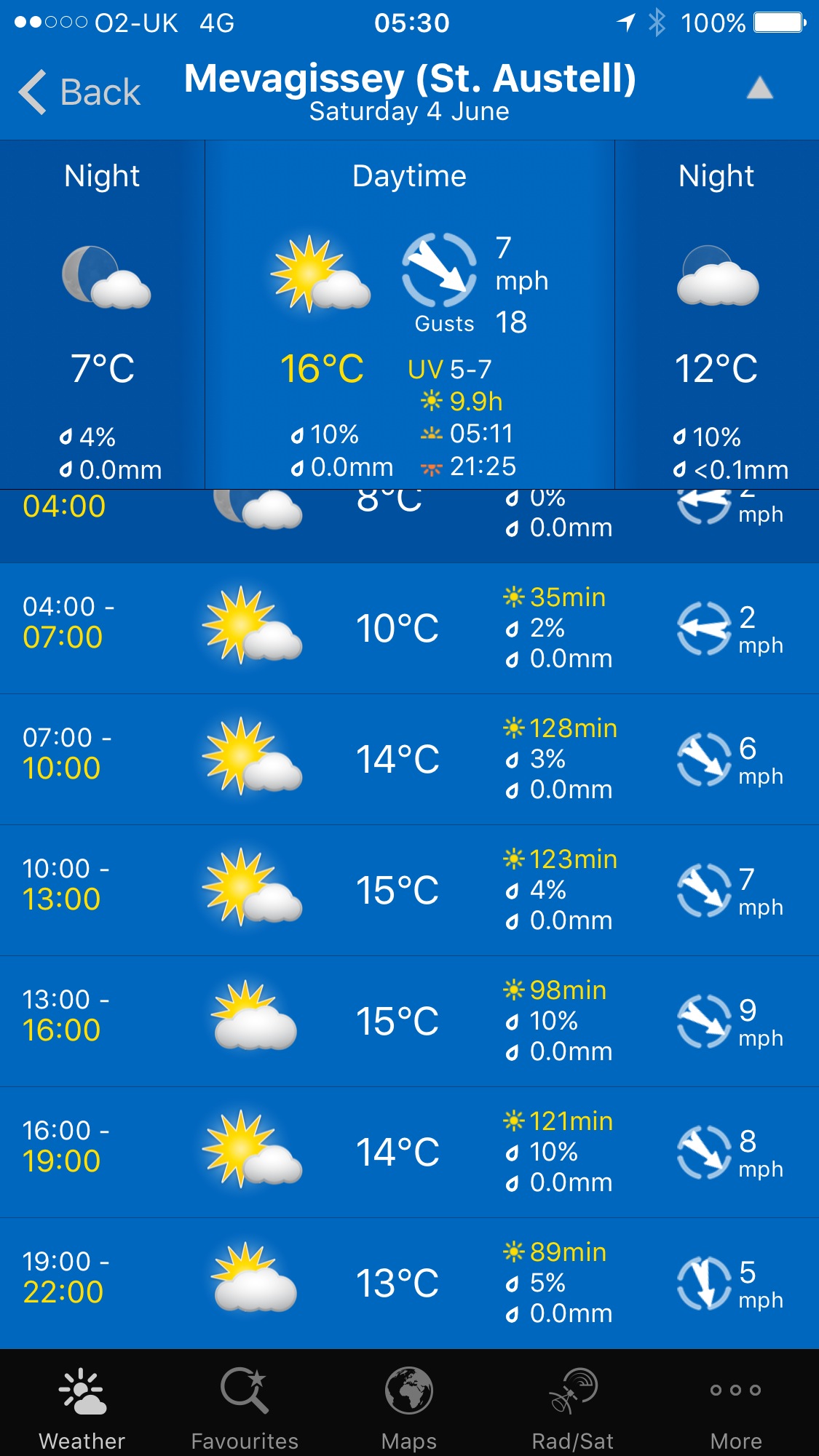
It looks like I'll have a lovely day of beautiful weather with sun forecast for all day long. Woop! The temperatures don't look very high particularly as there is very little in the way of wind but it should make for perfect walking weather.

Par Sands high tide 05:27

Par Sands low tide 11:56
I wake early. The birds are making a terrible racket out in the garden and I have a fine view of the sunrise over Lanlivery village.

sunrise over lanlivery

Today's walk starts at the car park above Mevagissey. I descend down to the harbour. It's early and the harbour hasn't really got going yet.

mevagissey harbour

I do a bit of exploration and pass the Wheelhouse Inn, the Harbour TavernThe Sharks Fin (@sharksfin_meva), The Fountain InnThe Ship Inn and the Cellar Bar before heading around the harbour towards Mevagissey Museum.

mevagissey harbour

I climb up out of Mevagissey where I have lovely views back over the harbour.

overlooking mevagissey

I pass by the coastguard lookout and the path heads behind houses on the outskirts of Mevagissey and the walk continues around Penare Point where the fields are full of cows. I now have lovely views over Pentewan Beach.

overlooking pentewan

I descend to Pentewan Beach and the Pentewan Sands Holiday Park. The official coast path route skirts around Pentewan Beach, presumably because the beach is privately owned. I head for the beach anyway and, technically, do a bit of trespassing.

trespassing on pentewan beach

At the end of the beach a path takes me back to the official coast path at Pentewan village.

Pentewan apparently means 'foot of the radiant stream' but I fail to find the said stream. The village and harbour here date back to medieval times and although the harbour was once important for shipping china clay it is now entirely cut off from the sea.

I take a footbridge over the harbour entrance and then round the harbour to reach the The Ship Inn.

the ship inn

The path leaves the square in Pentewan village and then climbs steeply up Pentewan Hill and past All Saints Church. Rooks are making an awful racket in the trees here.

all saints church

The path passes Polrudden Cove and reaches Hallane Mill. On a previous visit the paths here were full of stinging nettles so I got stung to buggery but someone has been overzealous with the strimmer and the path has been strimmed to within an inch of its life.

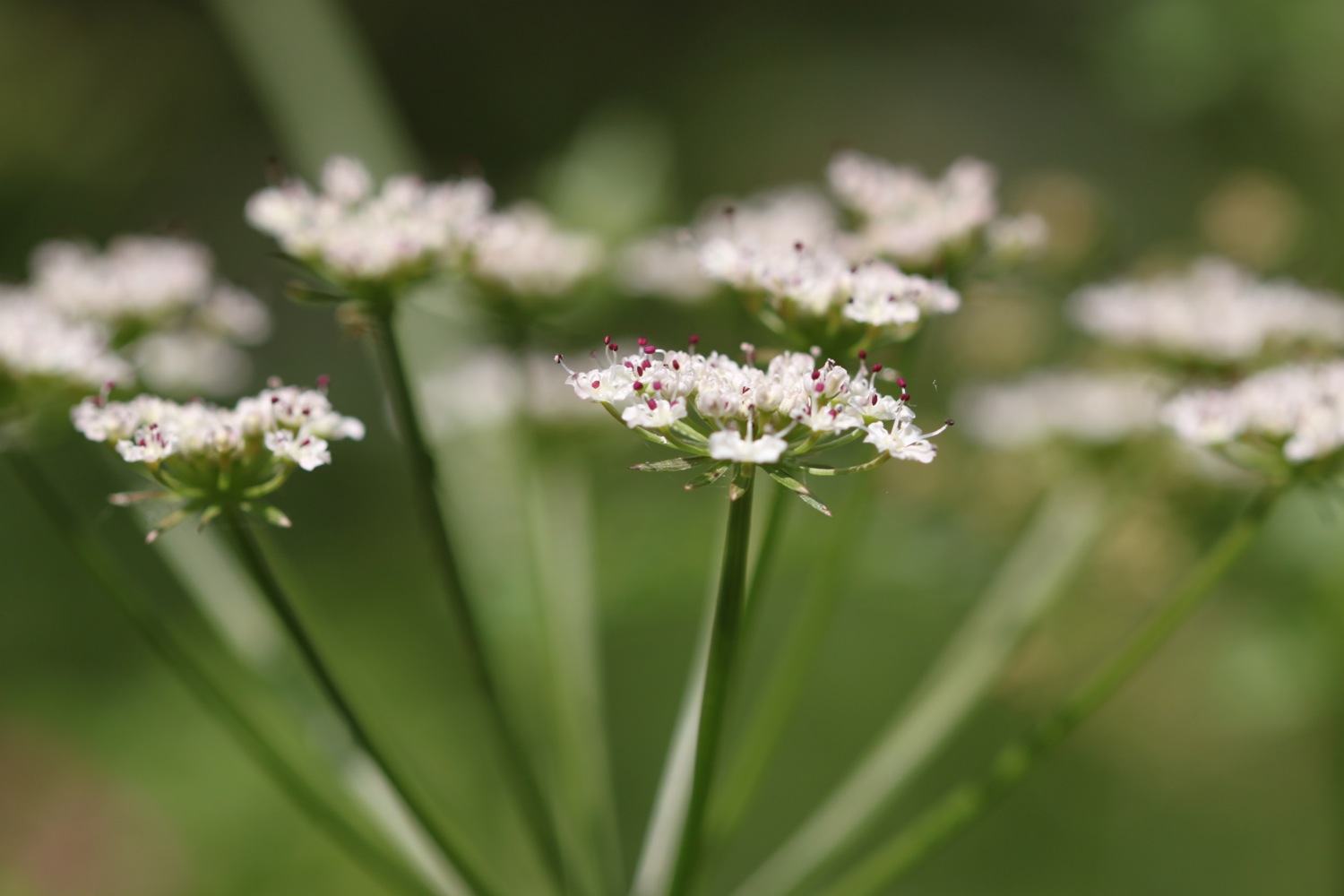
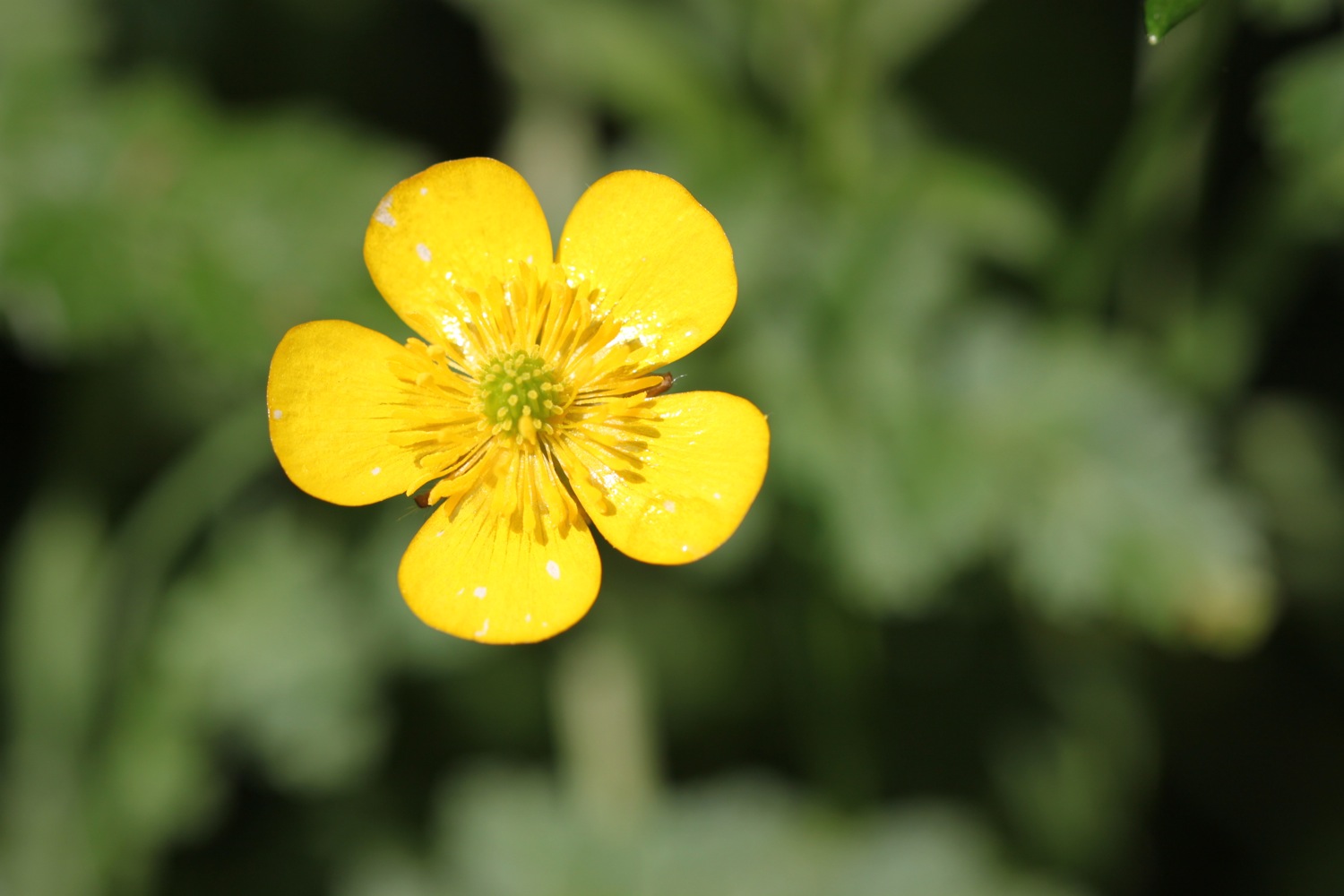
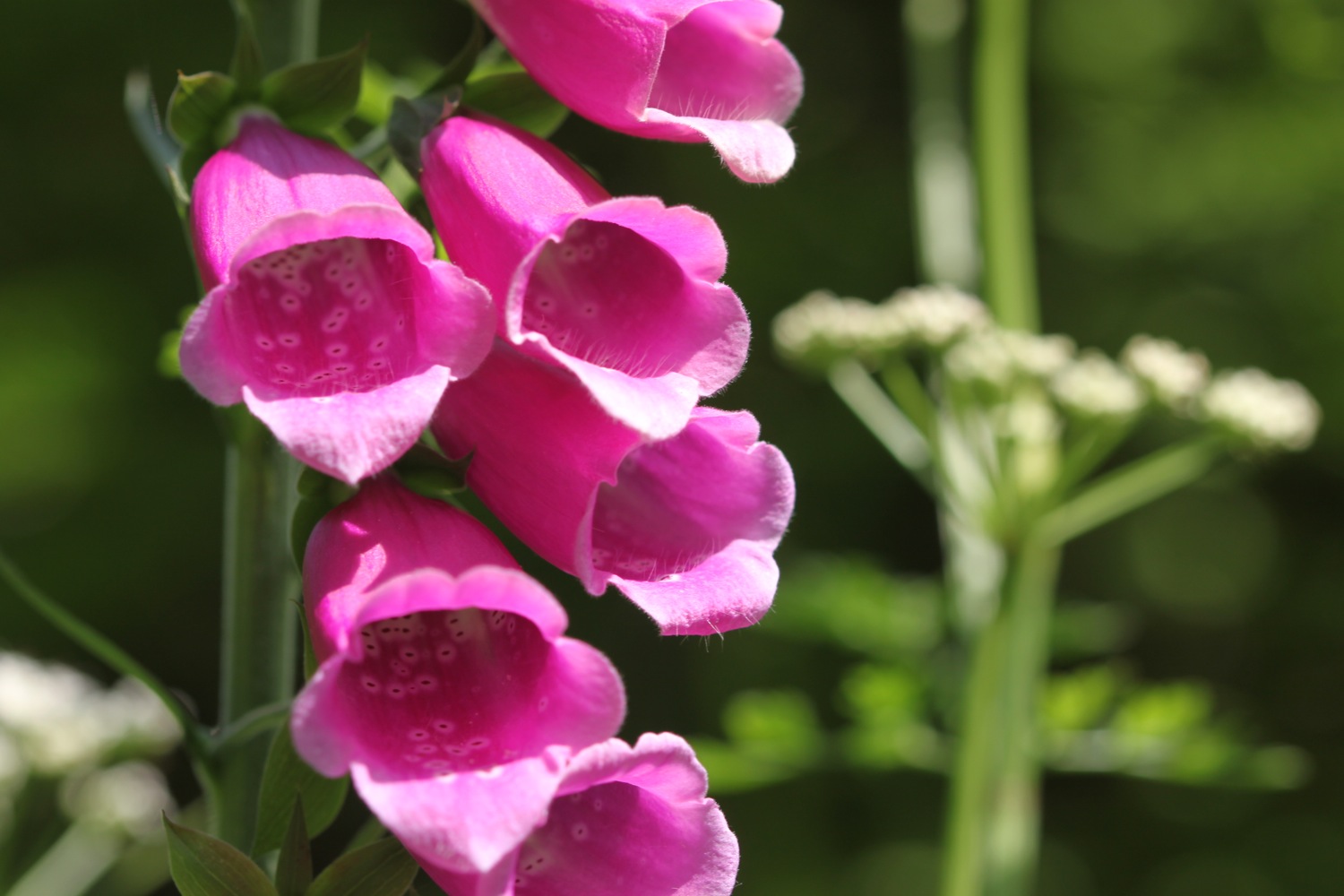
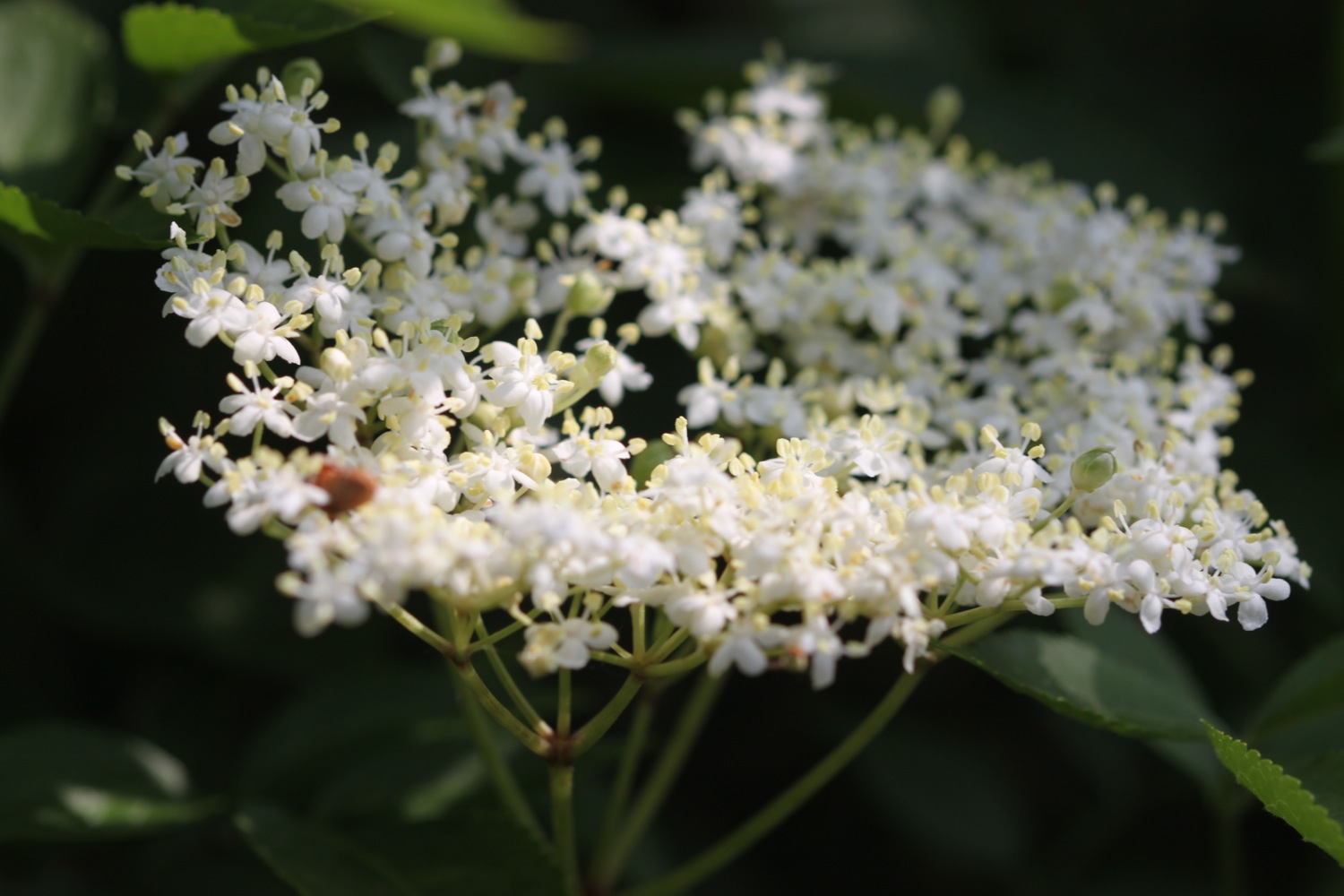
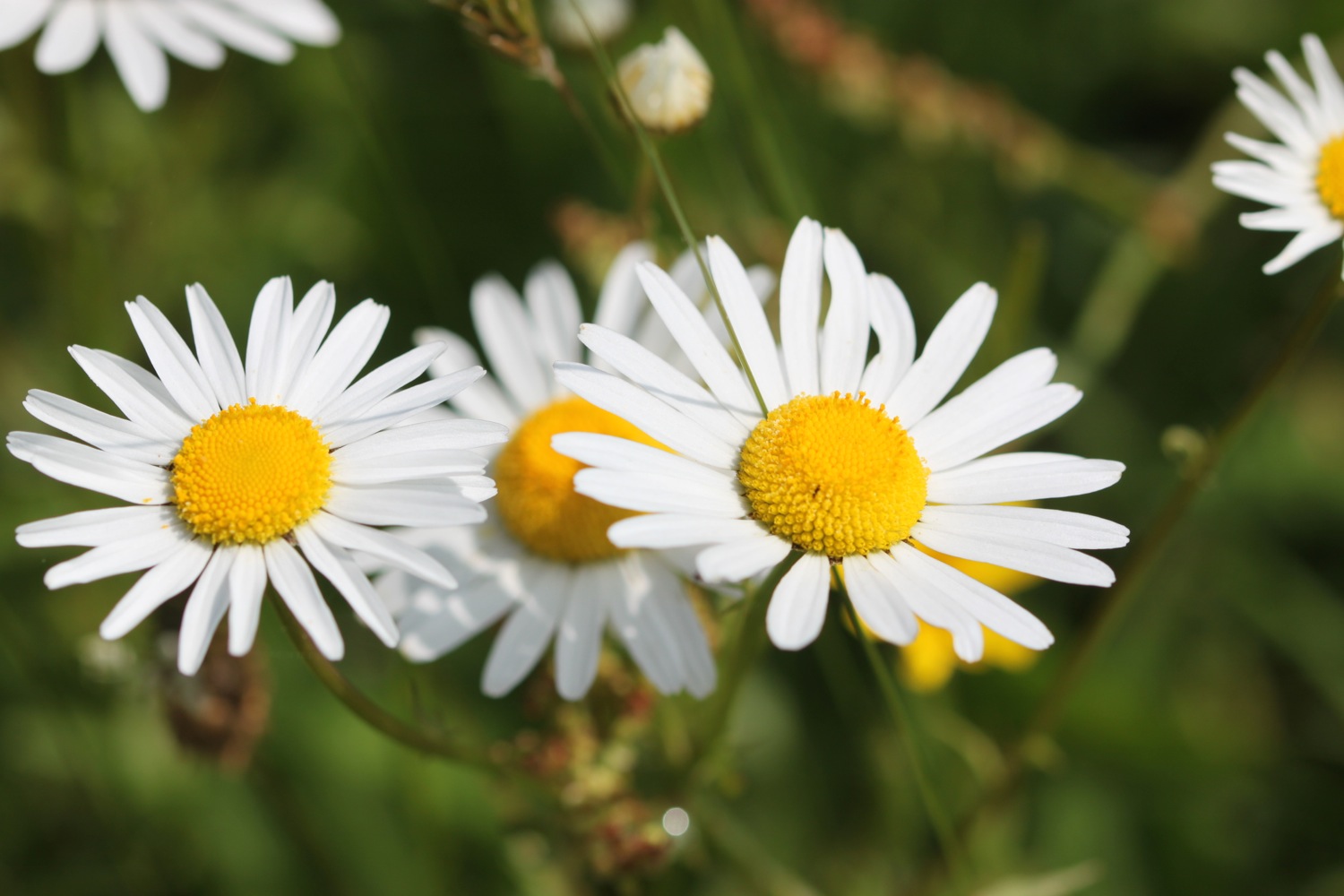
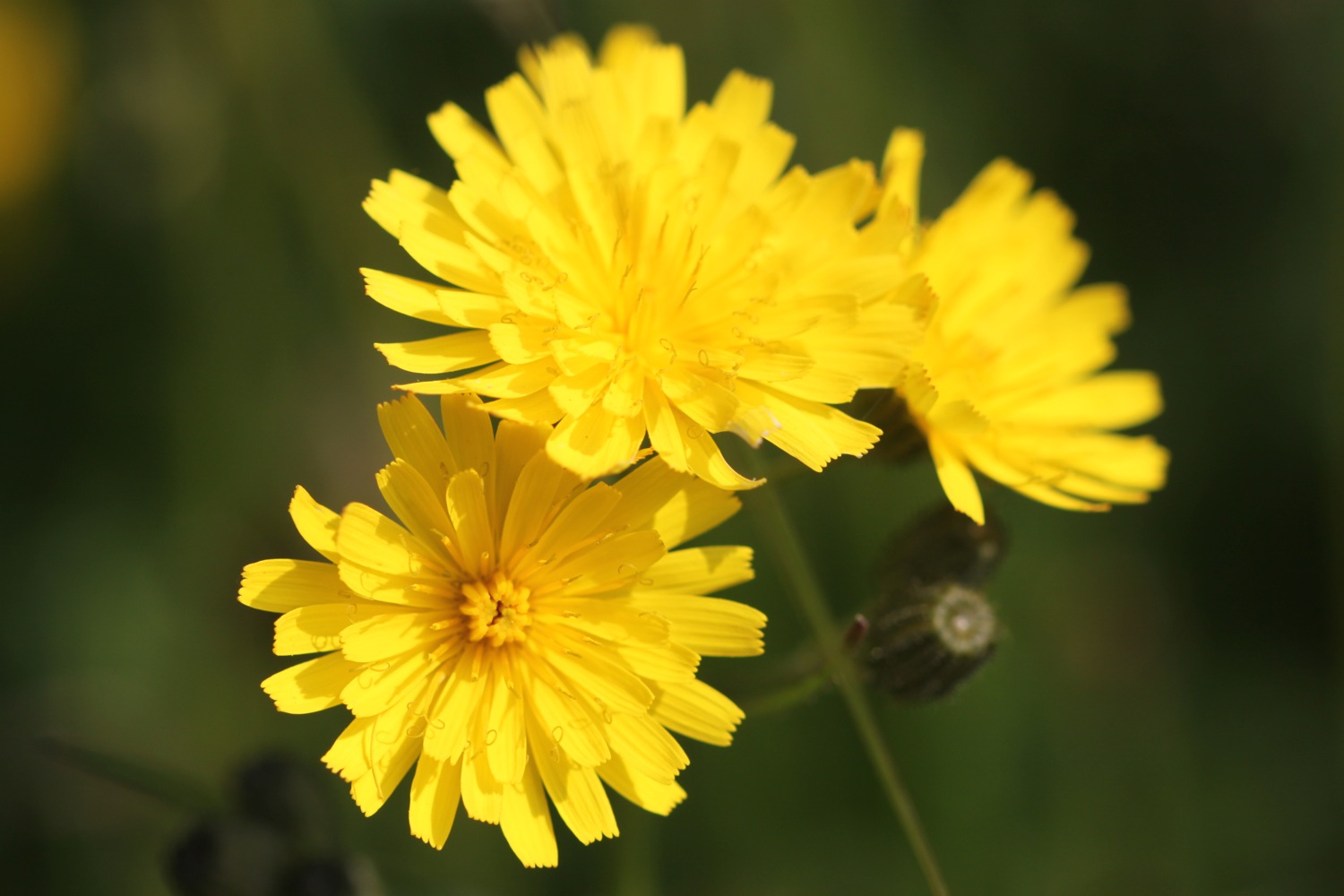
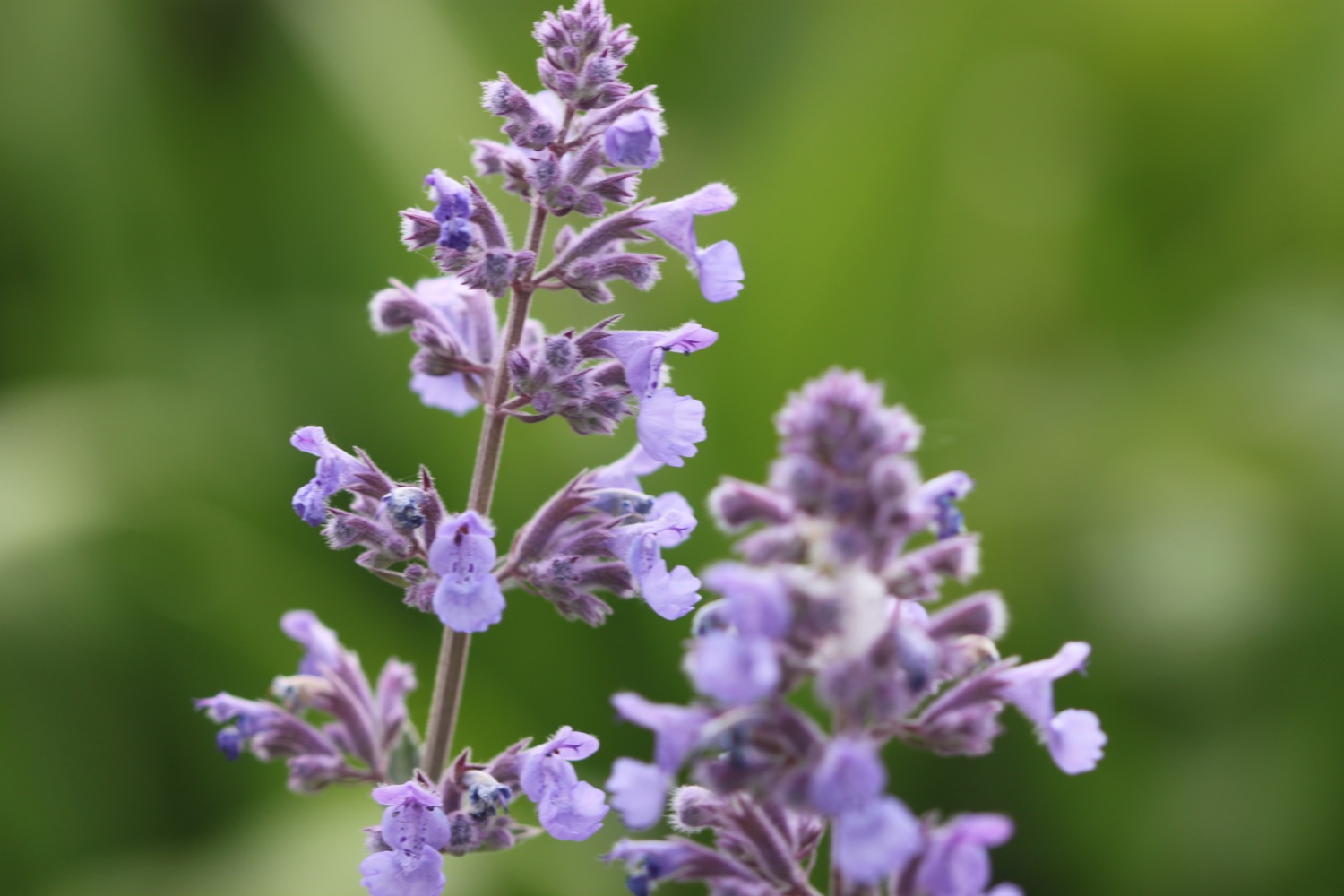
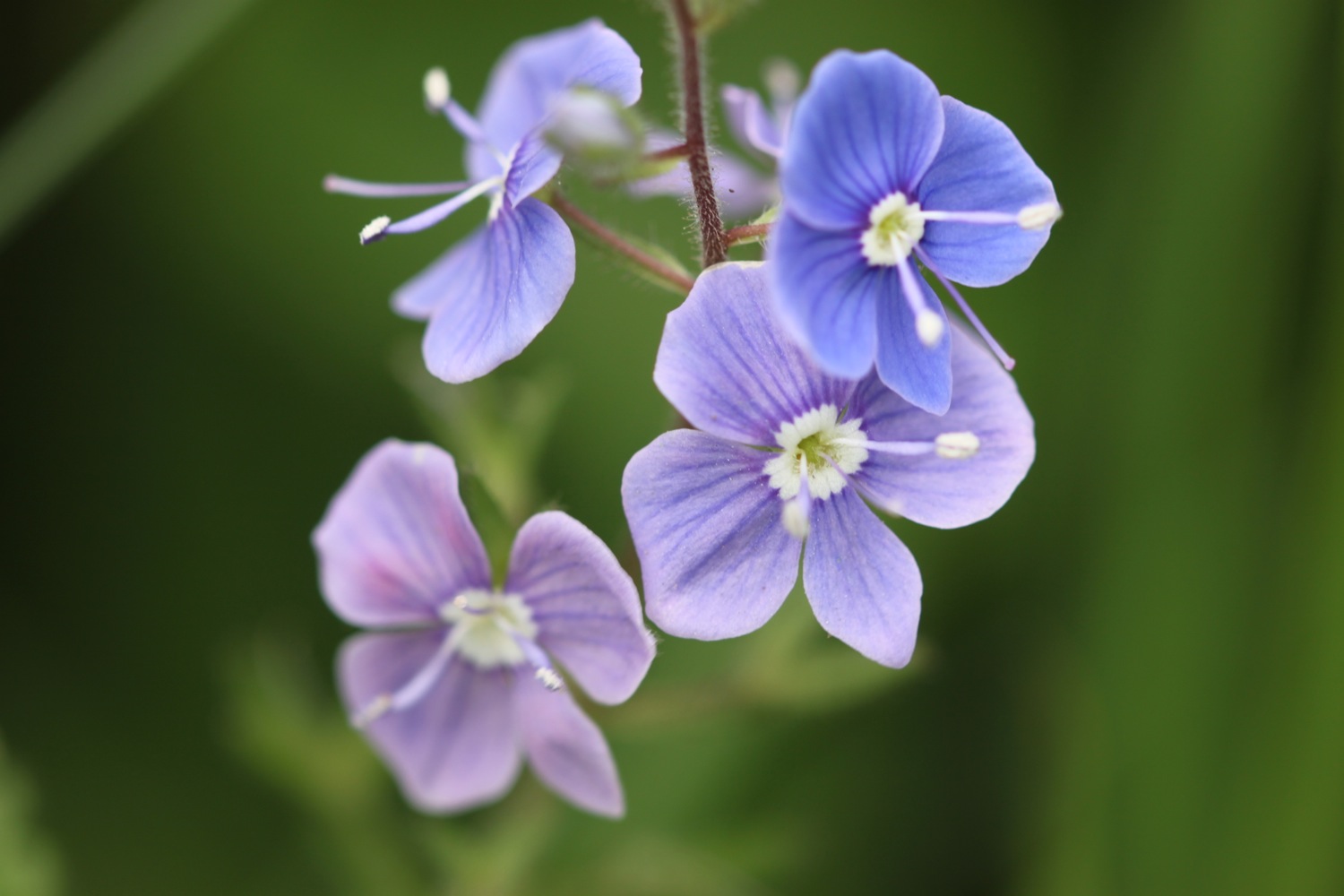
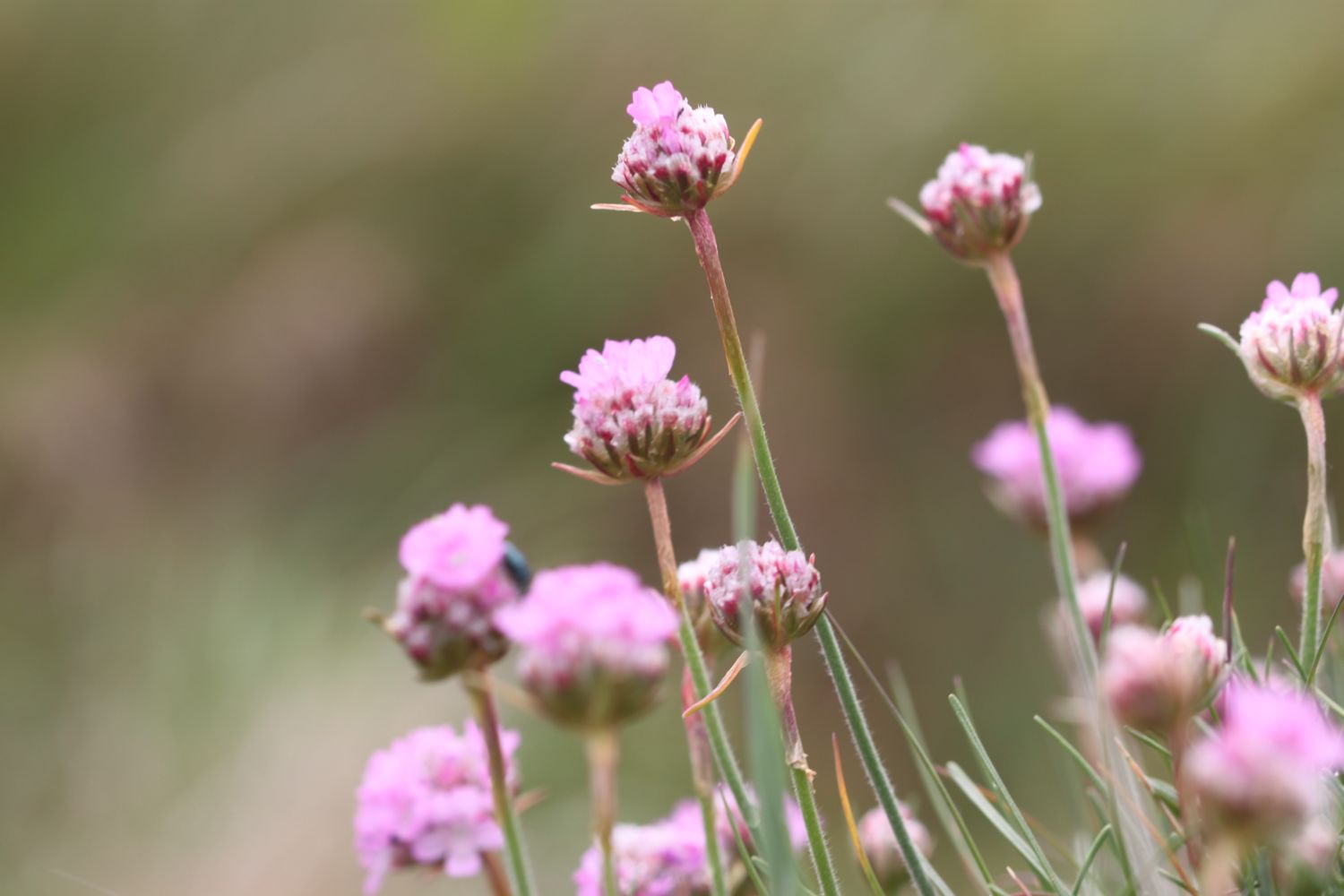
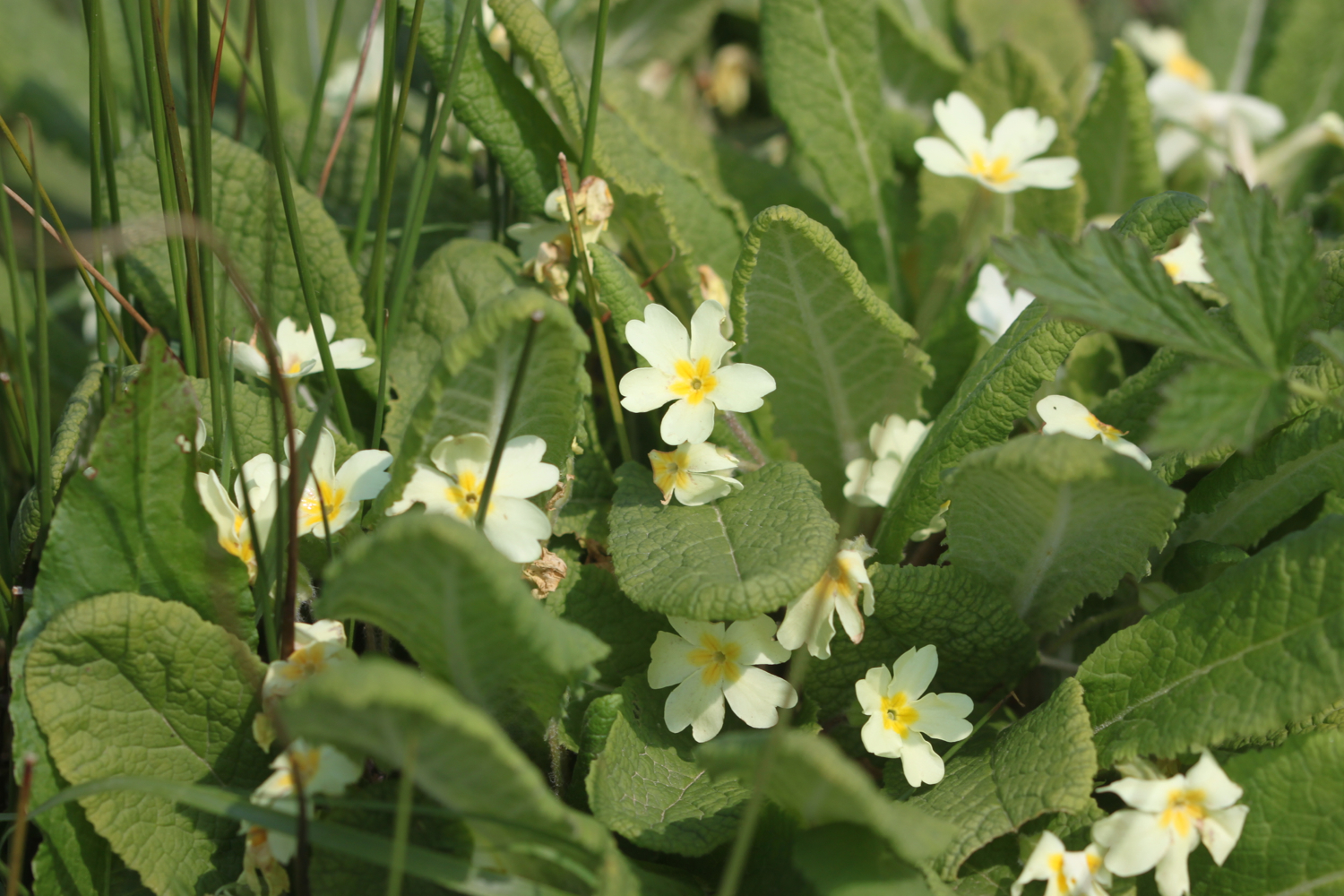
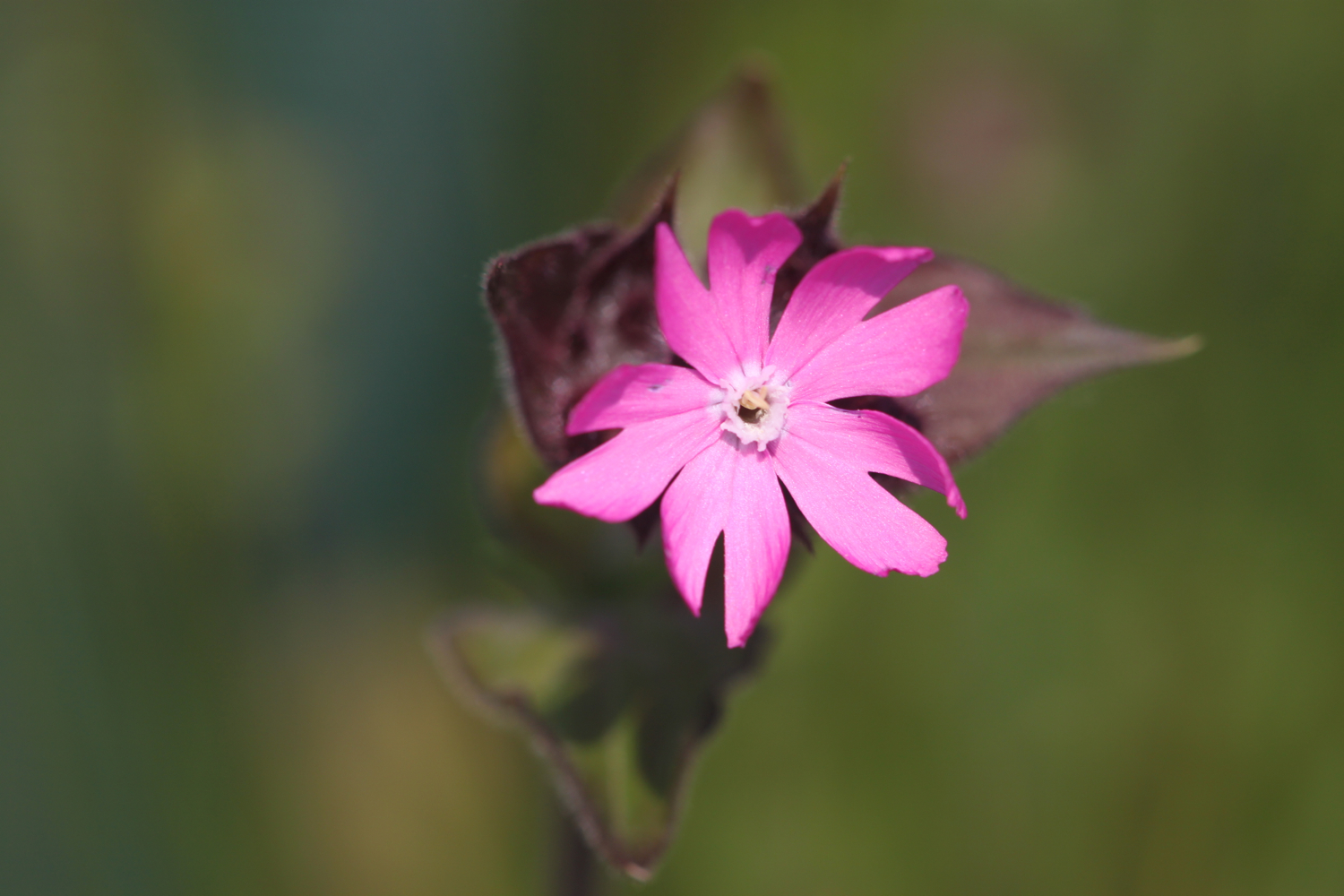
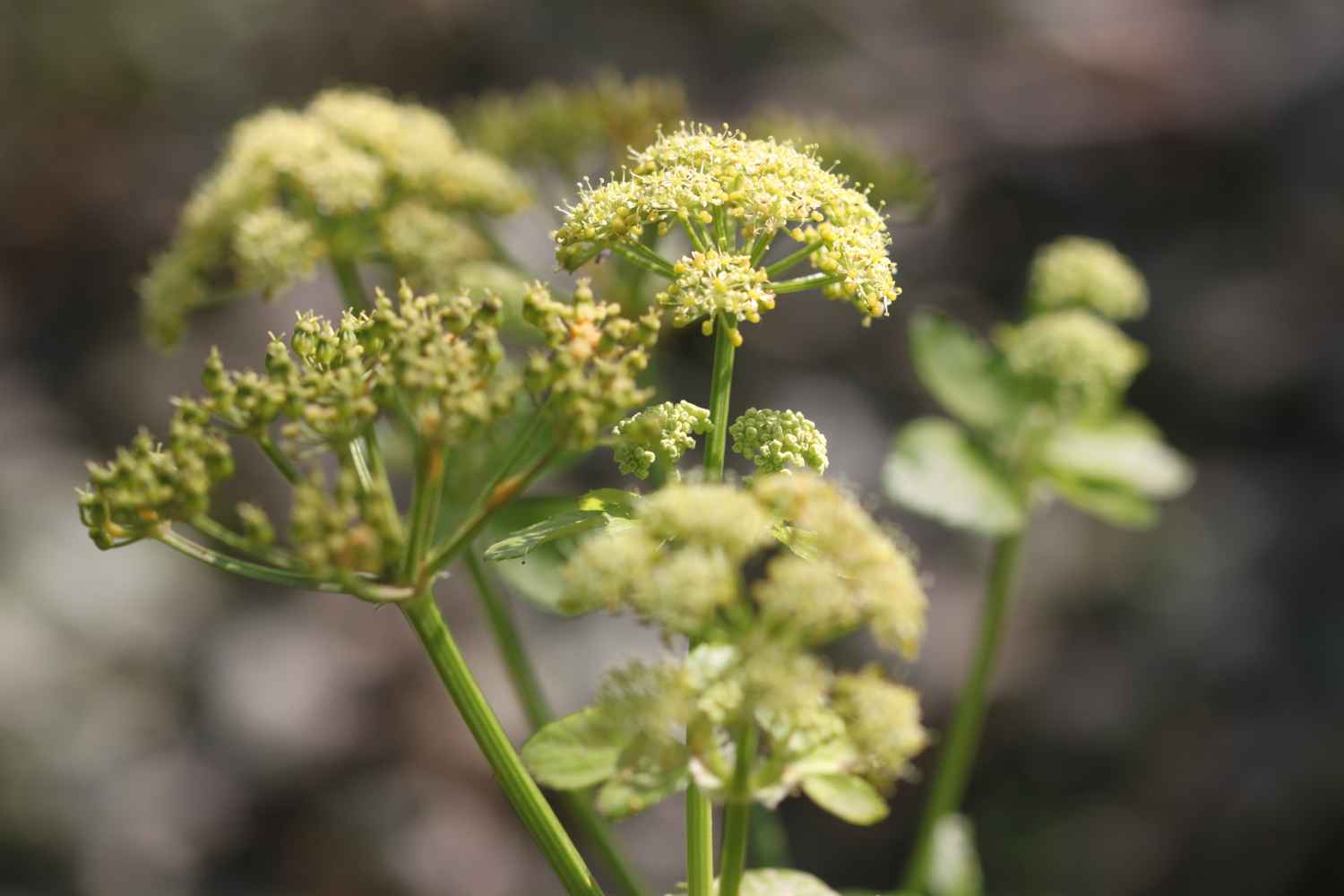
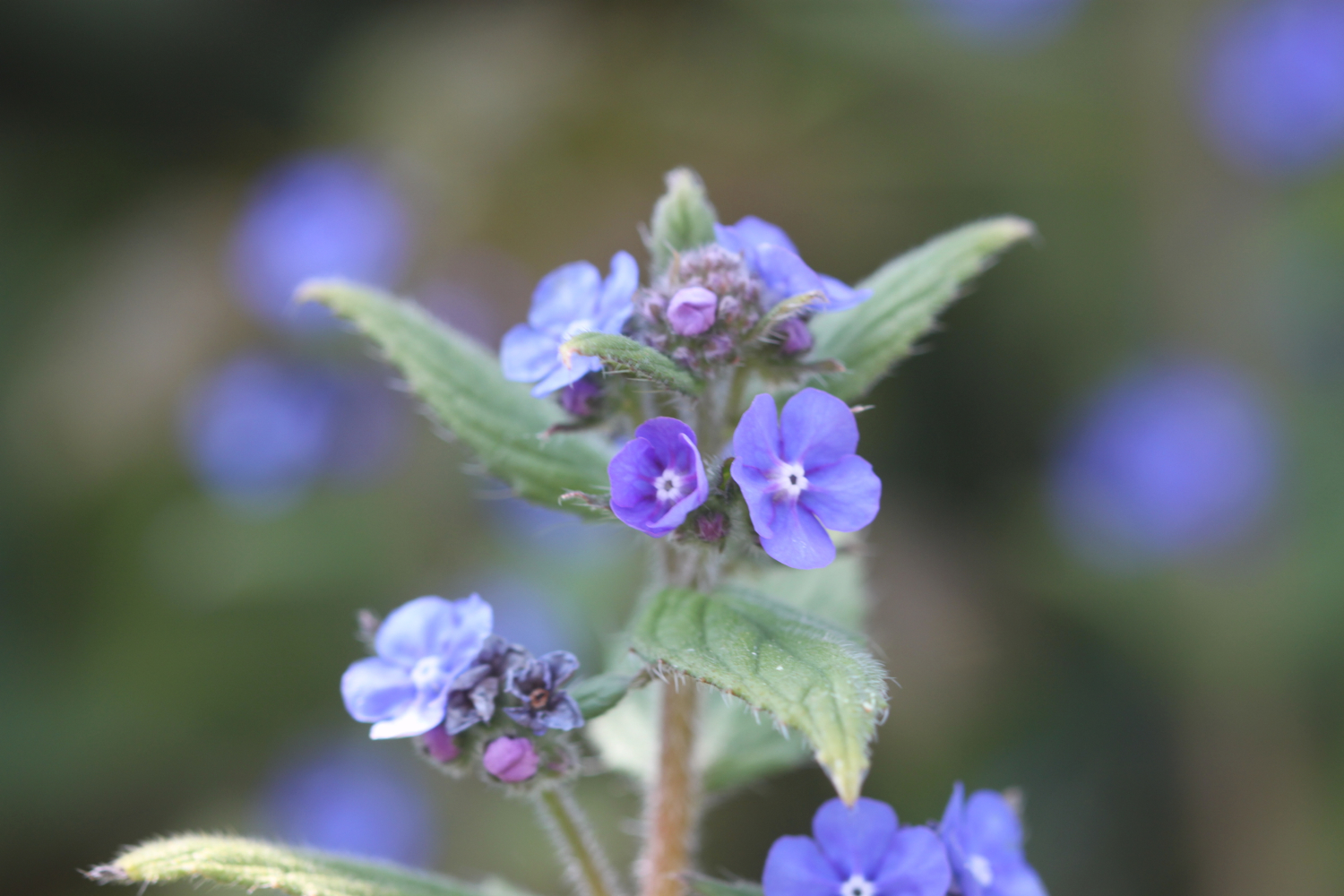
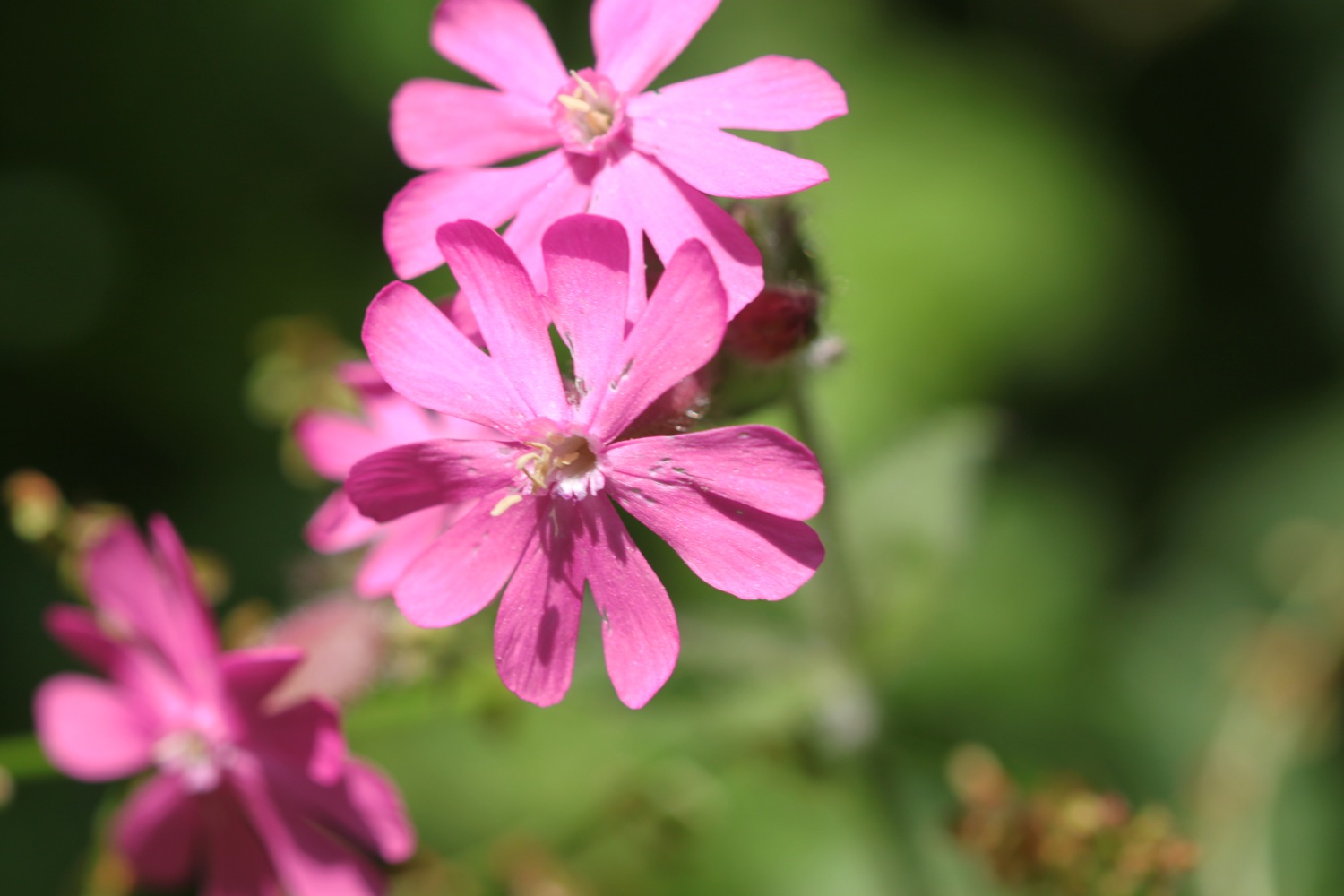
The wild flowers are looking at their finest.
I finally find some shade in woods where chaffinches are competing with each other. The house at Hallane is deserted and the statues which used to be in the garden here are gone. I just find a couple of lonely sculptures partially hidden in the long grass. 

sculpture in long grass

I drop down to Hallane Beach expecting to find it deserted but a group of canoeists have just arrived.

canoeists at hallane beach

The path continues towards Black Head and passes a big granite block in memory of the Cornish poet A L Rowse.

A L ROWSE CH
1903-1997
POET AND HISTORIAN

LEF A GERNOW
VOICE OF CORNWALL

THIS WAS THE LAND
OF MY CONTENT

memorial to a l rowse

The wild flowers continue to delight.
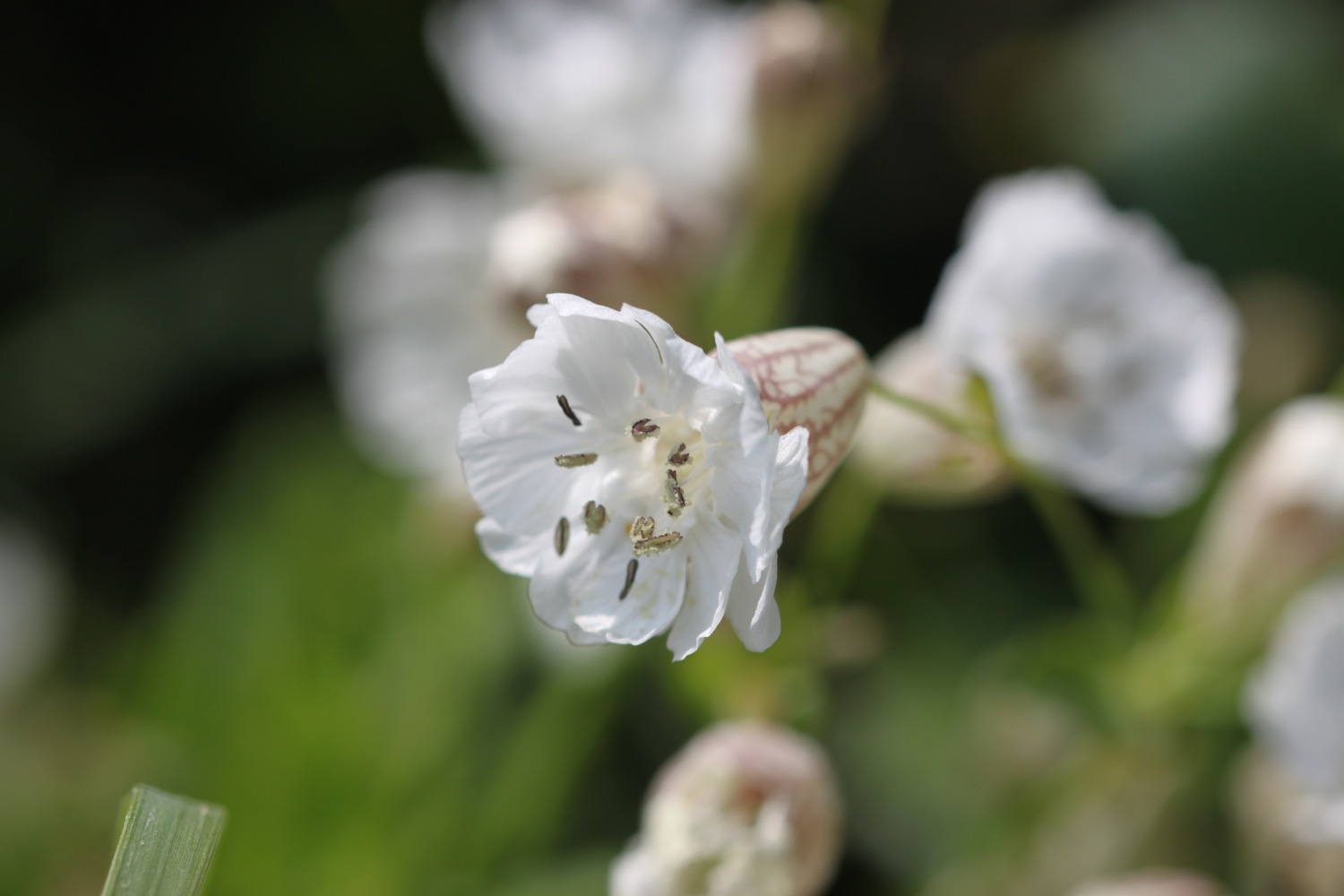
Rounding the memorial stone the path heads for some woodland and then climbs up along Ropehaven Cliffs to Trenarren House. I now have magnificent, if hazy, views over St Austell Bay.

hazy views over st austell bay

I enter woods where I temporarily get lost before passing Gwendra Point, Silvermine Point and Phoebe's Point and then drop down to the village of Porthpean where there is a lovely, sandy beach. The beach is home to Porthpean Sailing Club and the Porthpean Beach Cafe can be found here.

porthpean beach

A short walk over Carrickowel Point takes me to Du Porth Beach which means 'two coves' in Cornish. The beach is privately owned but accessible to the public and it's much quieter than Porthpean Beach.

du porth beach

I wander along the beach to the far end but the exit gate is locked and so I have to retrace my steps along the beach.

I regain the coast path and it takes me behind back gardens where I pass the Crinnis Cliff Battery, constructed around 1793 to defend the entrance to the new harbour at Charlestown. I climb down to reach Charlestown, an unspoilt example of a late Georgian working port, originally used to export copper and import coal but subsequently used to export china clay.

overlooking charlestown

Nowadays it is much more recognized as a television and film location and has been used for The Onedin Line (Blimey! that was a long time ago!!), The Eagle has Landed, Longitude, Apocalypto and Doctor Who amongst others. 

The sand and pebble beach here sits just outside the harbour. I have a spot of lunch here looking out over the harbour before setting off again.

I pass by the Pier House Hotel and Restaurant and  The Harbourside Inn before rounding the harbour. The Charlestown Shipwreck and Heritage Centre is found at the head of the harbour.

I regain the cliffs and pass in front of Porth Avallen Hotel where I come across more wild flowers but also a patch of the dreaded japanese knotweed.
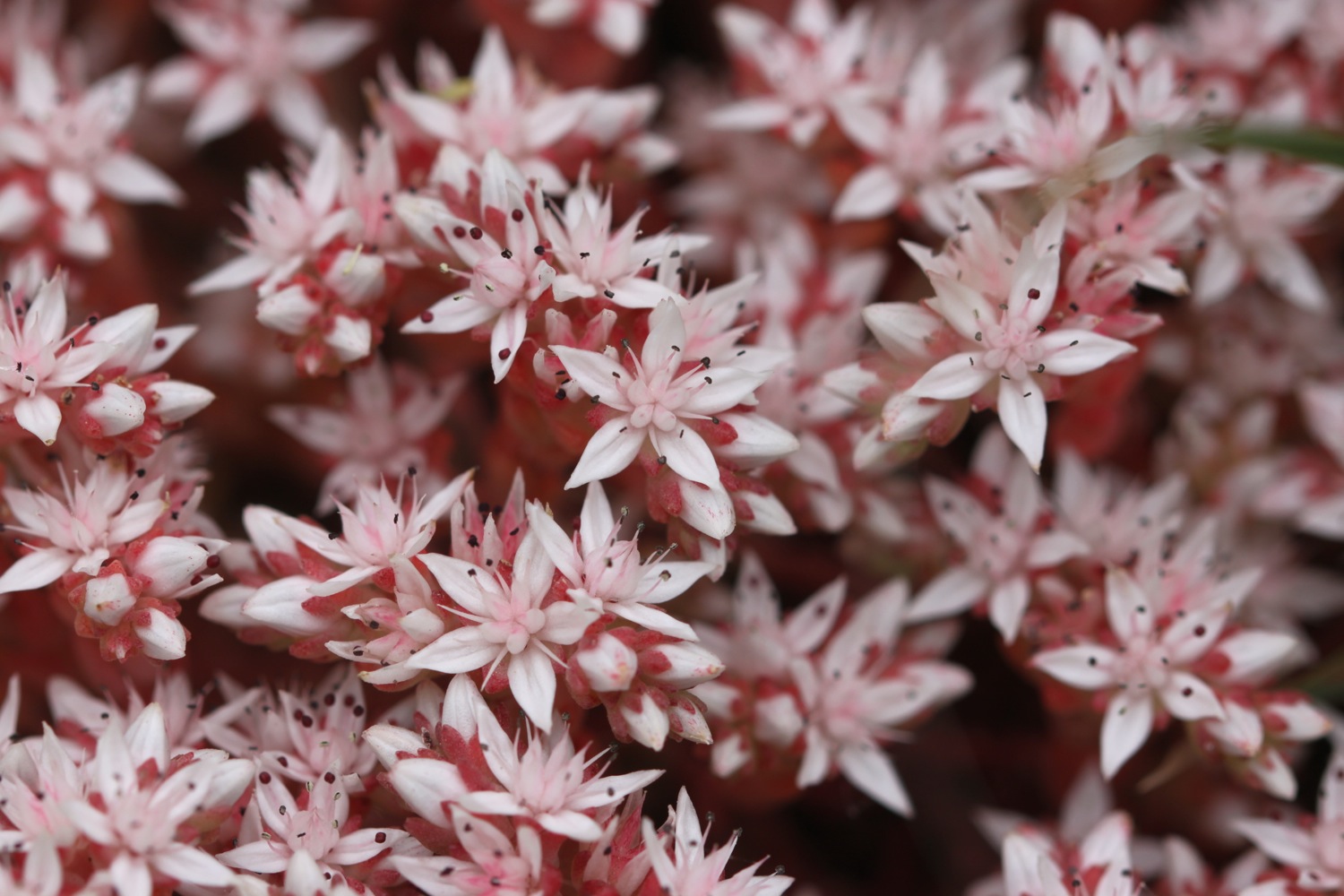
The path continues in front of Carlyon Bay Hotel before I descend down a concrete ramp to Carlyon Bay.

Carlyon Bay consists of three beaches, Crinnis, Polgaver and Shorthorn, and once upon a time it was lovely around here but on my previous visits had turned into an eyesore with the Cornwall Coliseum at the top of Crinnis Beach gradually falling into disrepair. The Coliseum was finally demolished in the Spring of 2015.

A series of poor planning decisions over a number of years has ruined Carlyon Bay and disgruntled the local residents, but the place looks like it is finally being redeveloped and there are plans to create a new beachside village with homes, restaurants, bars and cafes. Let's hope that the place finally gets back to the way it should be. There are still lines of steel shuttering,  piles of ugly boulders and fences everywhere. Yuk!! But at least the beach is looking much more like a family beach again. You can keep up with developments at the Carlyon Bay Watch website.

carlyon bay

carlyon bay

families on carlyon bay

There's even some pop up shops on the beach hinting at what may come including Ostraca Pop Up Oyster Bar and Sam's @ The Bay.

pop up shops on carlyon bay

It's not clear to me whether there is an exit point at the far end of the beach so I head back up the concrete ramp to rejoin the coast path where it continues alongside the Carlyon Bay Golf Course and towards a disused china clay works at Spit Point.

I find a beach which is normally deserted just before reaching the china clay works but it's actually quite busy today. It is unmarked on my Ordnance Survey map but must be Spit Point Beach.

spit point beach

I enjoy the beach here before walking through the deserted and dusty china clay works to reach the hideously busy A3082. A lorry driver has suddenly decided that his lorry won't go under the 11 foot 9 inch railway bridge and is causing chaos by reversing back up the road.

The path continues past the Port of Par and then through the village of Par passing the Church of the Good Shepherd.

church of the good shepherd

The coast path should lead down to Par Beach but on previous visits I haven't found any signs but I'm determined this time so I continue past the Welcome Home pub and finally find a sign pointing out the coast path. The signs dry up again but I follow a convoluted path which finally leads me to the beach at Par Sands.

par sands

I wander along the sandy beach and at the far end walk through the sand dunes to reach my lift at the car park.

My wide angle lens seems to be faulty so I might have to swap it for my cheap 18-55 lens for the rest of the holiday.

FLORA AND FAUNA

Flora and fauna encountered on the walk today includes :-

  • chaffinches
  • chiffchaffs
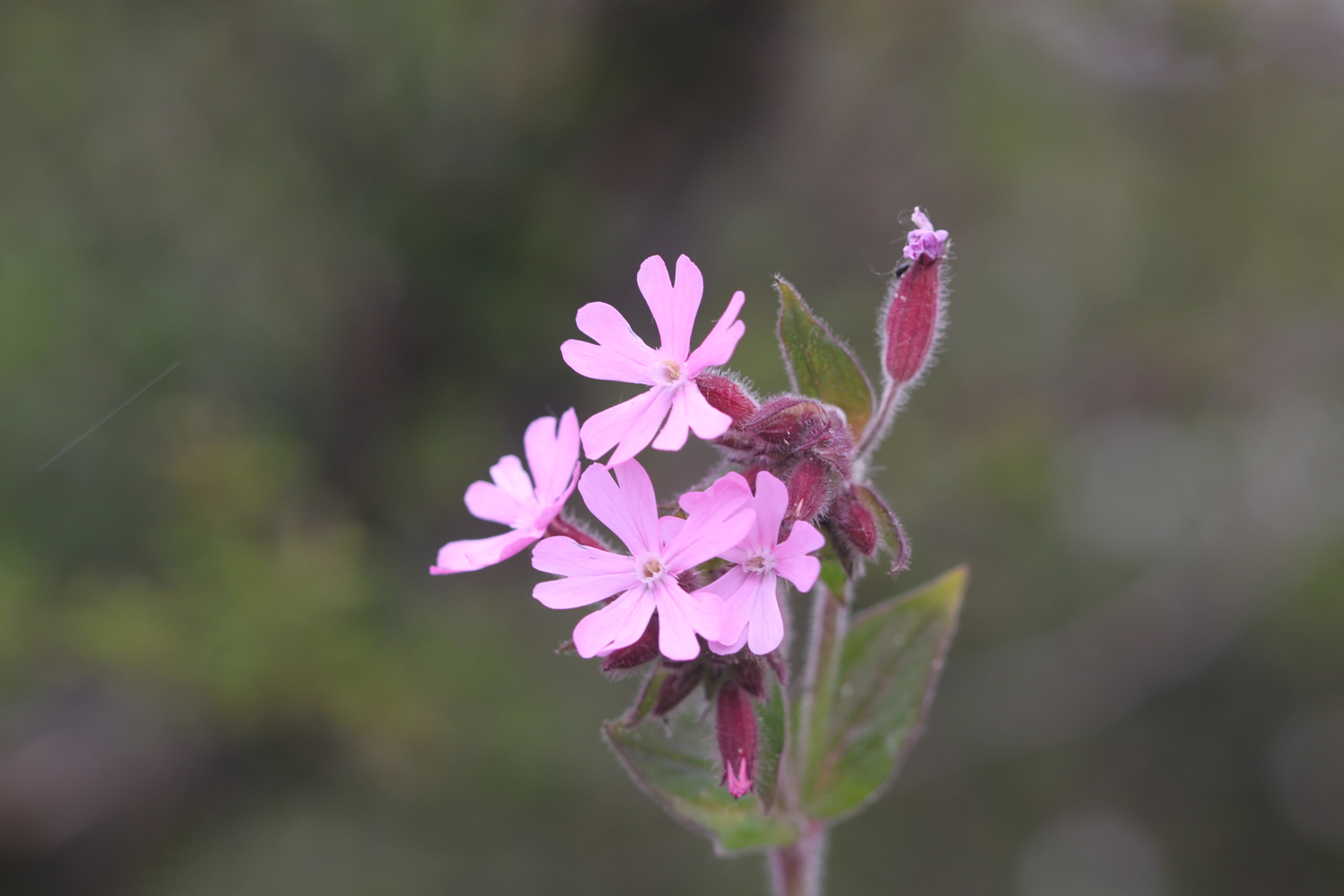
  • red campion
  • foxgloves
  • speckled wood butterfiles
  • cows
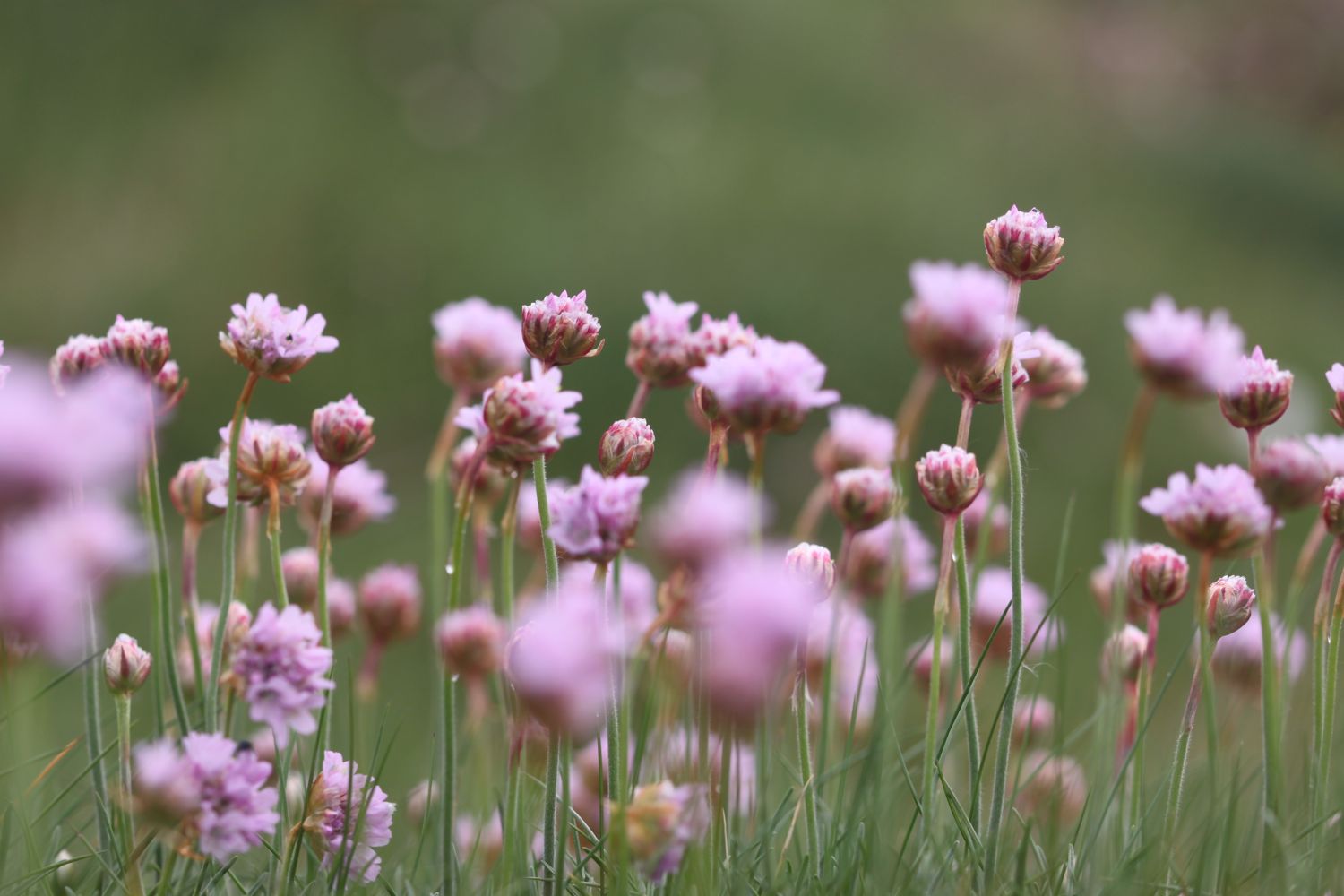
  • sea thrift
  • house martins
  • rooks
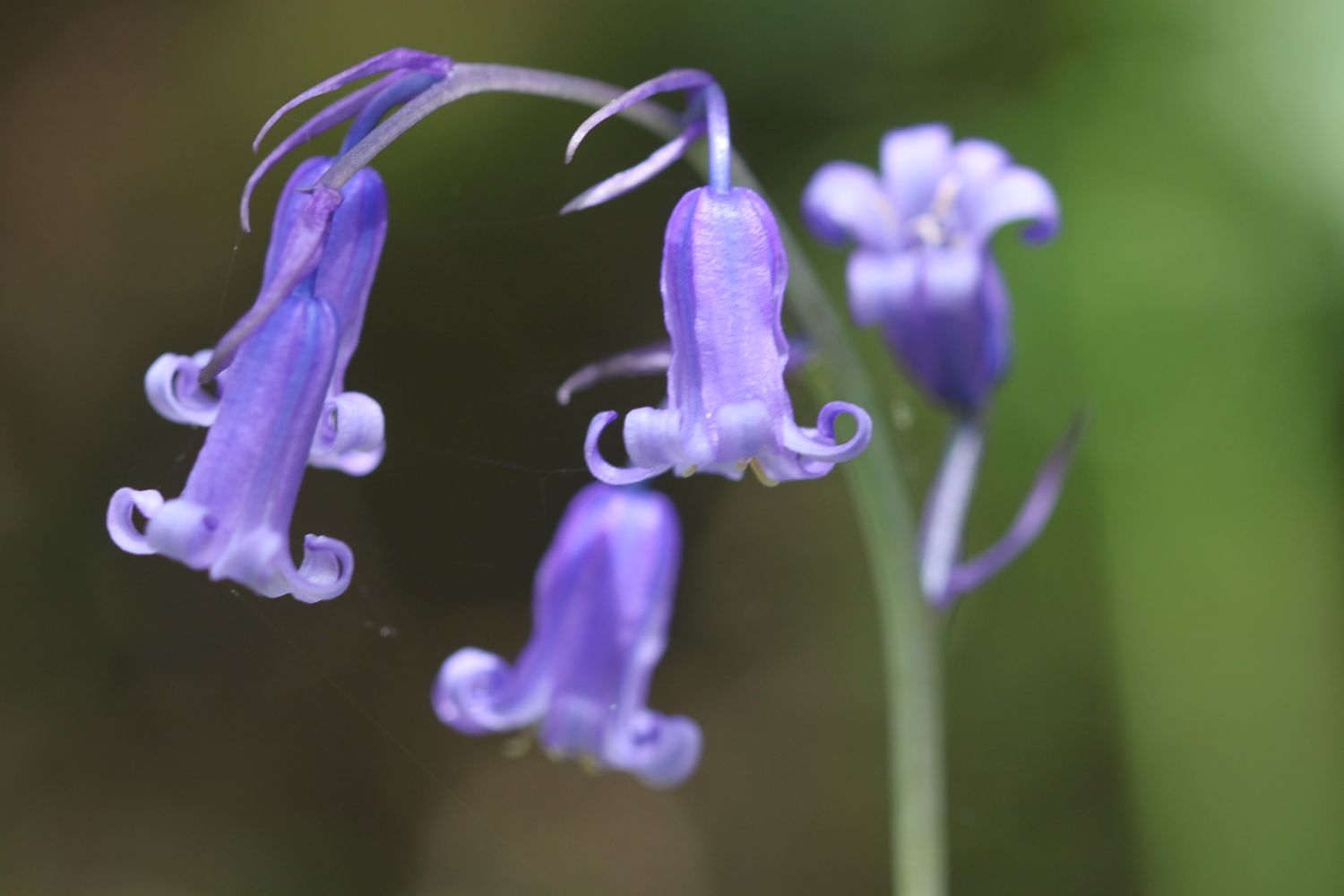
  • bluebells
  • sheep
  • honeysuckle
  • swallows
  • skylarks
  • buzzards
  • elderflower
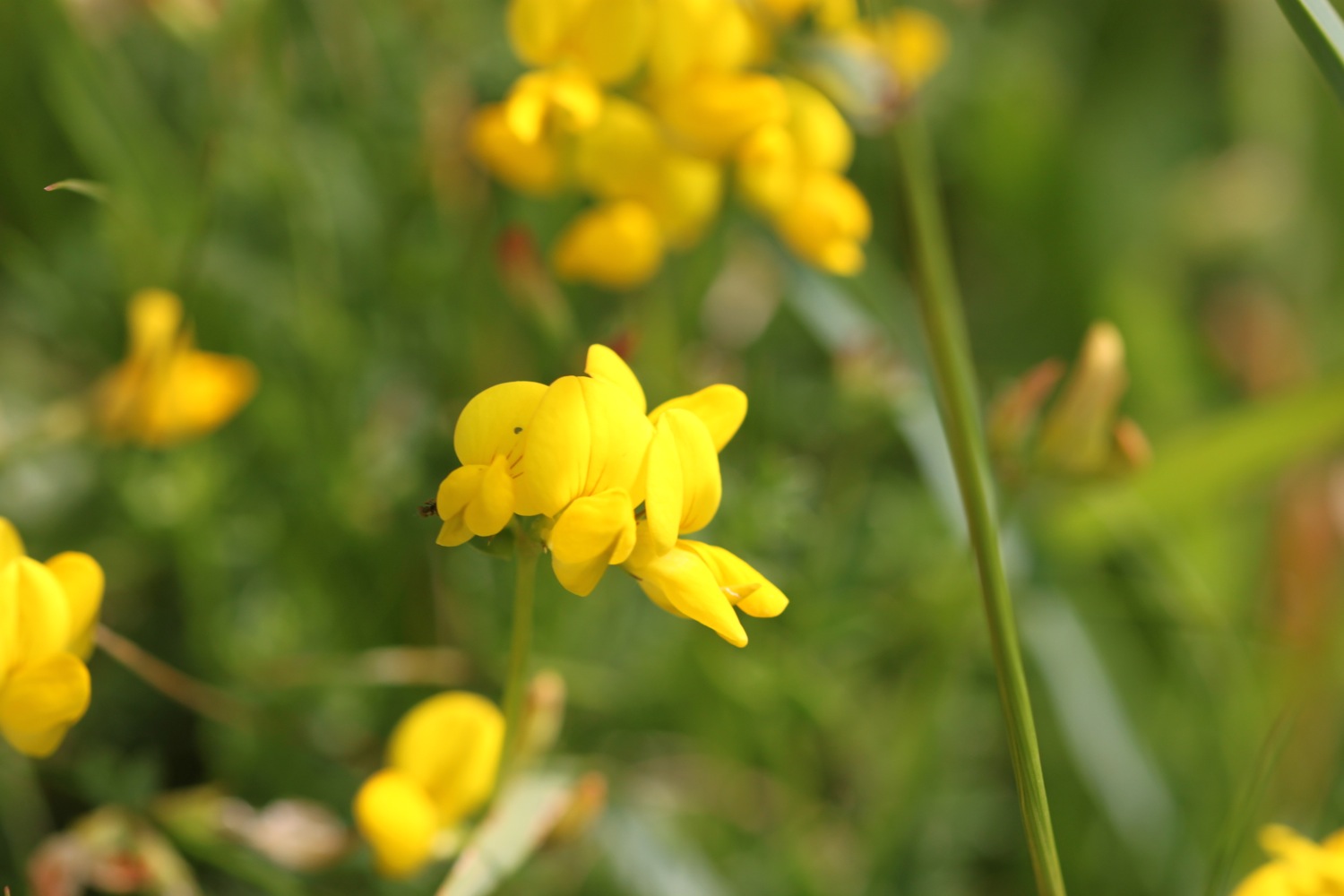
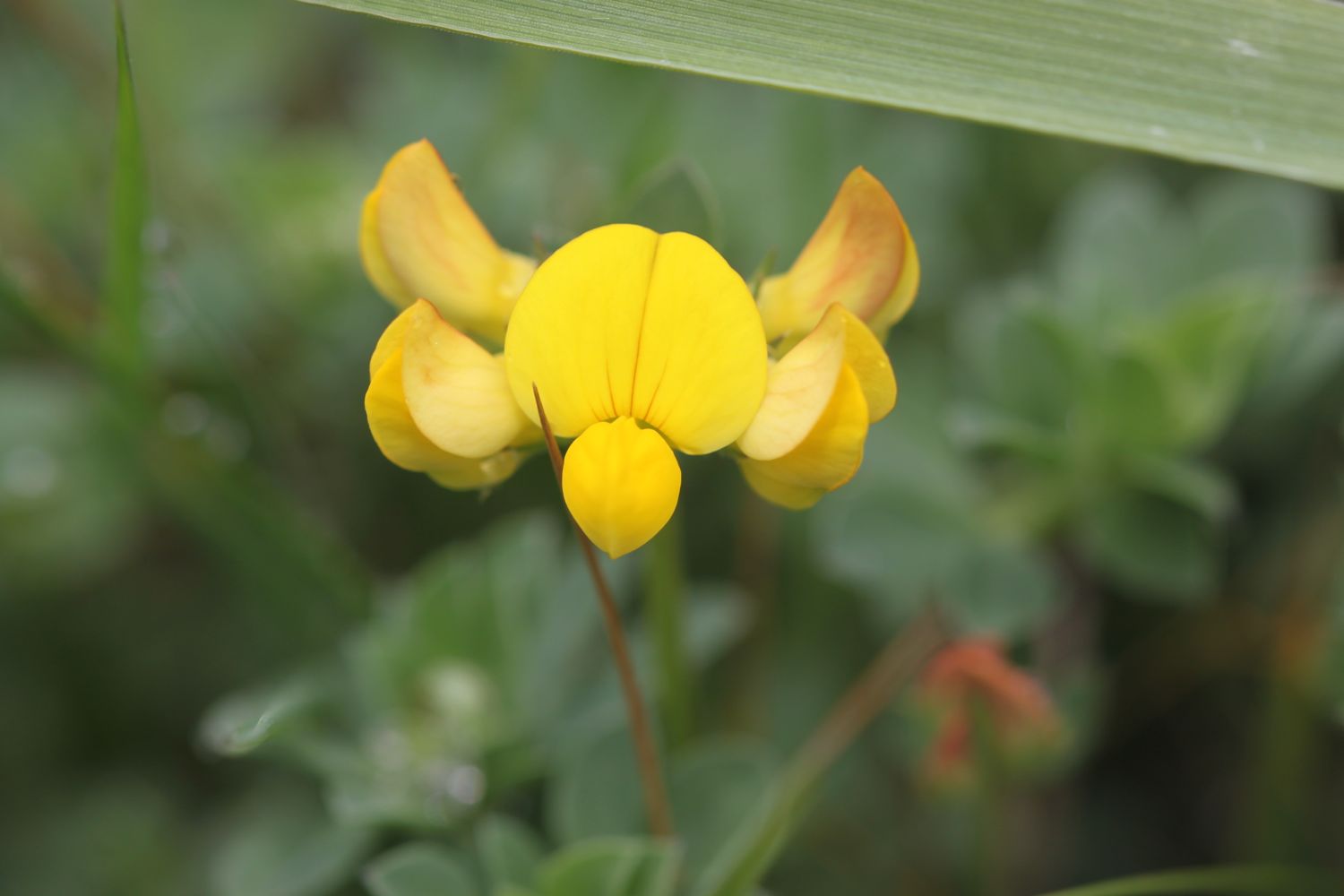
  • bird's-foot trefoil
  • kidney vetch
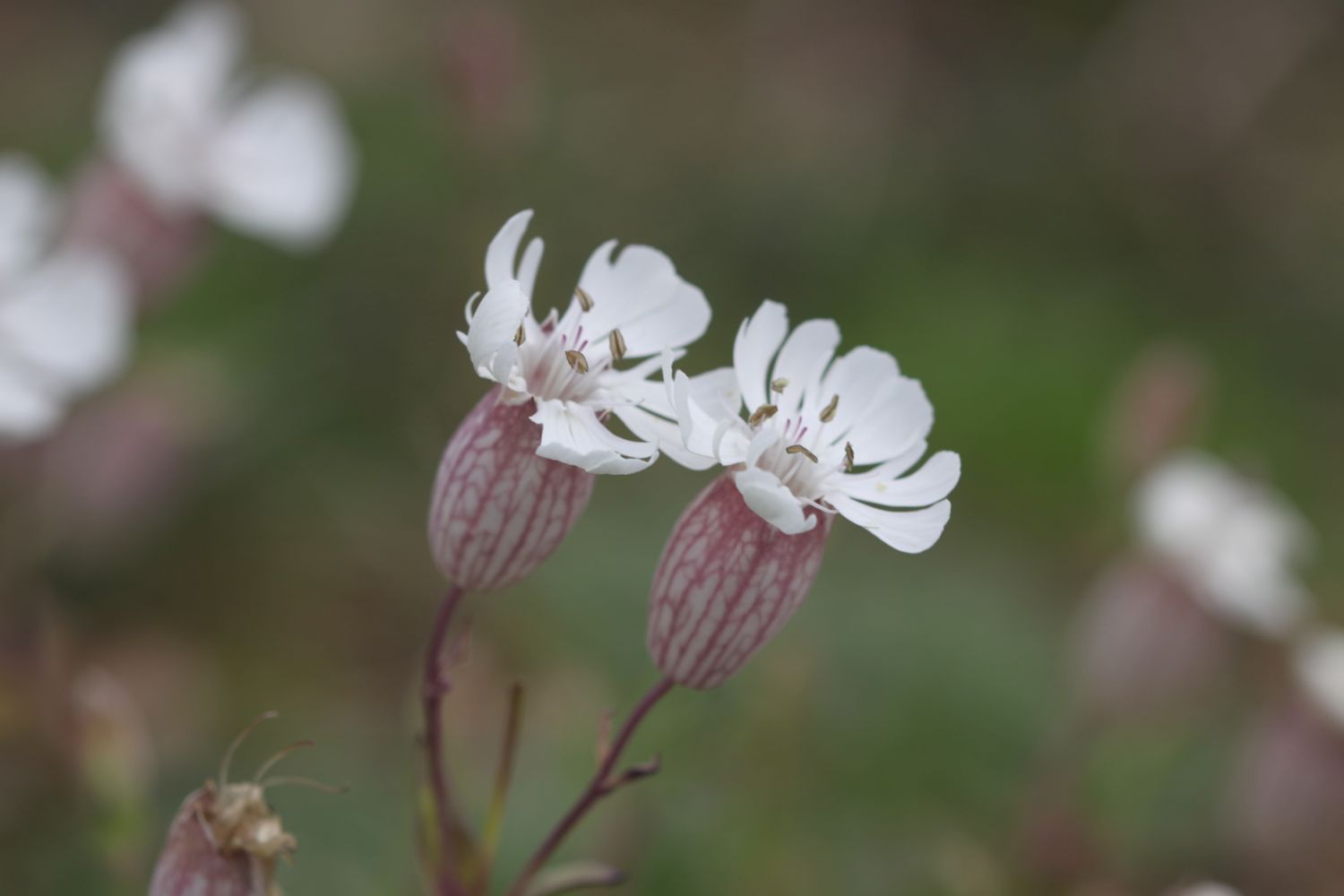
  • bladder campion
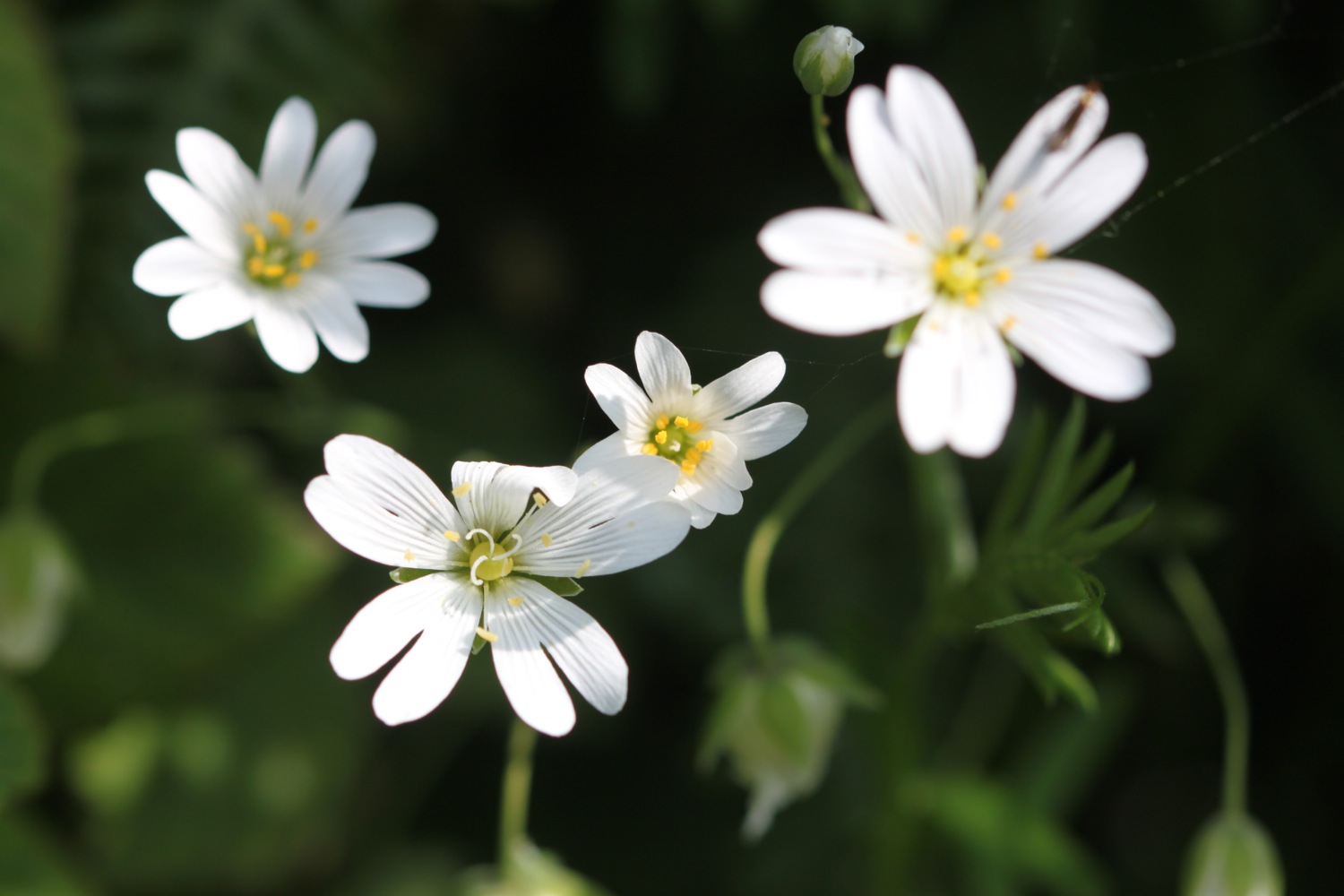
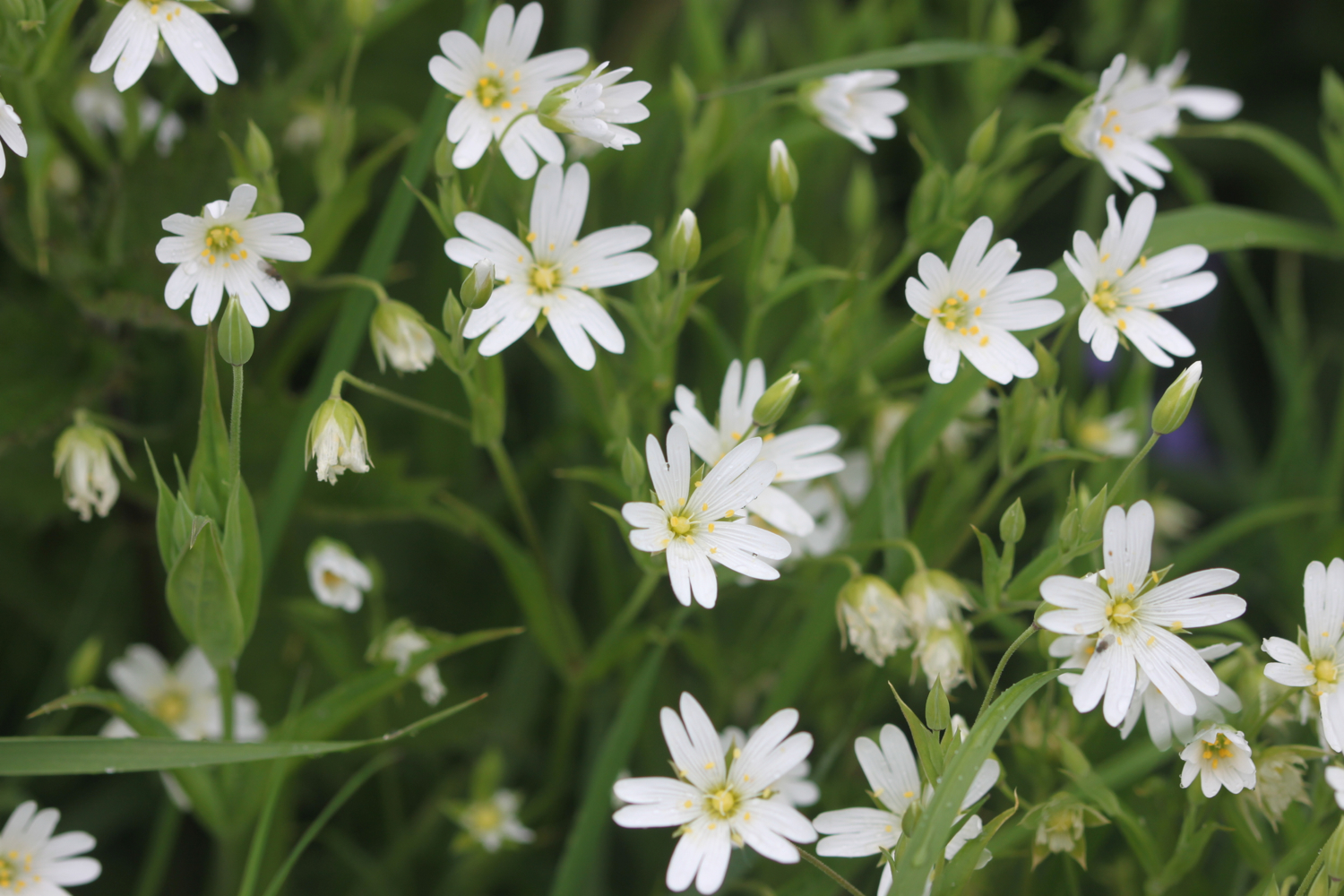
  • greater stitchwort

PODCAST

The podcast of today's walk is now available. You can subscribe via the iTunes store or listen using the player below.

MARKS OUT OF TEN?

According to my phone I've walked 14.7 miles today which amounts to 34019 steps. After a misty start it turned into a lovely day with blue skies and it was properly hot. Nine out of ten!

My total ascent today has been 708.60 metres or 2324 feet.

Video

map

mevagissey harbour

view over pentewan

foxgloves

beach collection

abbotsbury to ferrybridge

south west coast path

wednesday, 11th may 2016

The weather forecast for today doesn't look too bad, if a little on the cold side, but it's a proper manky day as we arrive at Abbotsbury. It's raining, gloomy and foggy and it doesn't look as if it's going away any time soon.

Chesil Beach high tide: 11:04

Chesil Beach low tide: 16:20

Today's walk is perhaps, on paper, not the most exciting walk, largely being inland due to the presence of Chesil Beach, but it's great to be back walking on the Dorset coast. Apparently Chesil Beach consists of 180 billion pebbles but I've not got time to count them all.

TODAY'S GEOLOGY LESSON

At the end of the last ice age about 10000 years ago sea levels rose as the ice melted. Beaches made of sand, gravel and mud were driven inland. These joined to form the first Chesil Beach.

Since that time the sea has eroded enormous piles of debris created by landslides in the west. Thousands of tonnes of rock were turned into pebbles by the relentless power of the sea and washed eastward by longshore drift burying the older beaches and creating the Chesil Beach we see today.


Today's walk starts at the car park behind Chesil Beach just before Abbotsbury. The waterproof jacket gets straight on as I head down to the beach to admire it's majesty before heading back to the coast path. The path detours inland towards Chapel Hill where St Catherine's Chapel can be seen. At least it could if it wasn't so foggy. The photographs aren't going to be good today.

a gloomy chesil beach

Great! I don't have a mobile phone signal!!

I slip and slide over shingle behind Chesil Beach before trampling through damp fields to reach Abbotsbury Swannery and then take to grassy hills with some lovely views back over Chesil Beach, only I can't see anything in the fog.

The path passes above Clayhanger Farm and through loads of fields with the coast at some distance. In places the path is muddy, slippery and nettle infested. This is not a good start to the day, especially as it is now May.

I continue through sodden fields and even manage to come across a locked gate which I have to scramble over. WTF? The song birds don't seem to mind it around here though as they are making a magnificent racket.

I eventually come to a field of rape above Rodden Hive. This is supposed to be a promising spot for birds but all I can see is a solitary heron fishing in the Fleet.

rape above rodden hive

I continue along the coast path to reach West Fleet with a view over to Herbury Island. One high point of the day is that there are skylarks all over the place and they are making a terrible racket. I even stop to record one male skylark who hangs in the air for three and a half minutes chirping away.

a gloomy view over herbury island

a gloomy view over herbury island

The Fleet Lagoon, at 8 miles long, is the largest inland tidal lagoon in Britain. It has many designations including being a Special Area of Conservation under the European Union Habitats Directive, is a Site of Special Scientific Interest, a Special Protection Area under the European Union Birds Directive and a Ramsar Site (wetlands of international importance designated under the Ramsar Convention).
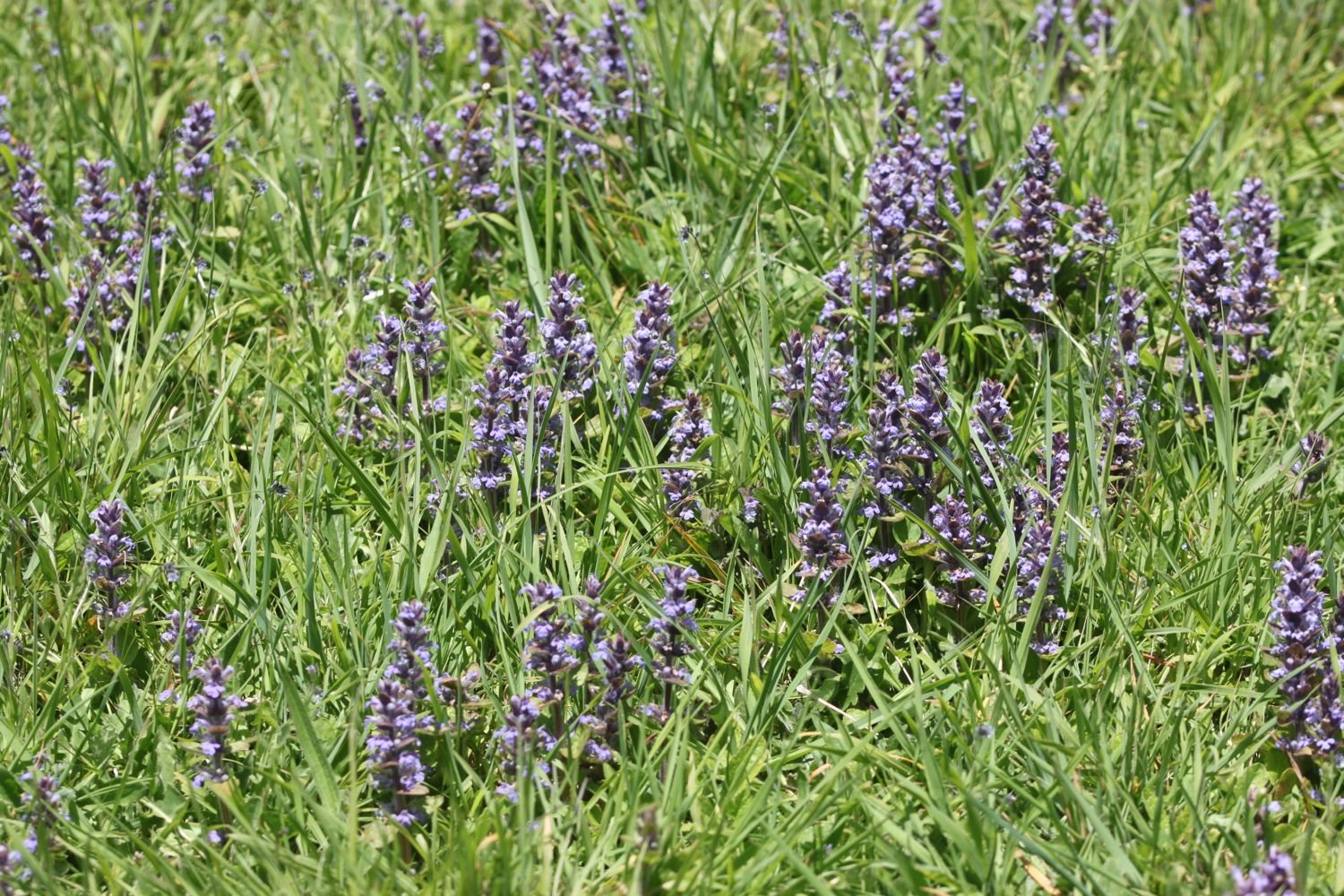
The path continues past Gore Cove and the Moonfleet Manor Hotel and Restaurant, named after J.M. Falkner’s novel Moonfleet in which he describes a lake of brackish water full of “sea-fowl, herons, and oysters ... shut off from the open Channel by a monstrous great beach or dike of pebbles”.

Hmmmm ….. I still don't have a phone signal.

 East Fleet Touring Park can be found here and some gallops are close by but I don't see any horses today. I do come across some wall brown butterflies fluttering around though.

wall brown butterfly

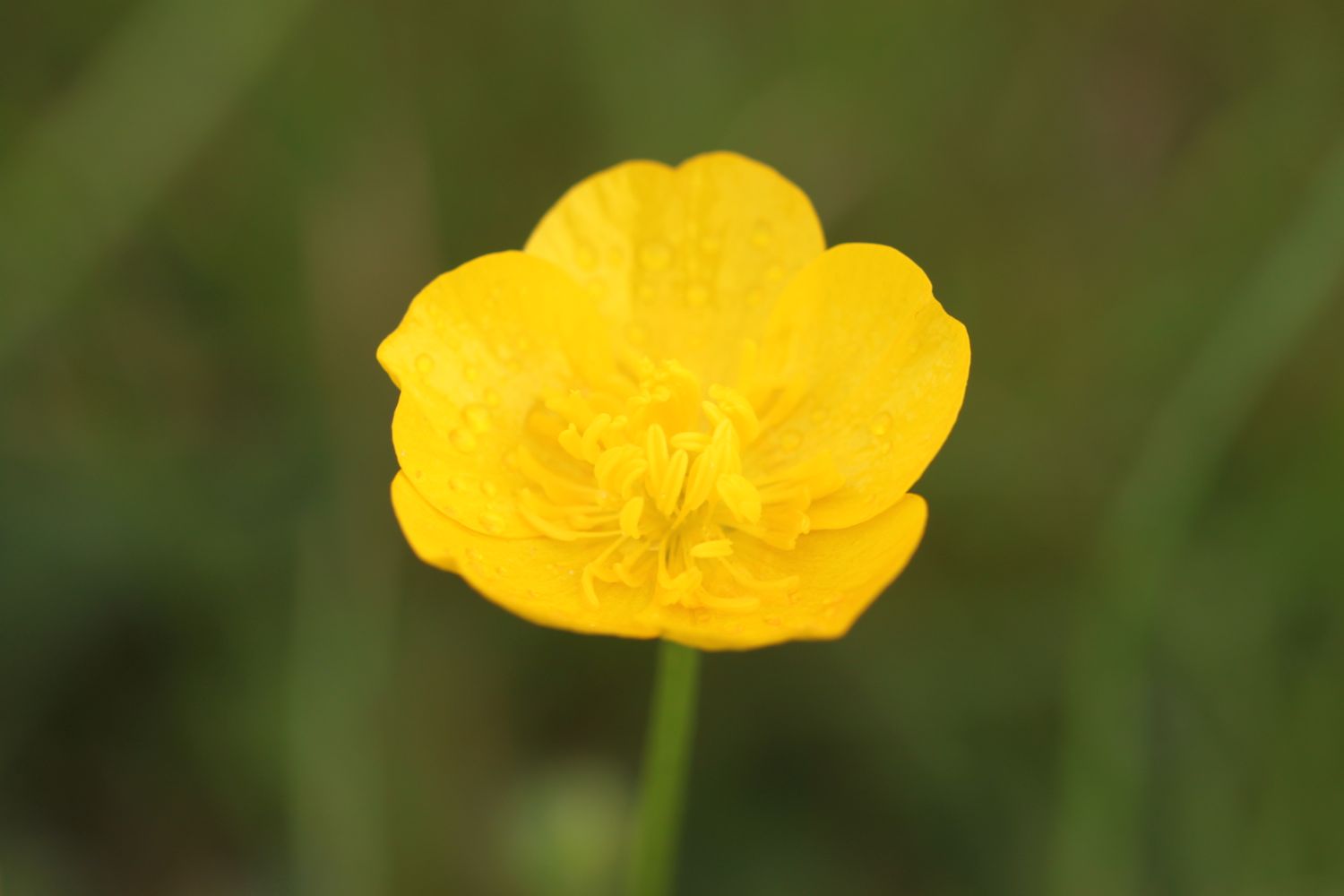
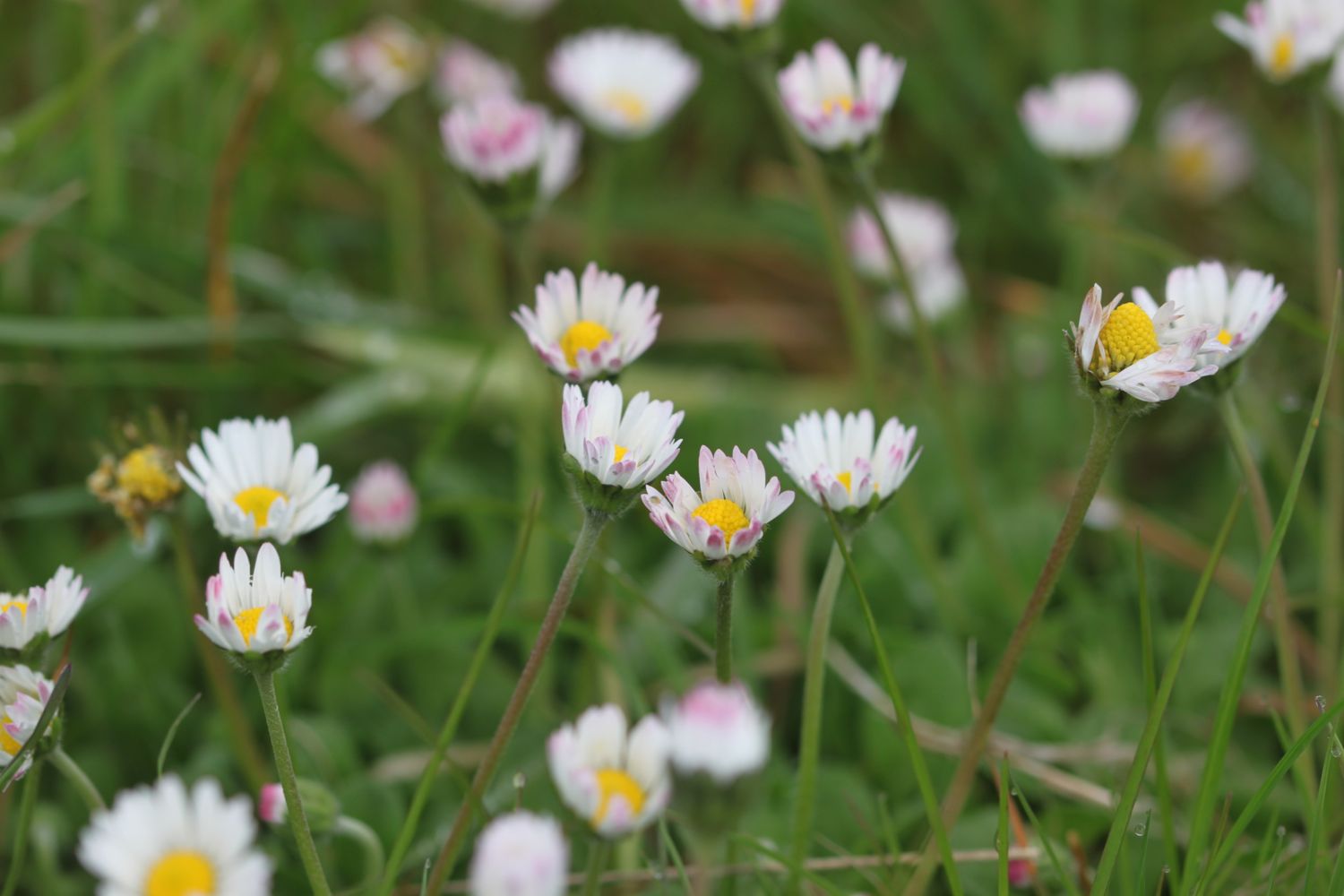
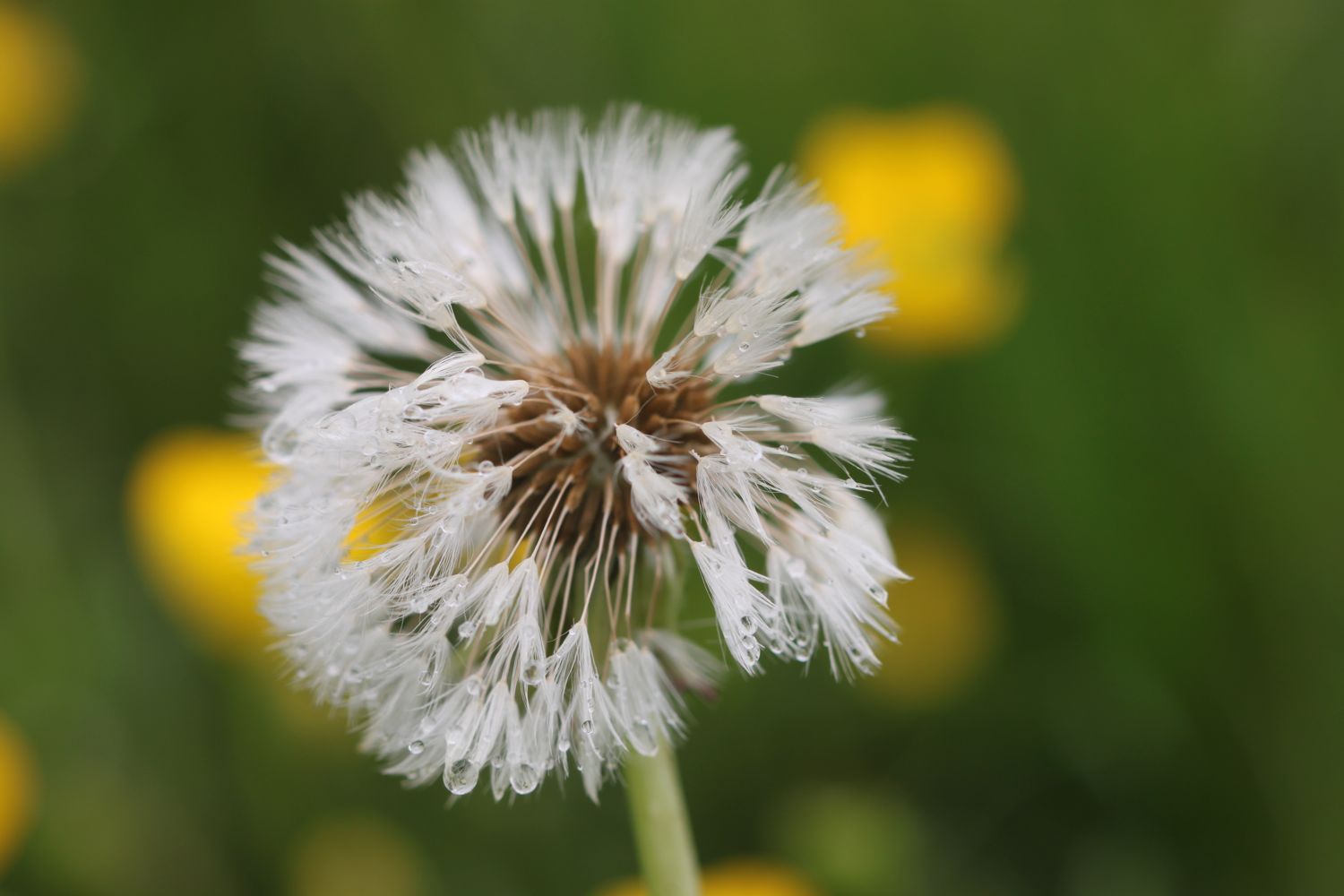
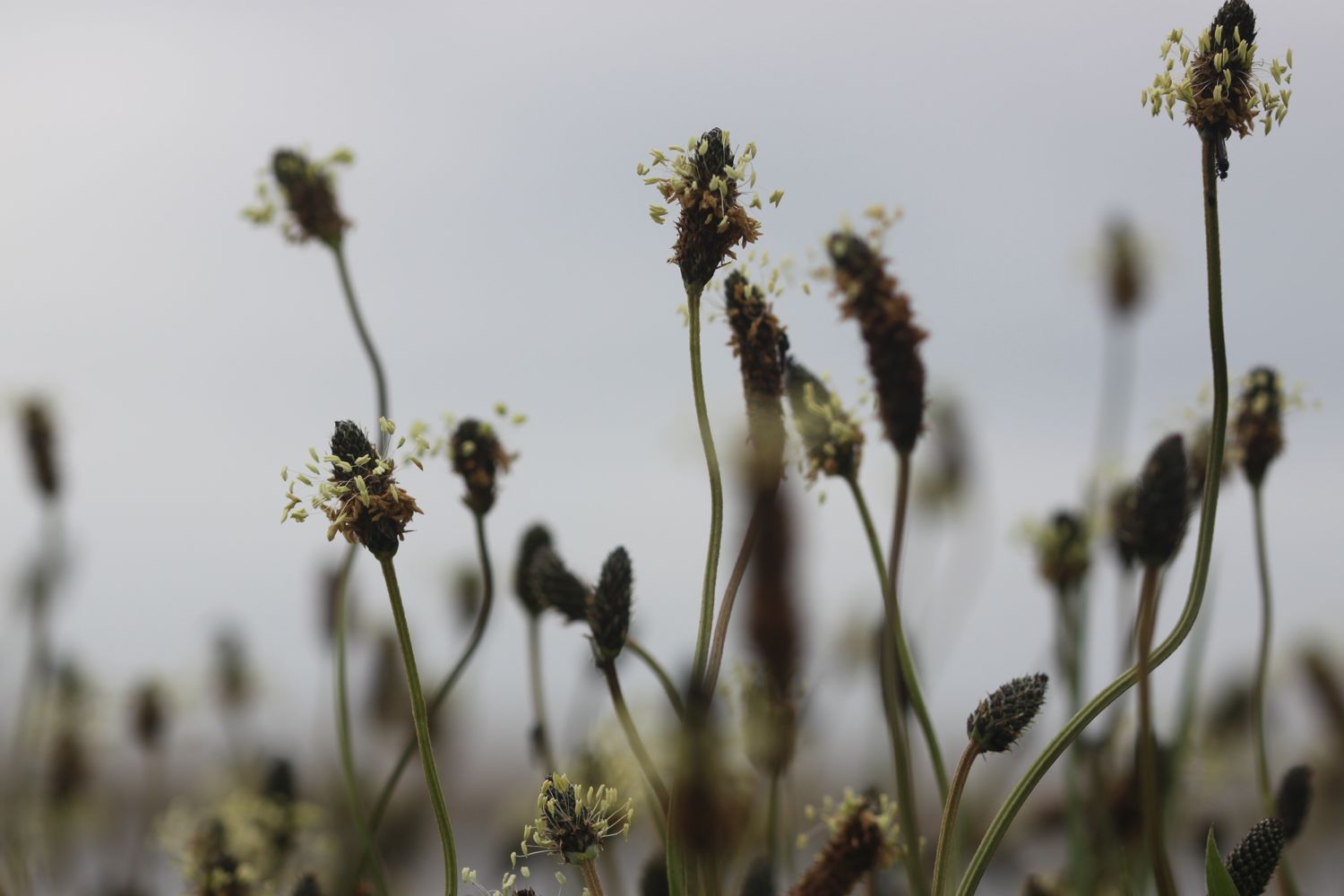
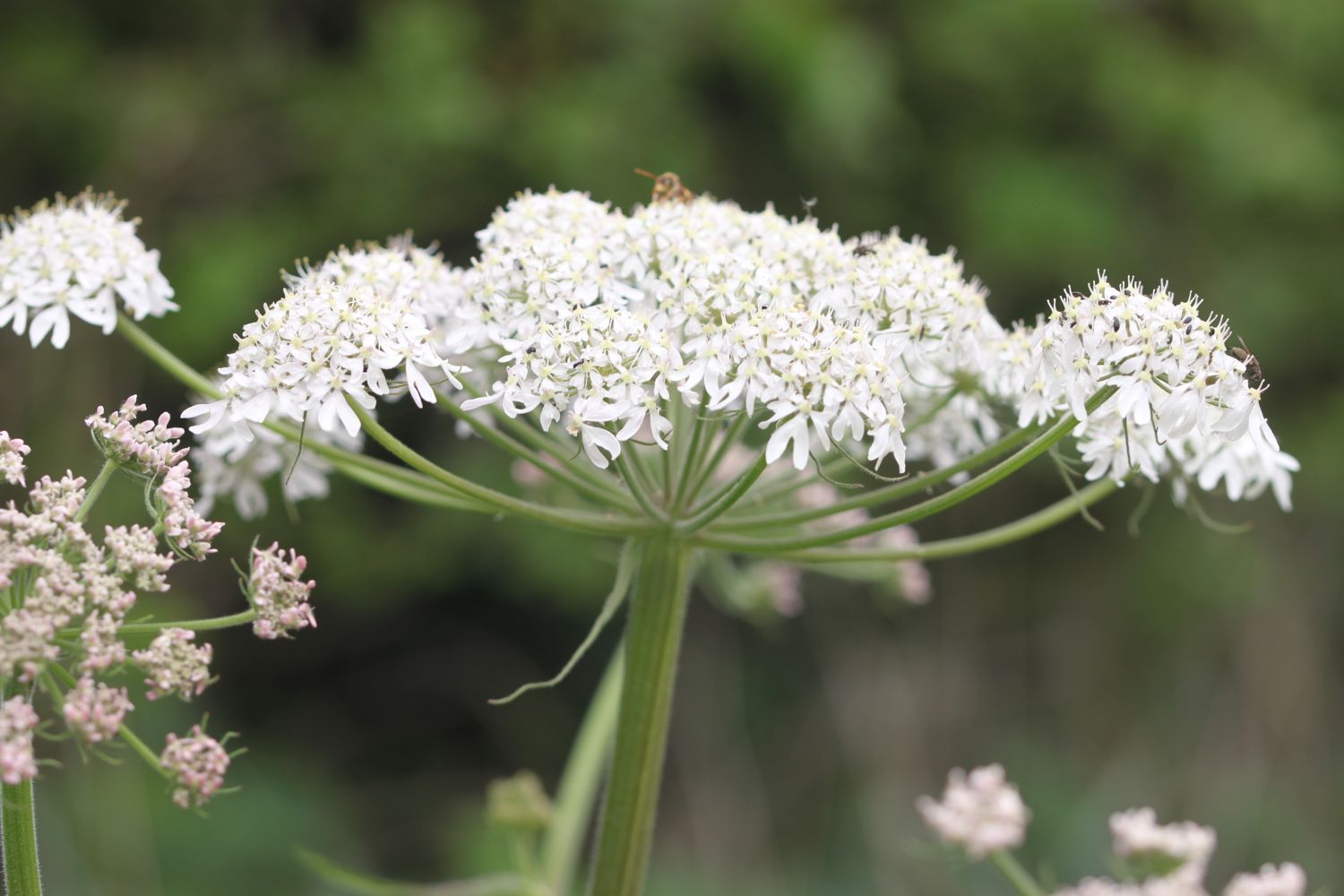
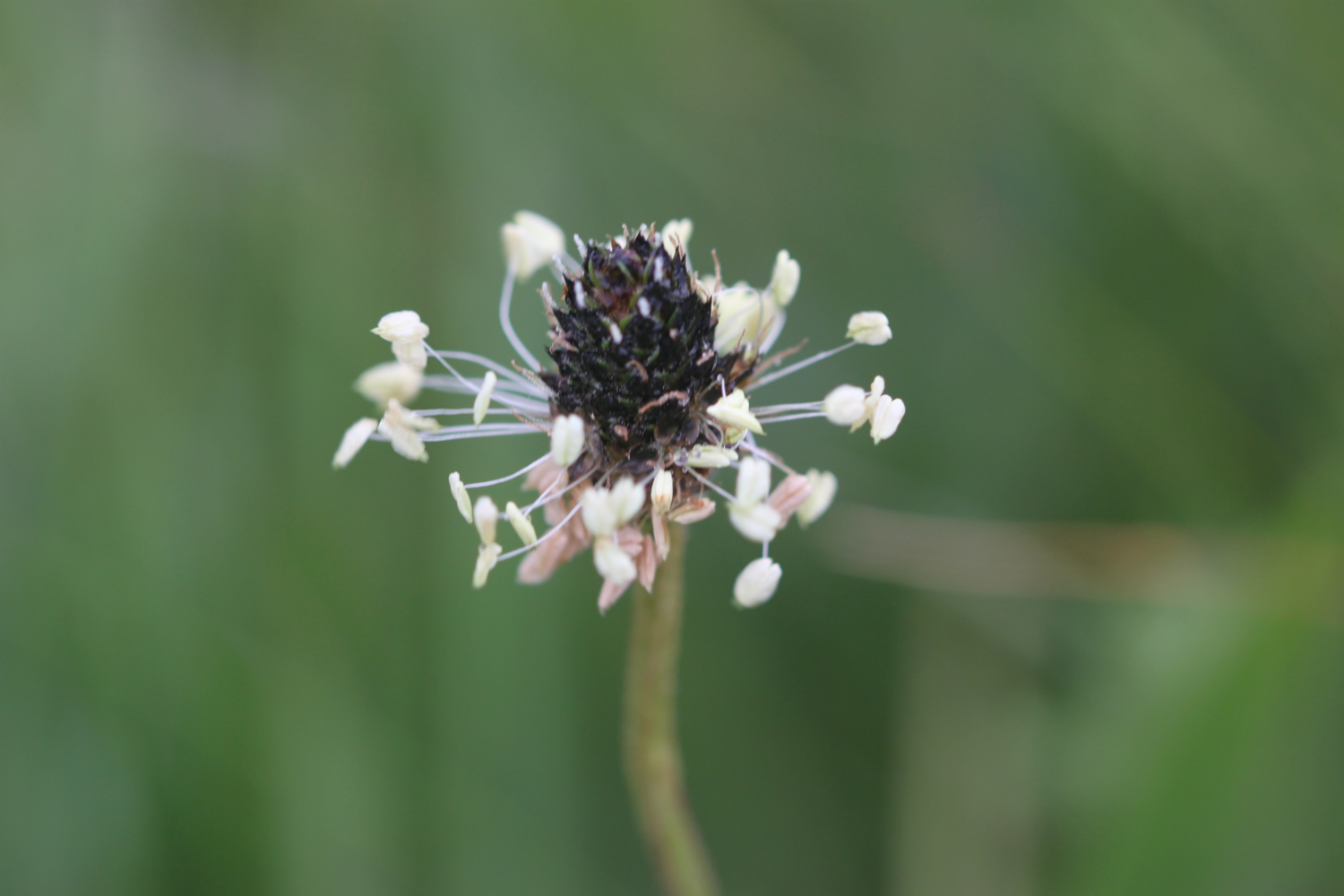
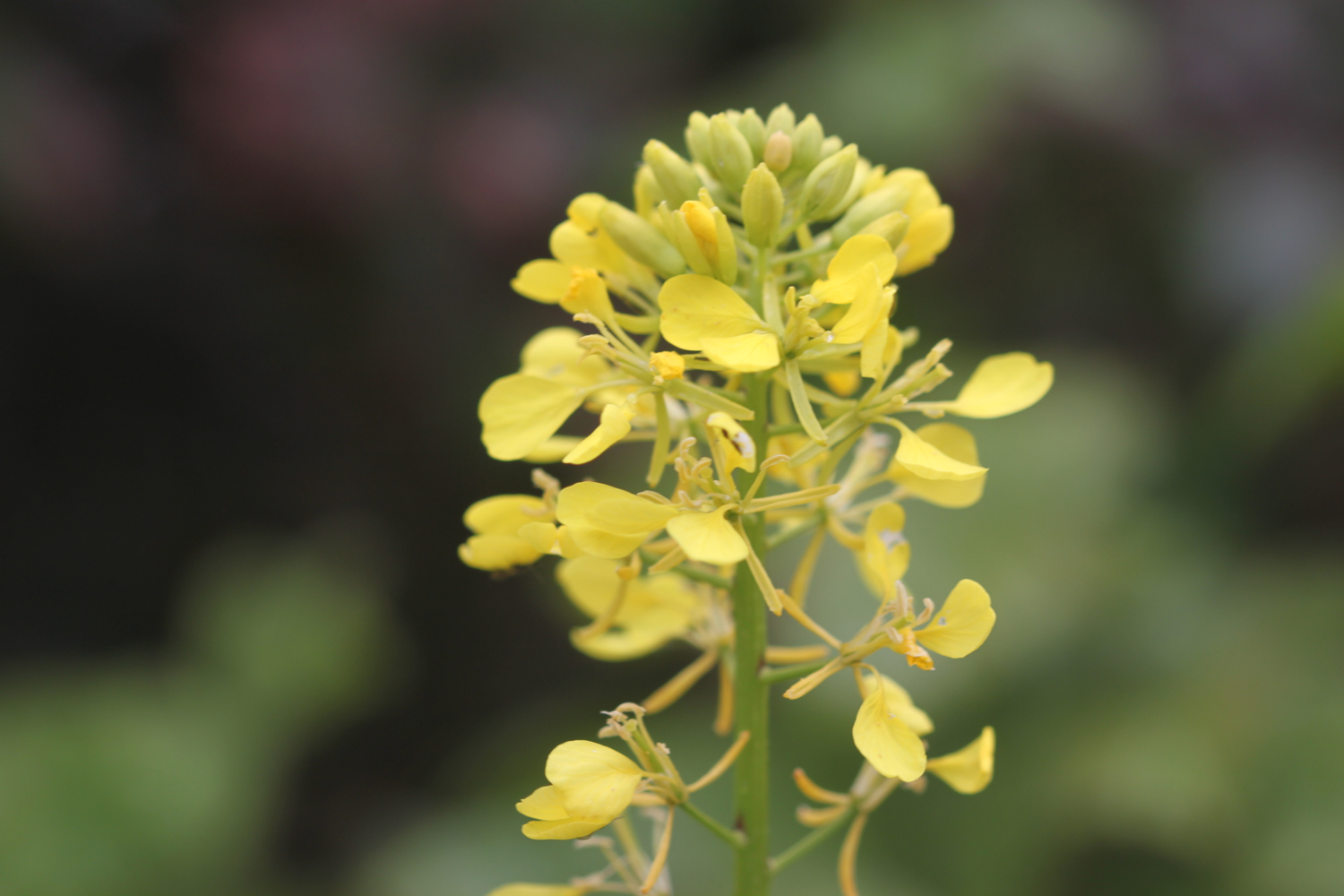
I attempt to take some photographs of the wild flowers around here but even they prove to be of the boring variety. I manage to find buttercups, daisies, dandelions, ribwort plantain and hogweed. I do finally see a bit of blue sky though.

blue sky!

 I continue along the shore to reach East Fleet where the remains of Old Church can be found. Only the chancel remains and the rest of the church was destroyed in a storm in 1824 which breached Chesil Beach. A herd of friendly cows greets me here.

cows

That's about where the friendliness ends though as barbed wire seems to be covering every bit of wood I cling on to and I'm threatened by electric fencing.

I come across a blue butterfly but I have no idea how to tell the different species apart. Maybe a holly blue?

holly blue butterfly?

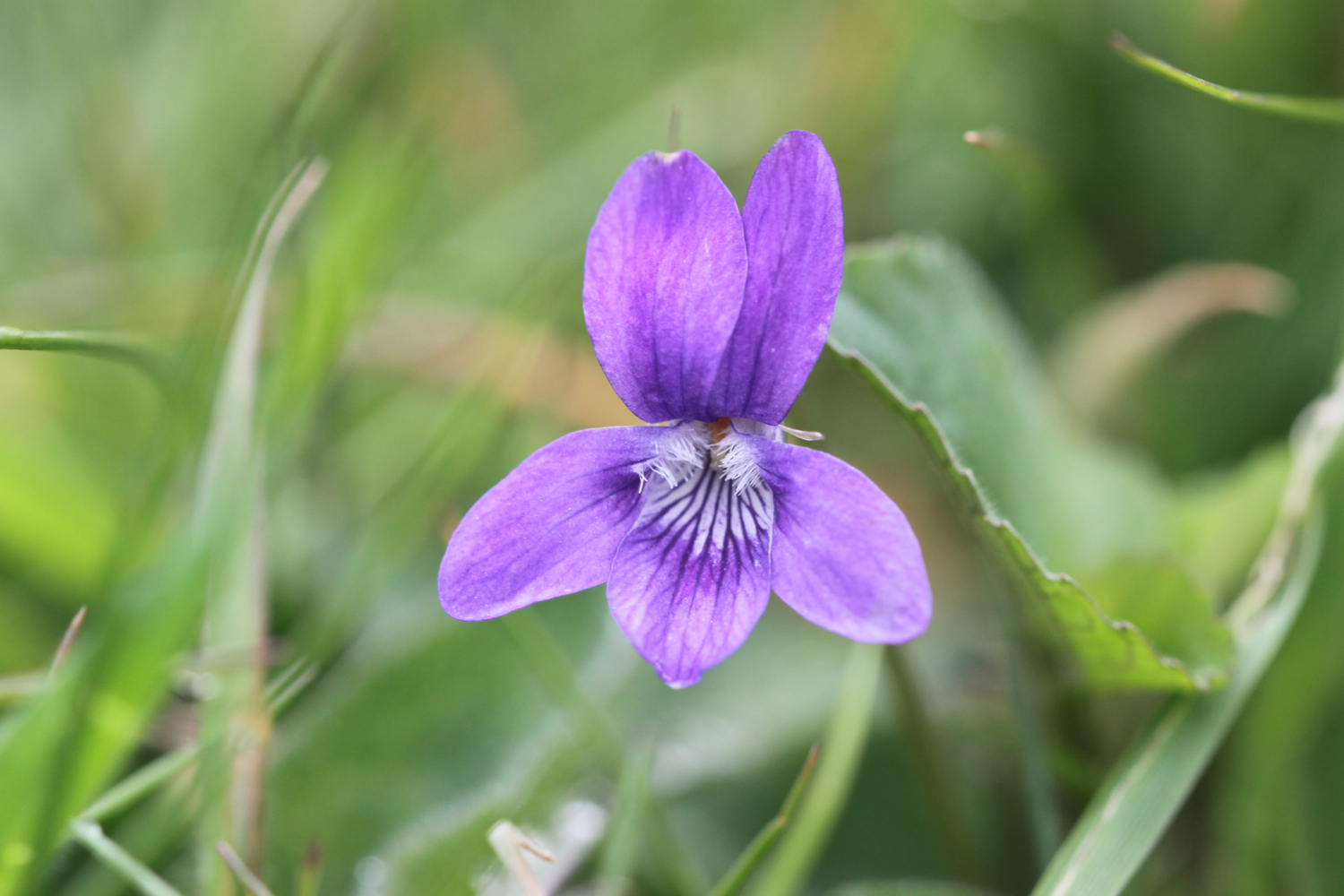
Chickerell Rifle Range is reached and I'm threatened by more signs. The red flags weren't flying today so I was able to cross through the range without any problems. It's a stinky, rutted, muddy path though. I do come across some dog-violets which try to brighten the day..

dog-violet

I come across one of the mankiest, overgrown, muddy and slippery, nettle infested footpaths I've ever come across and I'm now cursing the fact that I haven't had a mobile phone signal all day.

I carry on to reach Lynch Cove before having to head inland again to bypass the Wyke Regis Army Training Area. There doesn't seem to be any training going on.

I continue back to the coast before finally reaching a beach at Pirate's Cove. The path passes in front of a caravan site and the Crab House Cafe. It occupies a ragged boatyard of a site overlooking the eastern end of the Fleet lagoon, just before the bridge to the Isle of Portland.

ferrybridge

I finally come across some colour in the form of clumps of sea thrift.

sea thrift

I pass the Ferrybridge Inn at Ferrybridge which from behind looks like it is unoccupied - what a lovely sight to see - before heading on to the end of the walk at the Ferrybridge car park next to Chesil Beach Visitors Centre.

chesil beach centre

I still don't have a mobile phone signal. WTF! And none of my gps tracking apps have worked today. Turns out that on rebooting my phone I do have a perfectly good signal so I may well have had a decent signal all day if I'd done that at the start of the walk.

We drive past the Ferrybridge Inn on our way back to our cottage and it is indeed boarded up. What a sad end to the day.

FLORA AND FAUNA

Flora and fauna encountered on the walk today includes :-

  • sheep
  • pheasants
  • chiff chaffs
  • song thrush
  • watercress
  • swans
  • rooks
  • skylarks
  • chaffinches
  • rape
  • herons
  • little egrets
  • cormorants
  • wall brown butterflies
  • red admiral butterflies
  • friendly cows
  • housemartins

PODCAST

The podcast of today's walk is now available. You can subscribe via the iTunes store or listen using the player below.

MARKS OUT OF TEN?

According to my phone I've walked I don't know how many miles today - maybe 12 miles - as my phone failed me, which amounts to 29199 steps. I'm torn by this walk as I love Dorset but the weather has been iffy, the paths have been overgrown, nettle infested, muddy, slippery, barbed wire encrusted, electric fencing bound, dog shooting threatening and militarized. To top all of that I've often been far from the sea and without a phone signal. Two out of ten! I may not be back here for a while.

My total ascent today has been, err, I don't know. Did I mention that my phone failed me?

No map today as my phone failed me. It has not been a good day.

lyme regis to abbotsbury

south west coast path

monday, 9th may 2016

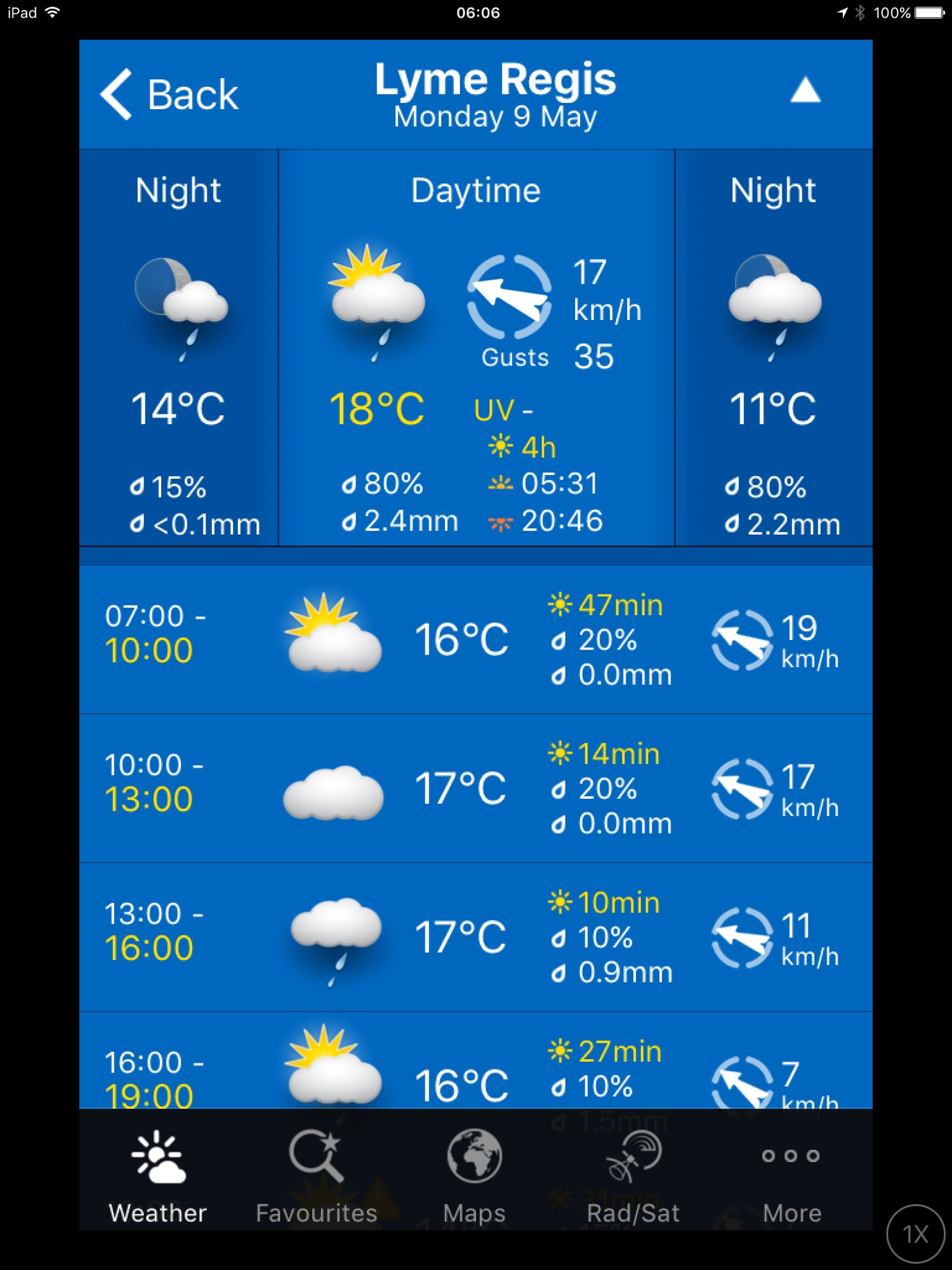
It feels like the last two days I've tested the good weather to its limits so I may well be back to manky 2016 weather later on today. Still, it's better than the weather forecast for tomorrow which doesn't look good. I was going to have a rest day today but due to tomorrow's forecast I've decided to continue walking.

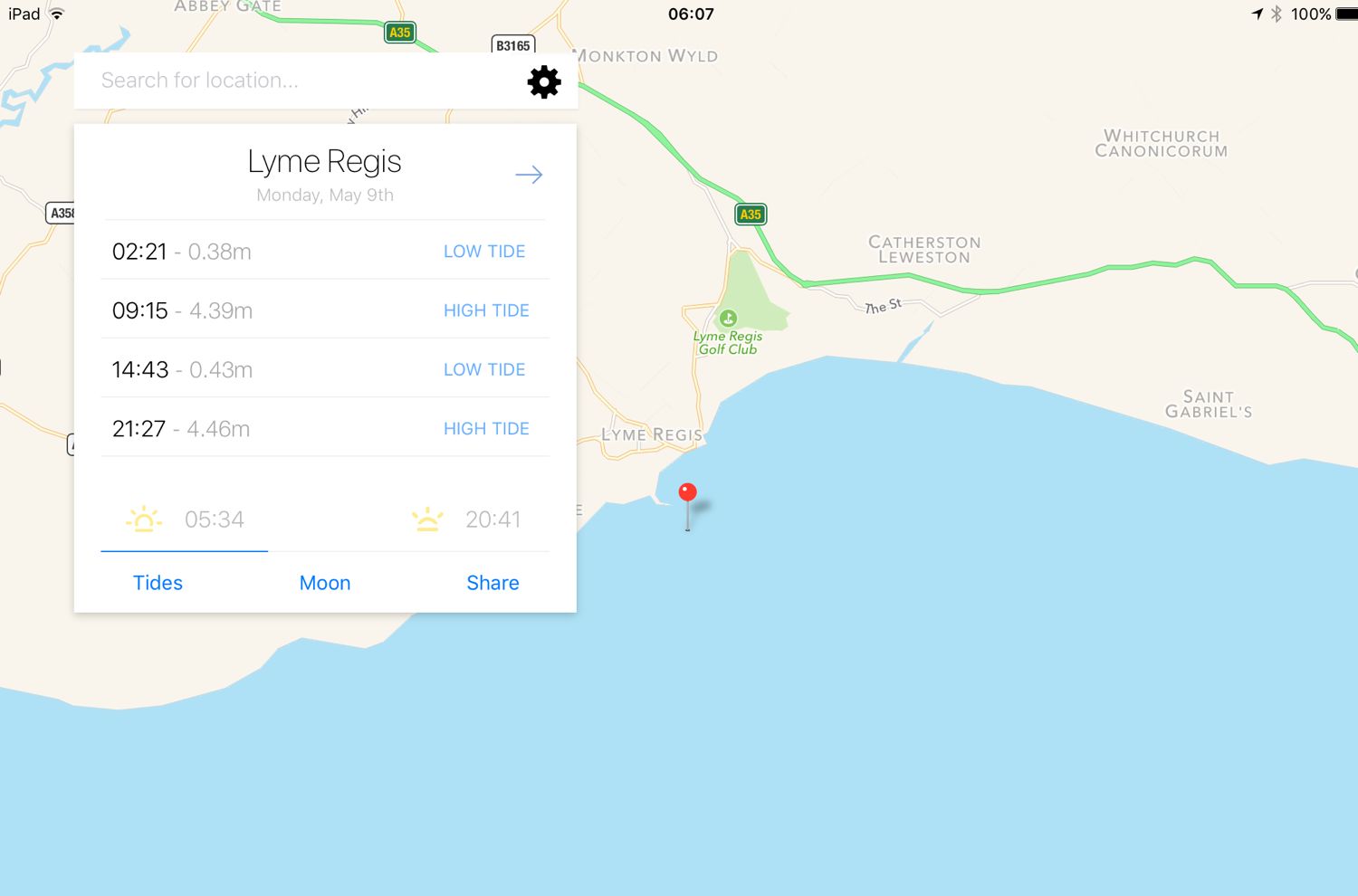
Lyme Regis high tide: 09:15

Lyme Regis low tide: 14:43

I start the day back at the car park above Lyme Regis. A sign here tells me that there are 114 steps down to the foreshore. This is all new to me so I climb the steps down to the foreshore where I have a view of the Black Ven landslip and the coast path walk for the day is laid out in front of me.

I can see over to Golden Cap and in the distance, East Cliff and West Cliff at West Bay and Burton Bradstock and just beyond those, Chesil Beach stretches out to the Isle of Portland. This is one of my favourite stretches of coast on the whole coast path.

 I climb back up to the Charmouth Road Car Park where a sign tells me about the recent developments here. The Church Cliff to East Cliff stabilisation works were completed in 2014 at a cost of £19.5 million, providing protection to around 400 metres of the coastline and 480 properties. It includes the new footpath I've just walked on from the new sea wall to Charmouth Road Car Park.
 Today's walk has typically in the past been dogged by landslips resulting in several inland diversions starting with an inland diversion at Lyme Regis and probably ending with a slight diversion inland at Burton Bradstock.

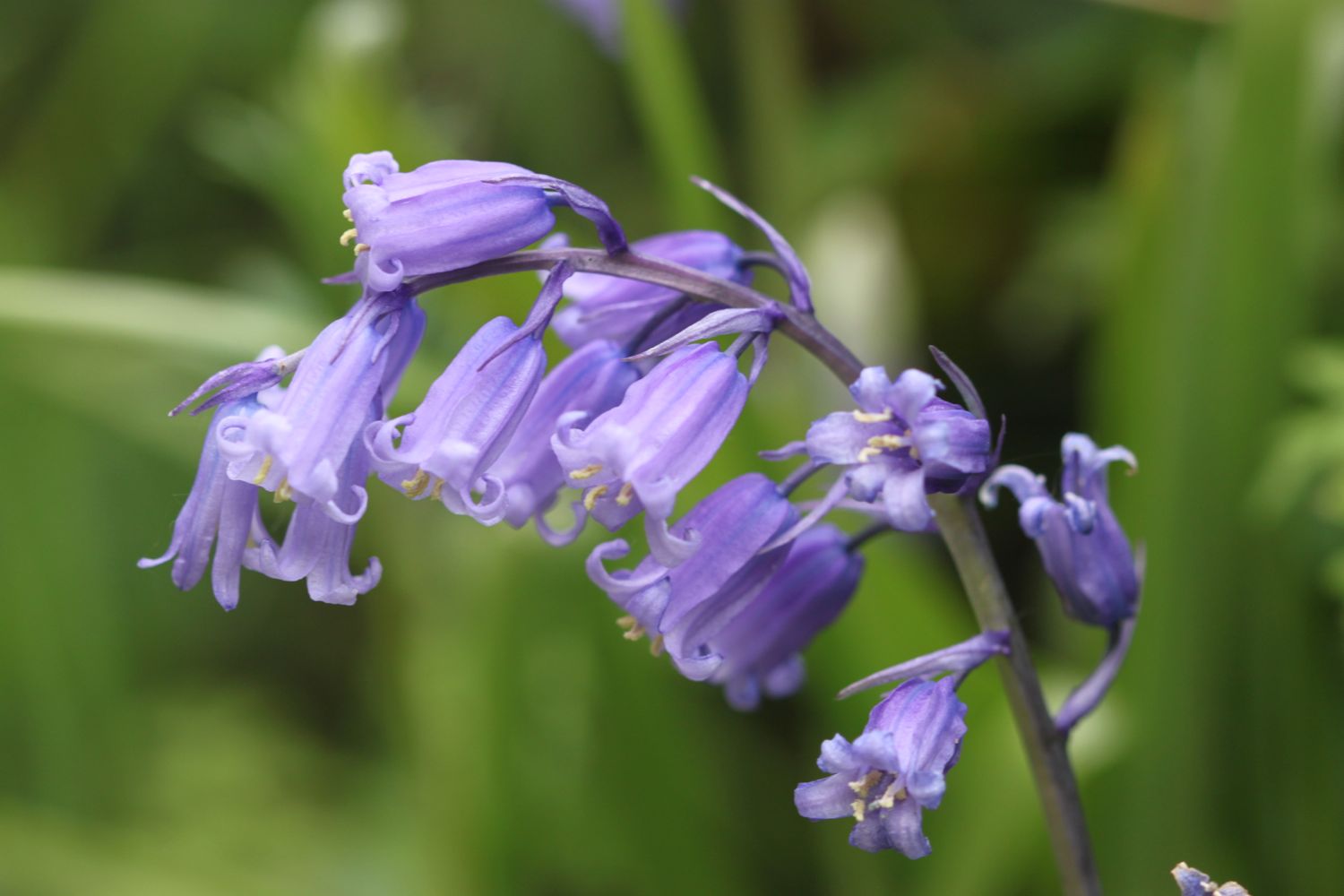
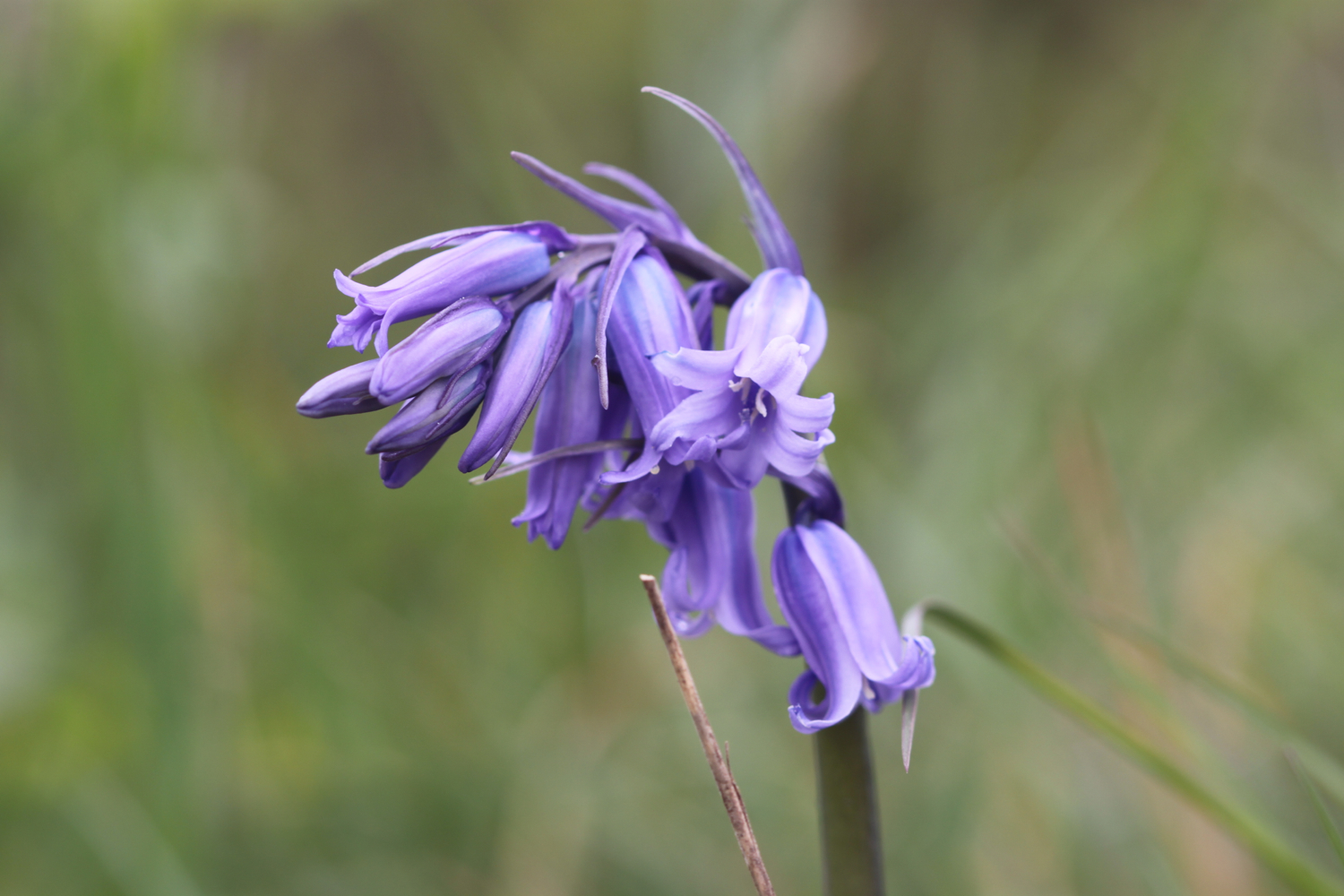
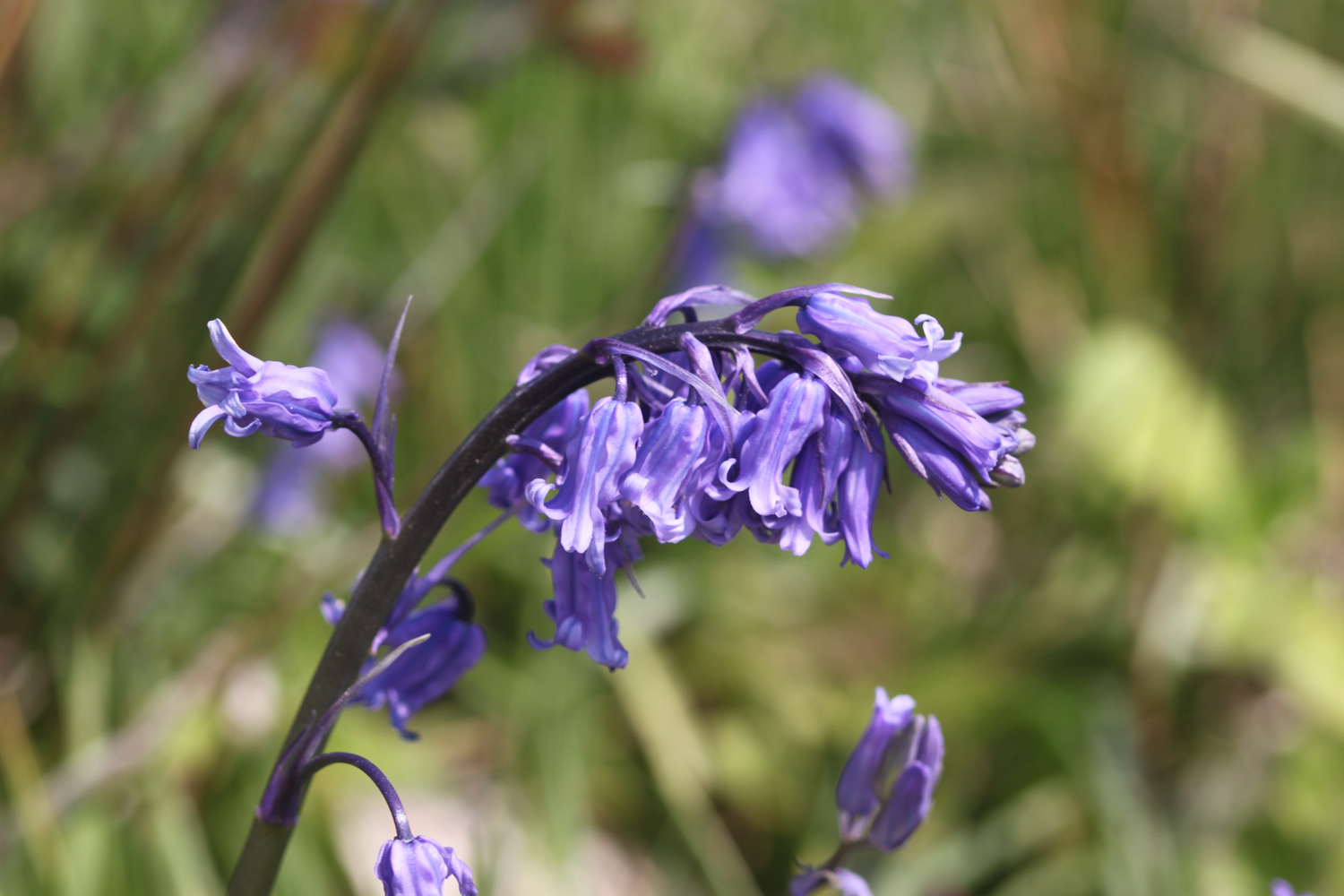
I cross the car park and head upwards through fields and woods where I come across my first bluebells of the day.

bluebells

I'm then dumped out onto a busy road above Lyme Regis which I follow until a sign points me to a path through Lyme Regis Golf Club. Dorset golfers seem to be rubbish! I watch one person tee off, the golf ball hits a tree and the ball pings off 50 metres behind where he teed off. His second shot hits another tree and lands on a green but not the green he was aiming for.

I continue walking along the golf course and come to a path made of scallop shells. Here the coast path signs run out so after pondering which direction to take I head through some woods and I come out onto the main road into Charmouth next to the Fernhill Hotel.
It is now an uneventful walk through the back streets of Charmouth.

 It has been years since I've seen Charmouth because of the diversions so I decide that it is time I visited the beach here again so I head off of the coast path and descend down towards the beach where I come across some beach huts and the Charmouth Heritage Coast Centre.

beach huts on charmouth beach

charmouth heritage coast centre

I wander along the beach here and do a bit of fossil hunting.

I head up from Charmouth Beach to rejoin the diverted coast path and gradually amble along the path, passing behind Seadown Holiday Park and past the fire station and the old toll house. I turn right at Stonebarrow Lane and it's now a steep and long climb upwards towards Stonebarrow Hill. I enjoy the wild flowers in the hedgerows.
I come to a break in the vegetation where I have lovely views from the lane back to Charmouth.
view from stonebarrow lane

I continue to the top of Stonebarrow Hill where I come across a National Trust shop located in an old radar station.
national trust shop

I have lovely views over to Golden Cap from up here.

view to golden cap

I head back down a footpath as it rejoins the coast just before Golden Cap, heading through a field full of buttercups.

buttercups as far as the eye can see

I climb slowly up on to the top of Golden Cap.

the climb up golden cap

It's a long way up at 627 feet and the highest point on the south coast. I enjoy the magnificent views from up here. In one direction I can see out to the Isle of Portland and in the other direction back to Lyme Regis and beyond.

golden cap back to lyme regis

golden cap towards the isle of portland

panorama from golden cap

Golden Cap is named after the distinctive outcrop of golden greensand rock at the tip of the cliff and is owned by the National Trust. There is a trigpoint up here which was covered in visitors.

I hang around for a while admiring the views before taking the long descent down to the Anchor Inn (@anchoratseatown) at Seatown.

anchor inn

I crunch my way across the pebbly beach before heading across a footbridge at the car park and then climb back onto the cliffs.

view back to seatown

I climb high above Seatown and then it's now another descent, this time down to the village of Eype where there's another pebbly beach at Eype Mouth

eype mouth

Another ascent and descent over cliffs takes me to the charming West Bay.

descending to west bay

I haven't brought any provisions with me today so I grab a bag of chips and happily munch on them next to the harbour, admiring the views out to sea.

I've lost count of the number of times I've visited West Bay, but it's an awful lot. I round the harbour passing The George (@georgewestbay), the Bridport Arms HotelThe West Bay Hotel (@westbayhotel), the amusement arcade and all of the food shacks dotted around the harbour.

west bay

I pass the newsagent where I grab a much needed ice lolly and then pass the fishmonger and head out onto the sandy beach. It's definitely a beach day today so I ignore the iconic, crumbling yellow sandstone East Cliff and walk along the beach instead.

east cliff

At Freshwater Beach Holiday Park I have to head inland in order to cross over the River Bride.

freshwater beach holiday park

Normally I'd continue inland to walk through Burton Bradstock but today I stay on the coast path and dart back out onto Burton Cliff which is also crumbling away. The weather is now closing in on me and it starts to rain and become foggy so it's time for my waterproof jacket.

The coast path diverts inland slightly towards Hive Beach due to a fatal cliff fall in 2012 and I pass Hive Beach Cafe (@hivebeachcafe) on my way back down to the beach.

TODAY'S GEOLOGY LESSON

The distinctive cliffs between West Bay and Burton Bradstock date from the early Jurassic period and are a bright yellow colour, made of 190 million year old yellow Bridport sandstone. 

Limestone beds made of Inferior Oolite, dating from the early to middle Jurassic period (180 million years or so ago) can be found below the cliffs.


I trudge my way above Hive Beach and then behind Cogden Beach before the coast path takes me inland behind Burton Mere. I continue on the path behind the beach and the path becomes shingle which is very difficult to walk along. I come across housemartins skimming across a stretch of water. I continue along the shingle to reach West Bexington where the beach is a lot more pebbly and noticeably now part of Chesil Beach.

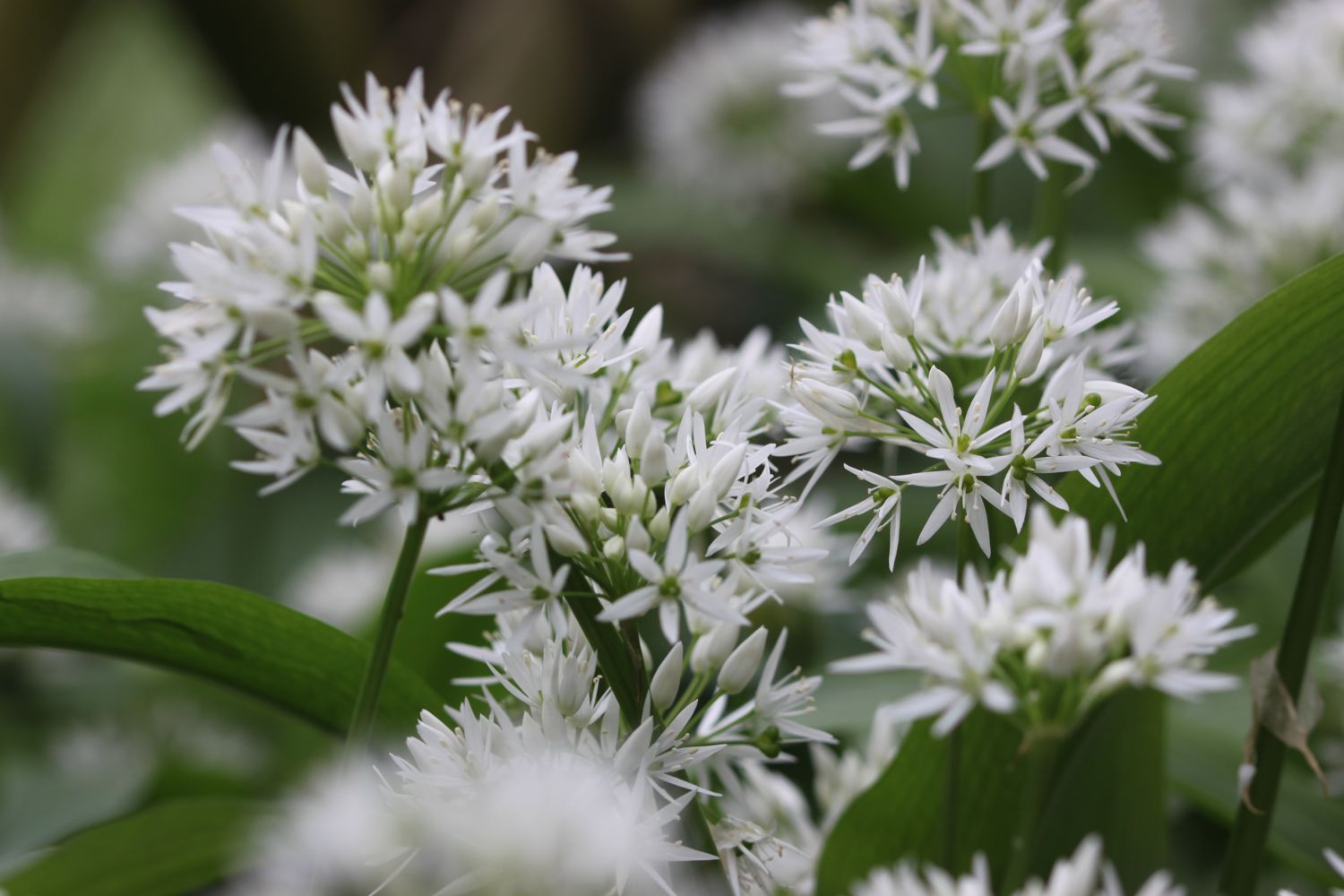
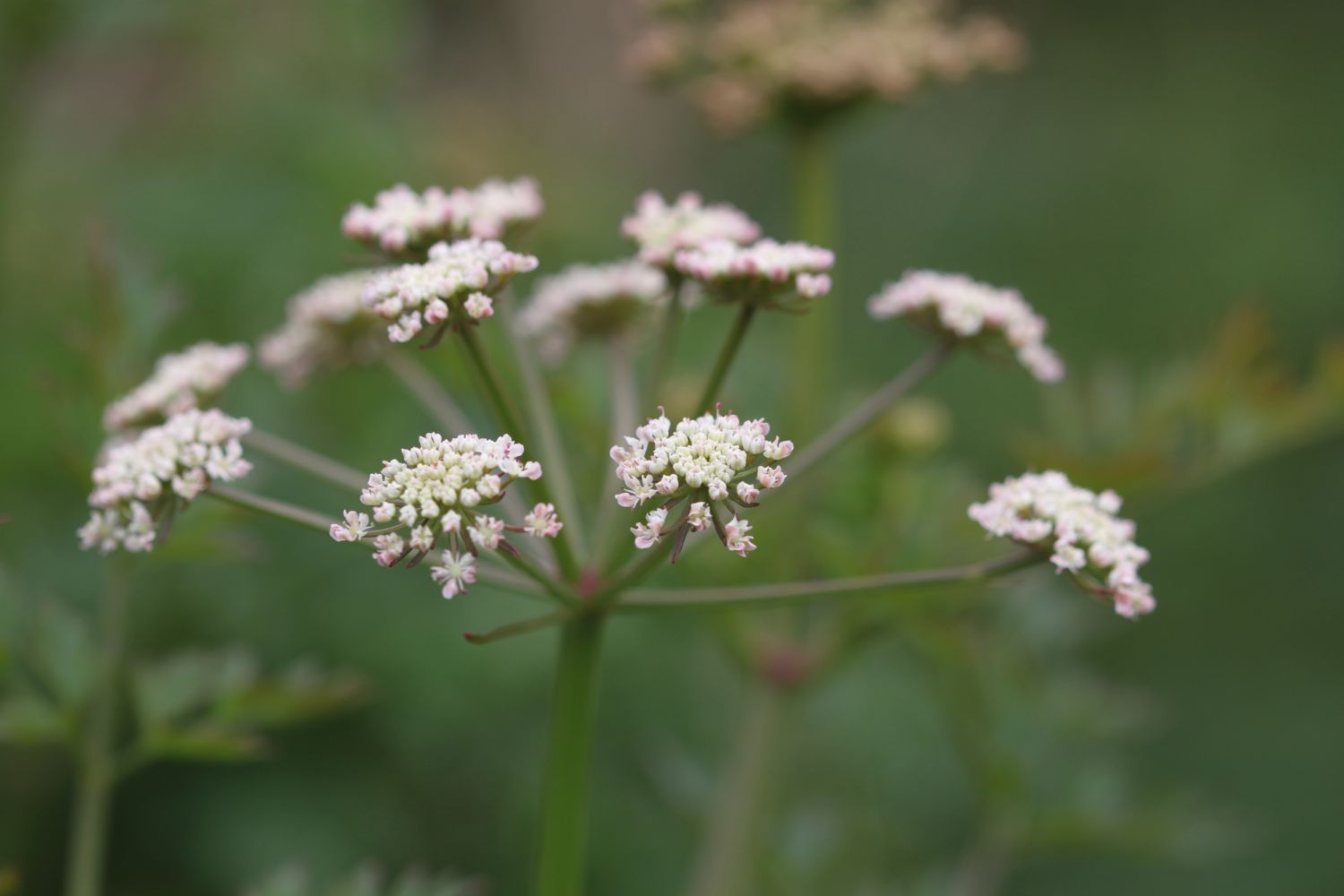
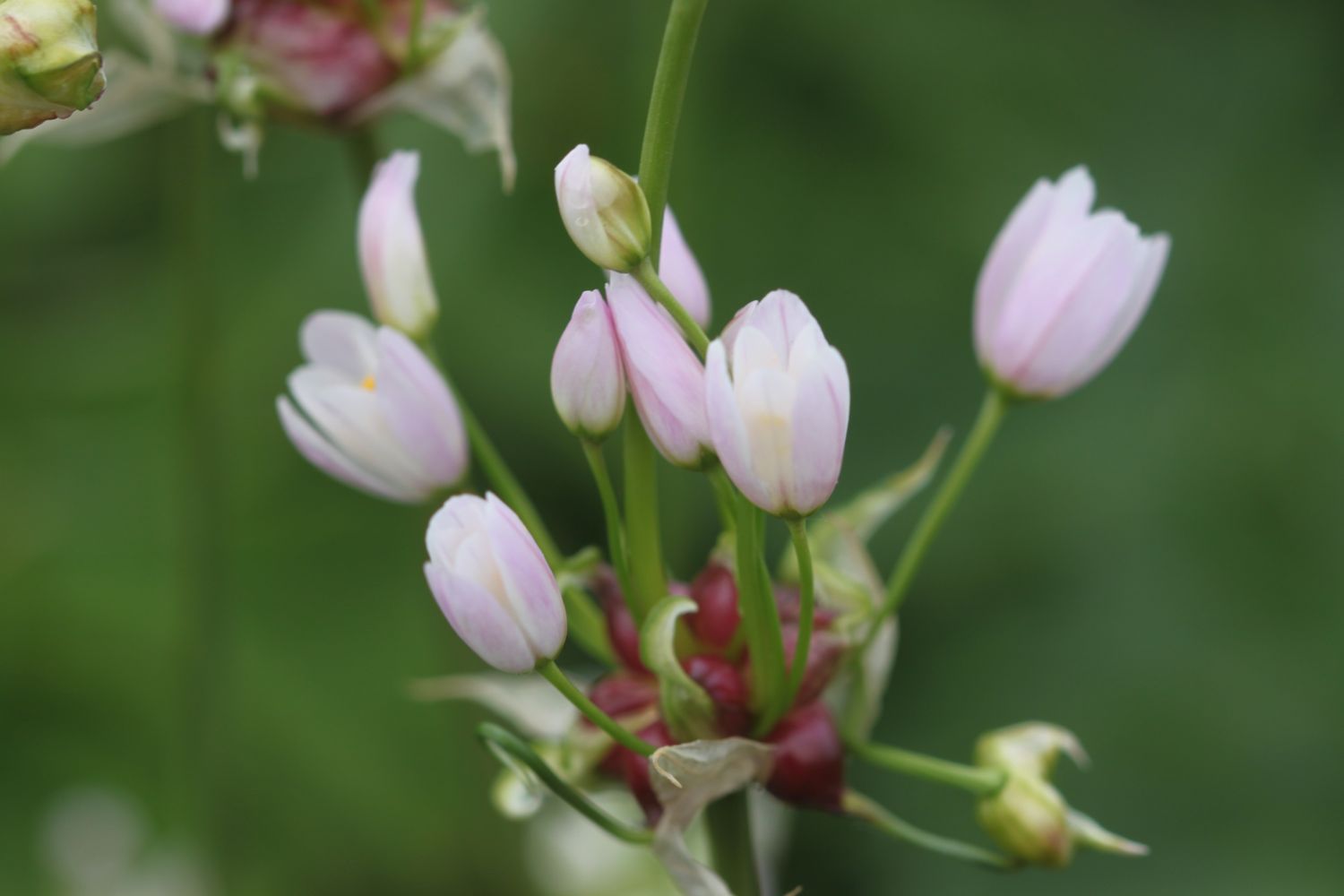
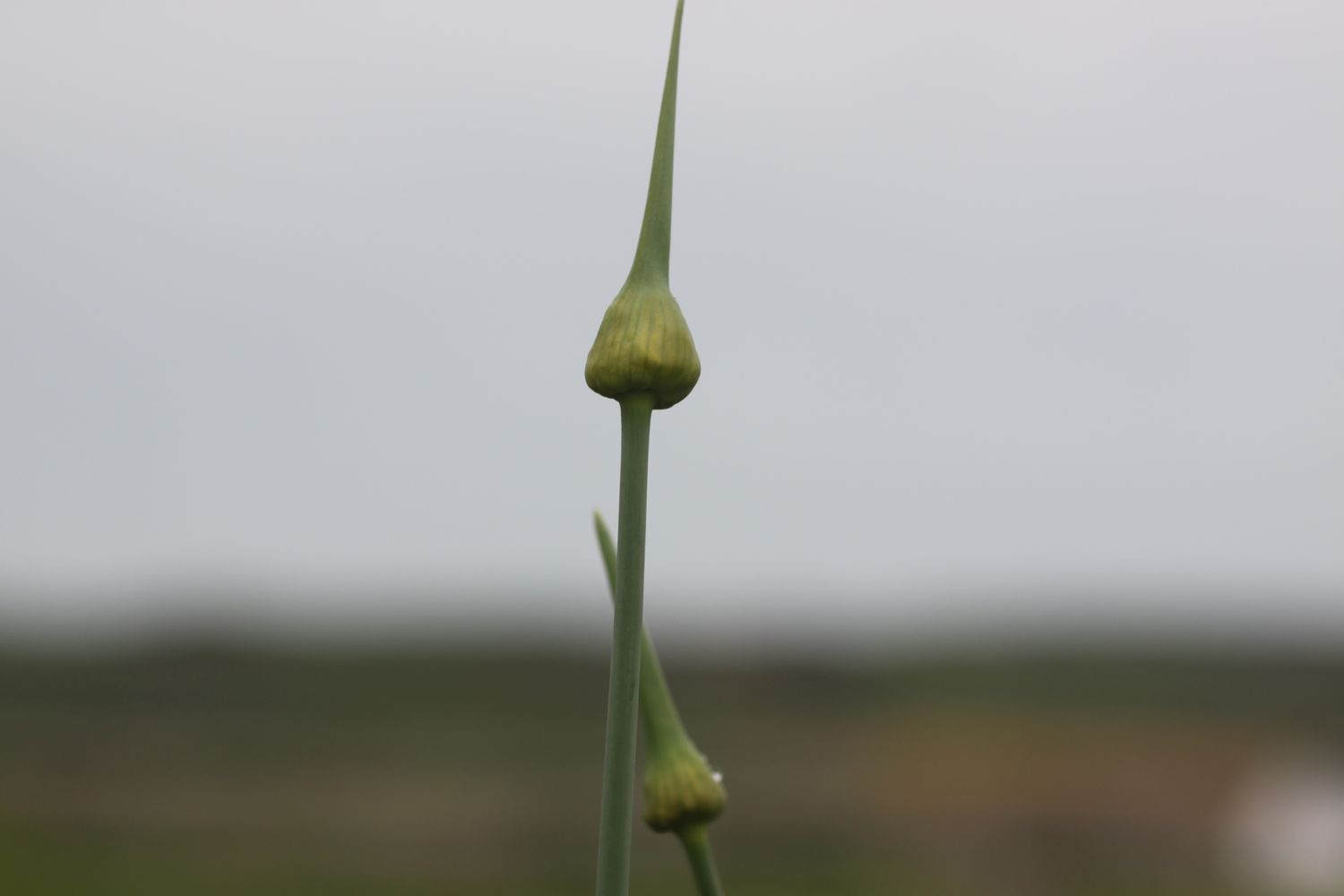
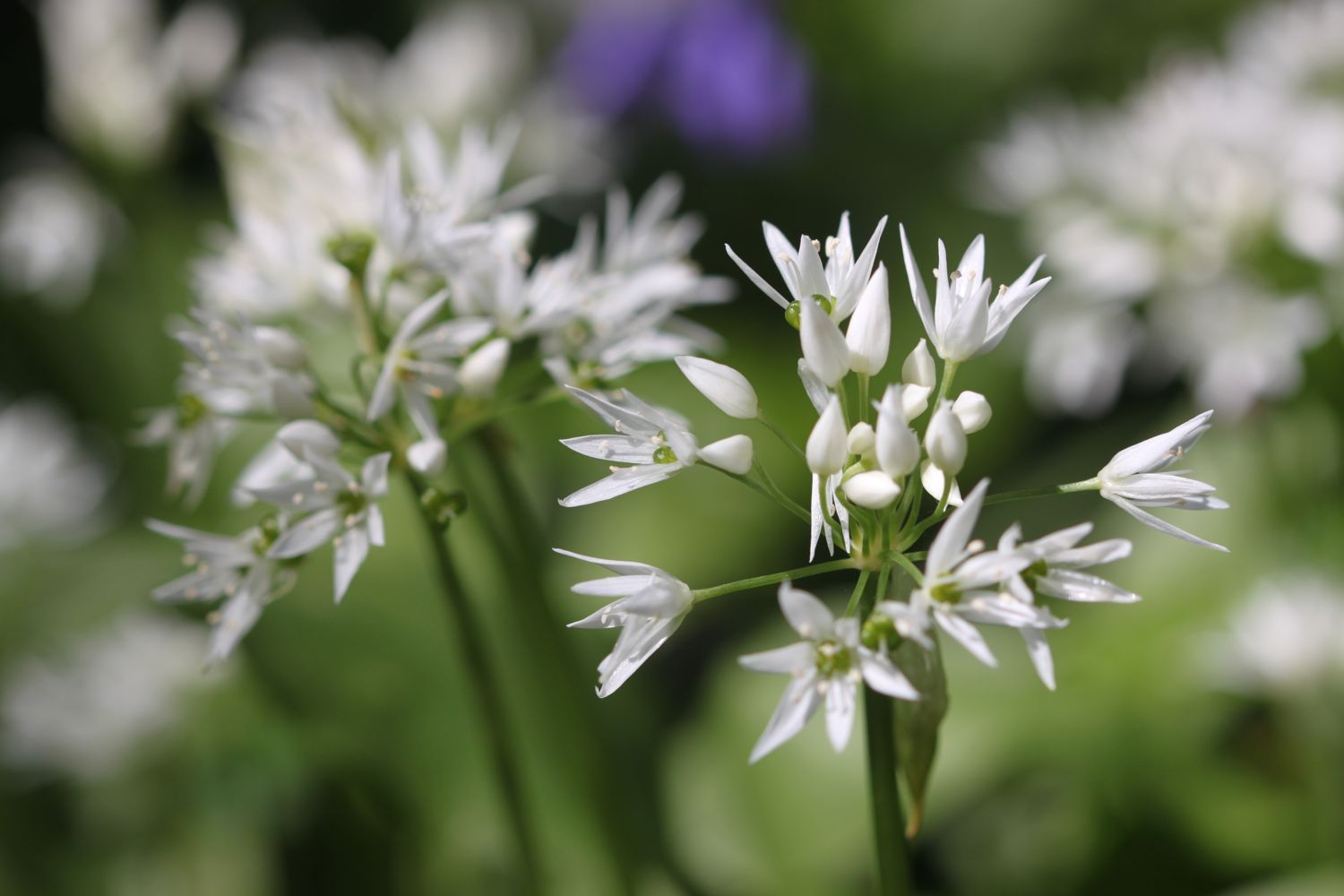
The shingle path continues inland of the beach before finally becoming a metalled path and the walking becomes a lot easier. The weather improves slightly so it's off with the waterproof jacket and I can finally enjoy some more of the wild flowers around here. There are what appear to be some kind of allium, possibly crow garlic?, everywhere.

I continue along the path to reach the car park at Abbotsbury, and the end of today's walk. The views back along Chesil Beach where I've come from and onwards along tomorrow's walk should be magnificent, but unfortunately they are engulfed in fog.

Driving back to the cottage in the car, it doesn't half look and feel like I've walked a MASSIVE distance today! The body doesn't feel it though.

FLORA AND FAUNA

Flora and fauna encountered on the walk today includes :-

  • swifts
  • magpies
  • rabbits
  • buzzards
  • wild garlic
  • bluebells
  • herb robert
  • ribwort plantain
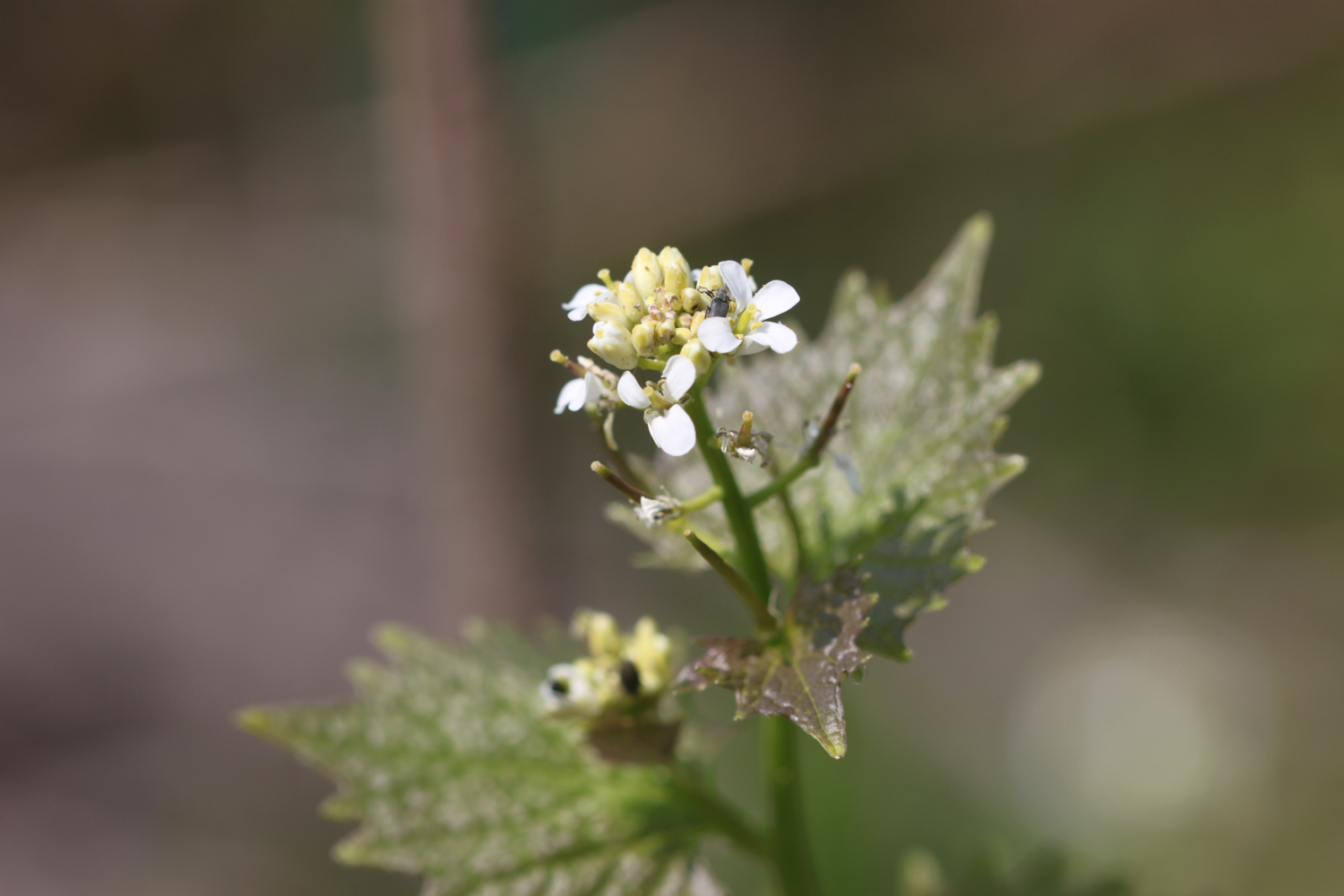
  • garlic mustard
  • larches
  • cow parsley
  • primroses
  • lords and ladies
  • chiff chaffs
  • sparrows
  • blackbirds
  • speckled wood butterflies
  • peacock butterflies
  • orange tip butterflies
  • one sorry looking orchid
  • sea thrift
  • sea beet
  • skylarks
  • housemartins
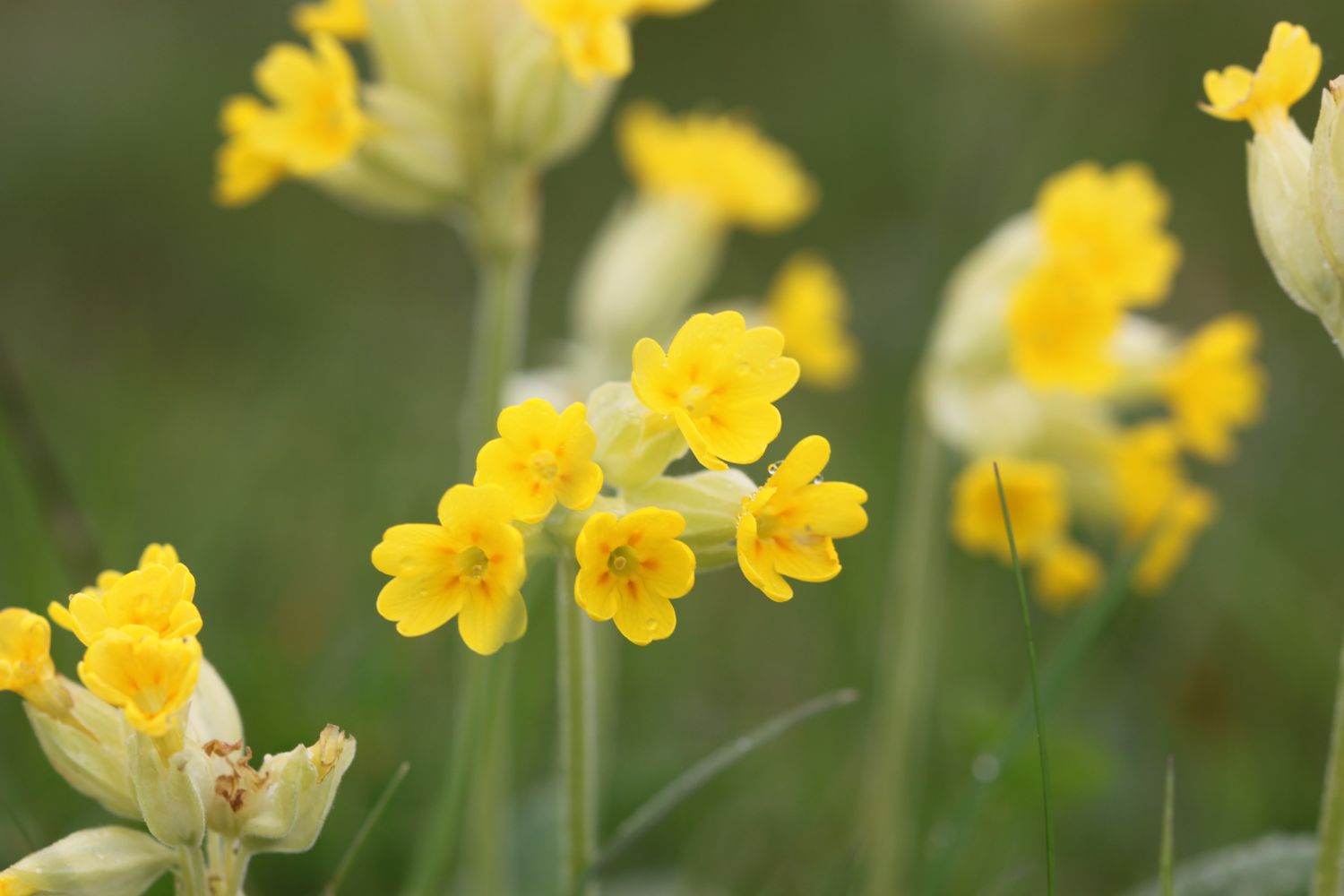
  • cowslips
  • bladder campion
  • crow garlic?
  • bird's-foot trefoil
  • bittersweet
  • marestail

PODCAST

The podcast of today's walk is now available. You can subscribe via the iTunes store or listen using the player below.

MARKS OUT OF TEN?

According to my phone I've walked 19.96 miles today - again, I wasn't expecting that distance - which amounts to 45196 steps. Blimey! I love this stretch of coast despite the inland diversions and some iffy weather at the end of the day doesn't spoil things. Nine out of ten!

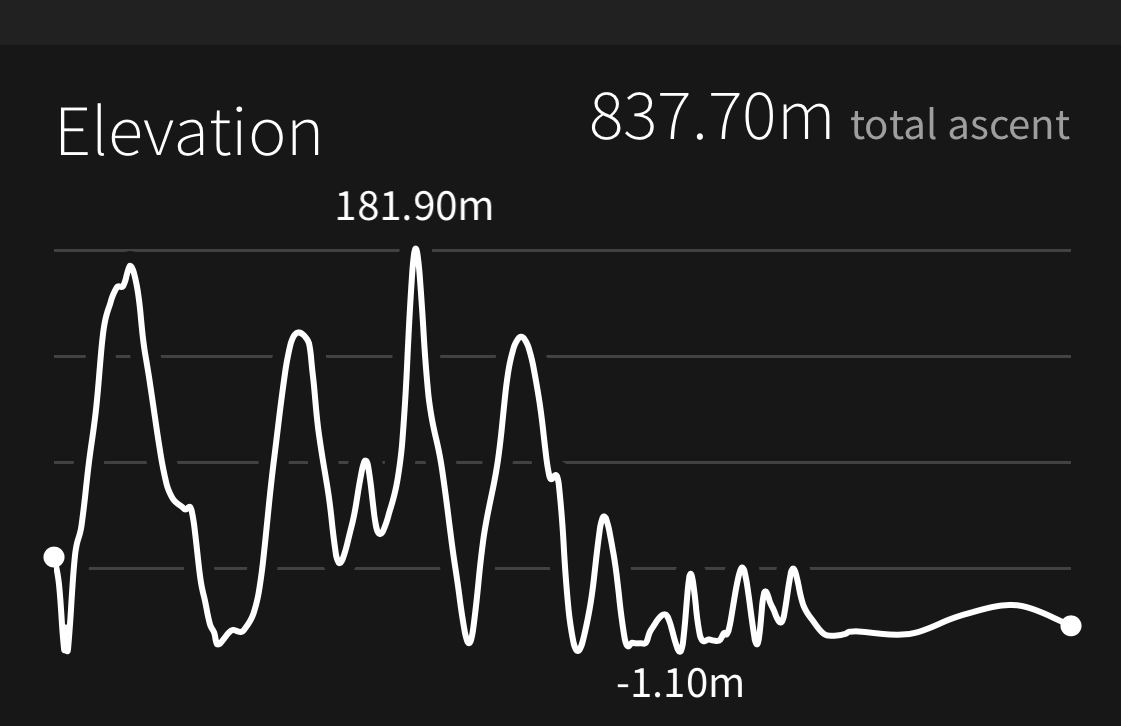
My total ascent today has been 837.70 metres, helped by the ascent of Golden Cap, or 2748 feet.

cowslips

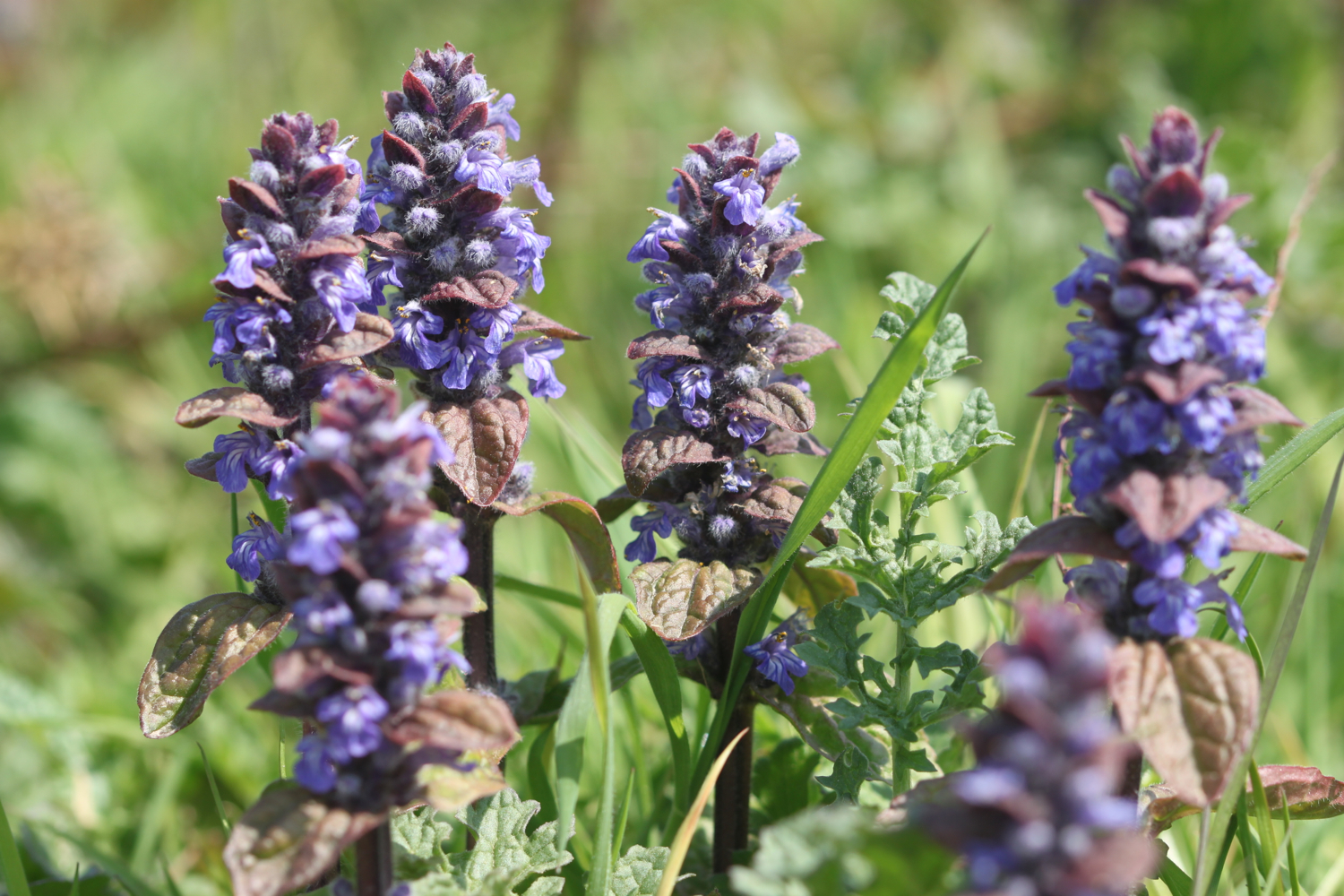
bugle

sidmouth to lyme regis

south west coast path

sunday, 8th may 2016

The weather forecast for the day looks to be fantastic and I should get sun all day long and it might even be HOT!!

Sidmouth high tide: 08:03

Sidmouth low tide: 14:13

I start the day back on the seafront at Sidmouth and wander along the end part of the esplanade again, admiring the rather fancy houses-turned-into-hotels.

sidmouth

At the eastern side of Sidmouth I pass Sidmouth Lifeboat (@sidlifeboat), an independent lifeboat covering a good chunk of East Devon. I cross Alma Bridge over the River Sid, name after the Battle of Alma, before climbing back onto the cliffs via a tarmac path. It's quite a climb up here (525 feet) but there are some benches at the top to rest and admire the view. It's going to be a roller coaster ride from here until I reach Beer. 

view back to sidmouth

I admire the bluebells up here on Salcombe Hill.

bluebells

The views ahead of me are spectacular.

the view ahead

The path continues past South Combe Farm and down some steps to Salcombe Mouth where there is a pebbly beach. I try to find an exit point but there isn't one. I do find some dreaded japanese knotweed though. After struggling to find an exit point I climb back up and find a sign pointing away from Salcombe Mouth. Must have missed that sign when I got here fifteen minutes ago. Whoops!

salcombe mouth

The coast path heads inland before climbing up on to the cliffs again at Higher Dunscombe Cliff. Did I mention that the views are spectacular.

more views back to sidmouth

Here can be found the Weston Plats where, in the 19th century, thanks to the unique micro-climate on these cliffs, local residents were able to produce early crops of flowers, vegetables and strawberries. By the mid 1960s the last of these plots had been abandoned.

After a walk along the clifftops the path descends on some steps to the beach at Weston Mouth where I come across a couple of optimistic anglers. The path climbs steeply yet again to the top of Weston Cliff.

weston mouth

The path ducks inland at Coxe's Cliff, where I pass a pig farm, before heading over grassy clifftops where the path goes through Berry Camp Fort, an Iron Age hillfort. Other lumps and bumps around here indicate the remains of an Iron Age field system. A sign on a kissing gate tells me all about lime burning that used to take place here.

The path descends once again, this time to Branscombe Mouth, and I once again have magnificent views.

view over branscombe mouth

The 62,000 tonne container ship MSC Napoli was beached here in January 2007 after experiencing difficulties during a storm.  After containers started to get washed up on the beach, scavengers started arriving to 'recycle' the contents. Unfortunately there are no longer any spare motorbikes lying around! The anchor of the ship, weighing 14 tonnes, was presented to the people of Branscombe by the ship's owners and was installed here in July 2008.

msc napoli anchor

branscombe mouth

I enjoy the beach here before another climb takes me to the top of East Cliff and I enter another caravan park, the Sea Shanty Caravan Park and then the coast path heads through the Hooken Undercliff, formed in 1790 by a slump in the chalk cliffs. I'm thankful for the undercliff as it saves me a hefty hike to the top of the cliffs.

hooken undercliff

The Beer Blazer 10k race is taking place today and there are runners in florescent clothing everywhere on the undercliffs. It may be a running event but most of the participants seem to be walking rather than running. I don't blame them in this heat!

I zig zag back up to the top of the cliff and round Beer Head where I have lovely views over Beer and Seaton, before reaching the village of Beer.

view over beer and seaton

The Anchor Inn is on the seafront at Beer, just by the slipway, and loads of people are sat outside, on the patch of ground opposite the inn, enjoying the fine weather.

anchor inn

I continue through the Jubilee Memorial Grounds where I have views back over beer, before joining a road.

overlooking beer

Following exceptionally wet weather in 2012, there was a cliff fall severing part of Old Beer Road along  which the South West Coast Path used to run. As a result Old Beer Road is closed for walkers. A new route was just about to be completed the last time I walked here and is now fully open. 

For the first time ever though, the tide is far enough out for me to be able to trudge along the pebbly beach from Seaton Hole to reach Seaton, saving me a trek inland along roads.

sea wall at seaton hole

I wander along the esplanade and at the far end stop to grab a much needed ice lolly. It's getting rather hot now and I haven't walked in hot conditions for quite some time.

seaton

I continue past the Axe Yacht Club (@ayc_racing) and Axmouth harbour.

axmouth harbour

The coast path between Axmouth and Lyme Regis has been closed from March 2014 due to a large landslip at Culverhole Point and a large inland diversion had to be taken. A new route close to the coast but avoiding the cliff fall has now opened as of April 2016, just in time for my walk! So, I head through the Axe Cliff Golf Club, sucking on my ice lolly as I go, and a sign warns me that it will take three and a half to four hours to walk to Lyme Regis and that the terrain is difficult and walking arduous. It won't and it isn't! 

three and a half hours!

Actually, I've only previous walked this section at the start of a day's walk with fresh legs but today I'm starting to tire and it's very warm and the path is very muddy in places so this section does prove to be more difficult than expected so it does take me two and three quarter hours to walk to Lyme Regis.

The wild flowers here are looking lovely.

The route through to Lyme Regis is all new to me and promises stunning sea views which were a bit lacking the last time I walked here. Details about the new route are a bit sketchy so I hope that it's well marked. Fortunately I've already seen a video of the new route taken by a drone.

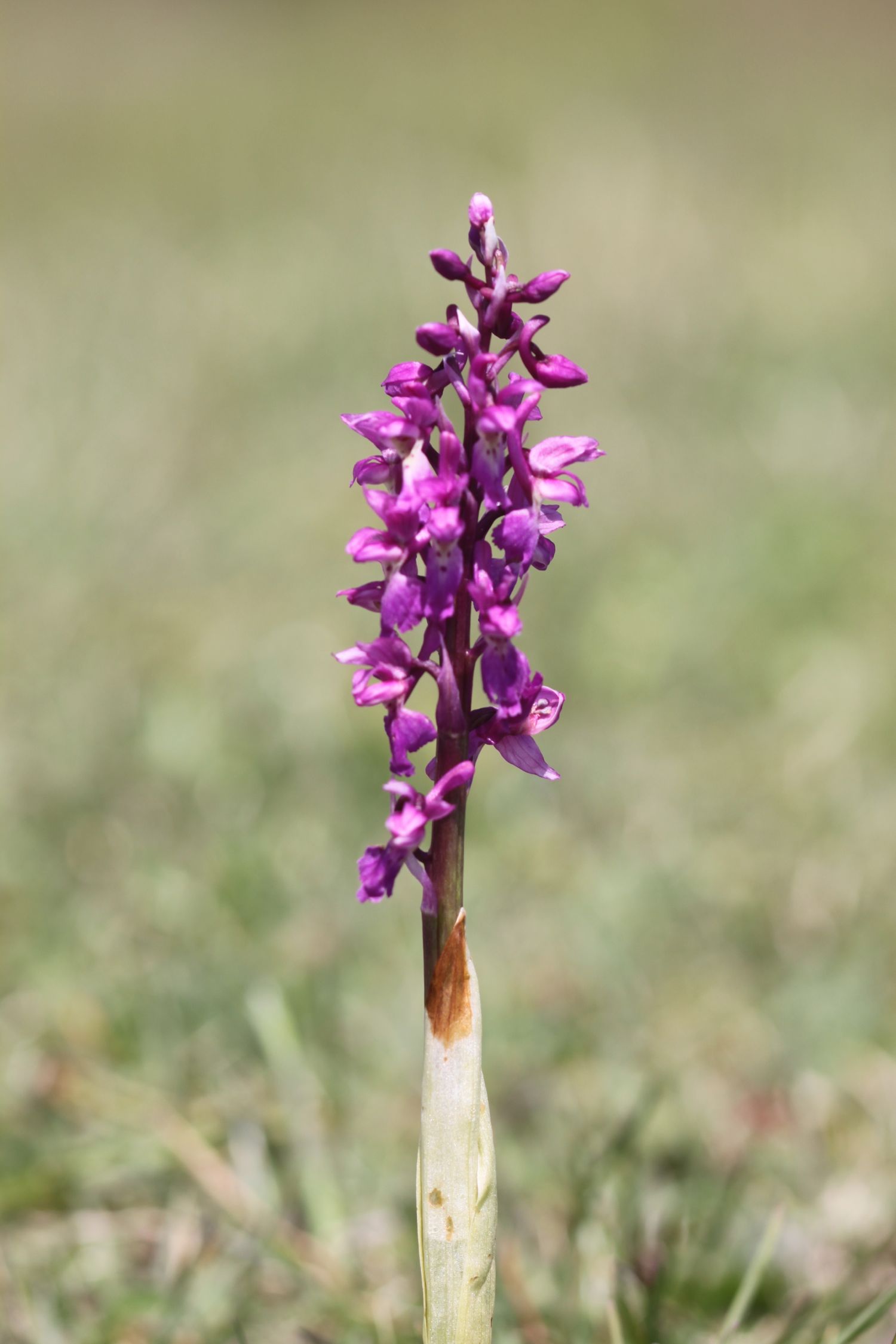
At Goat Island I come across a clump of early purple orchids. I'm rubbish at identifying flowers so I hope I've got them right!

On Christmas Eve 1839 an enormous section of cliff slid seaward in an event known as the Great Landslip. A deep chasm formed behind the landslide block, which later became known as Goat Island. I have no idea what goats have got to do with it!

I enter woods which will take me all the way to Lyme Regis and which provide me with much needed shade from a now intense sun. I've been seeing orange tip butterflies for a couple of days now but finally manage to find one who stays around long enough to be photographed.

orange tip butterfly

As it turns out the waymarking was perfect but the promised stunning sea views, except briefly at Pinhay Cliffs, were lacking. The rocks and tree roots are slippery and there is a lot more mud than I expected but it is a thoroughly pleasant walk to Lyme Regis.

Two and three quarter hours after entering Natural England's Axmouth to Lyme Regis Undercliffs National Nature Reserve I emerge from the woods above The Cobb at Lyme Regis. I descend down to the harbour and enjoy the beach here. The place is heaving with people. Not surprising as it is a beautiful Sunday afternoon.

the cobb at lyme regis

lyme regis

I head through a crowded Lyme Regis and walk up towards the car park above Lyme Regis where my lift awaits. What a thoroughly pleasant day's walking.

TODAY'S GEOLOGY LESSON

The giant cliffs, Salcombe Hill and Higher Dunscombe Cliff, either side of Salcombe Mouth consist of Mercia Mudstone capped with Upper Greensand. The Mercia Mudstone is Triassic and the Upper Greensand is Cretaceous.

Between Axmouth and Lyme Regis sandstone and chalk slipping over clay and limestone has left a ragged coastline dissected by some of the largest coastal landslides in the country.

This area is renowned for landslips and slips took place in 1775, 1828, 1839 and 1840 as well as in 2014 which forced the closure of the south west coast path.

The cliffs at Lyme Regis are largely made up of Lower Jurassic clays with bands of limestone.

FLORA AND FAUNA

Flora and fauna encountered on the walk today includes :-

  • chaffinches
  • robins
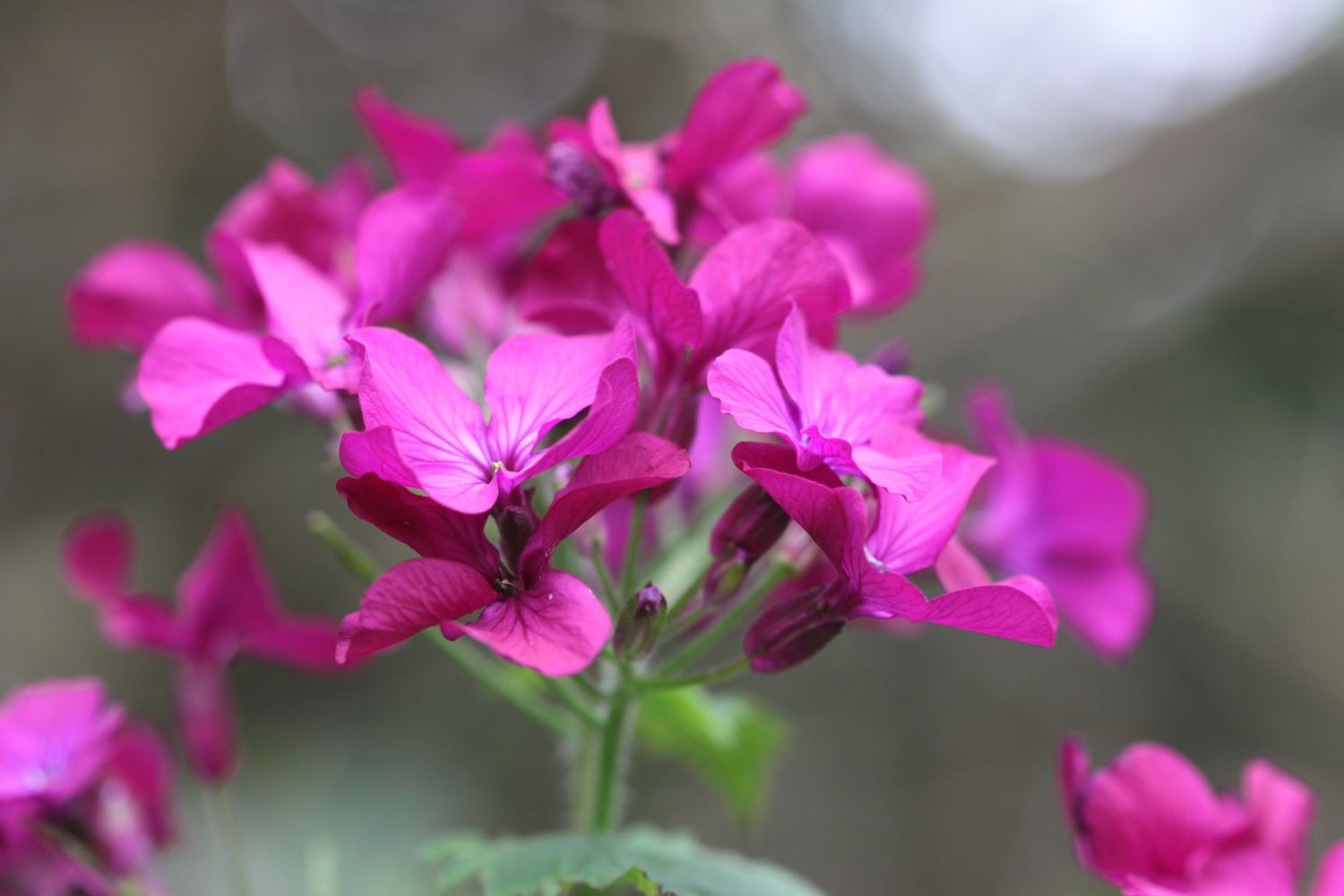
  • honesty
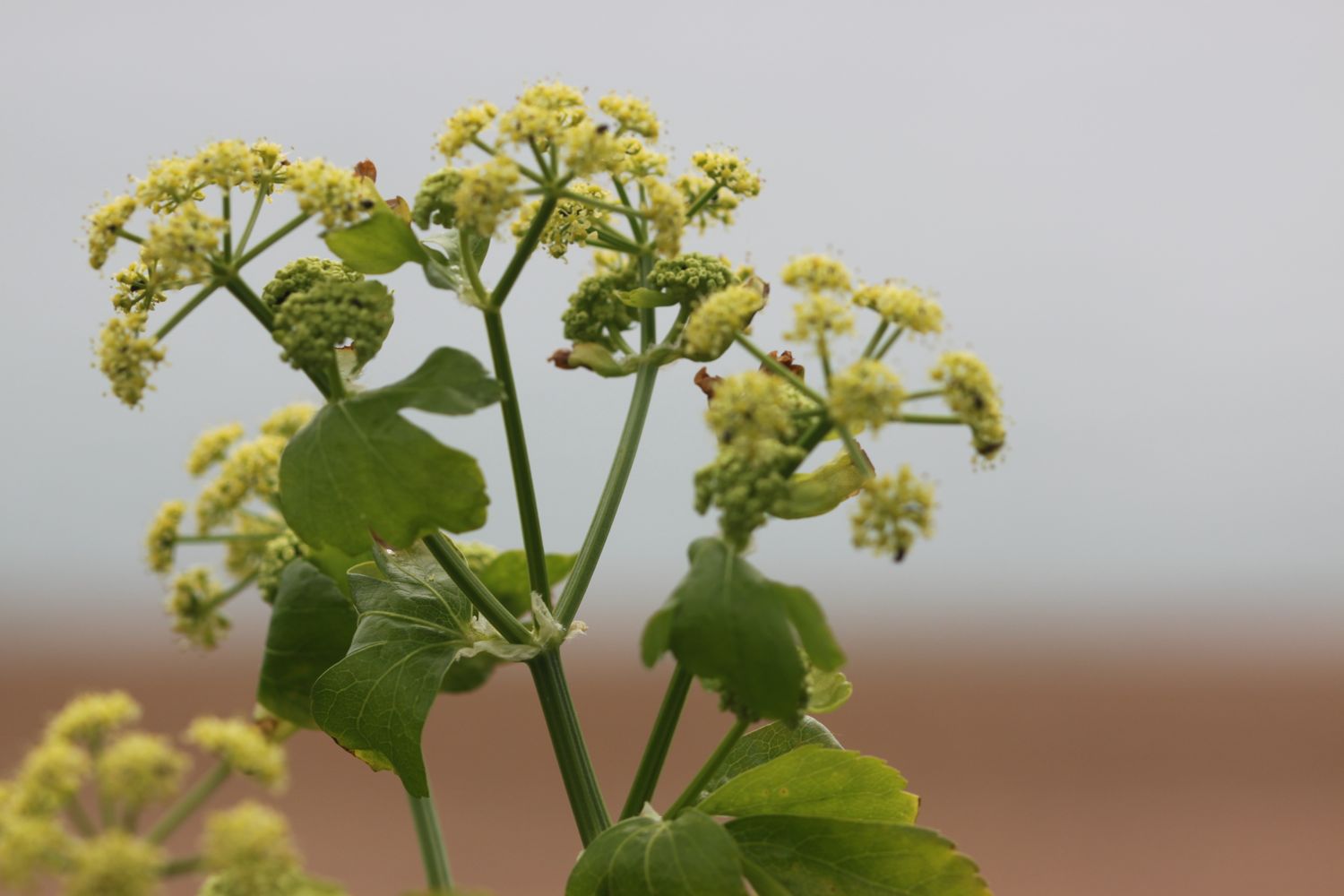
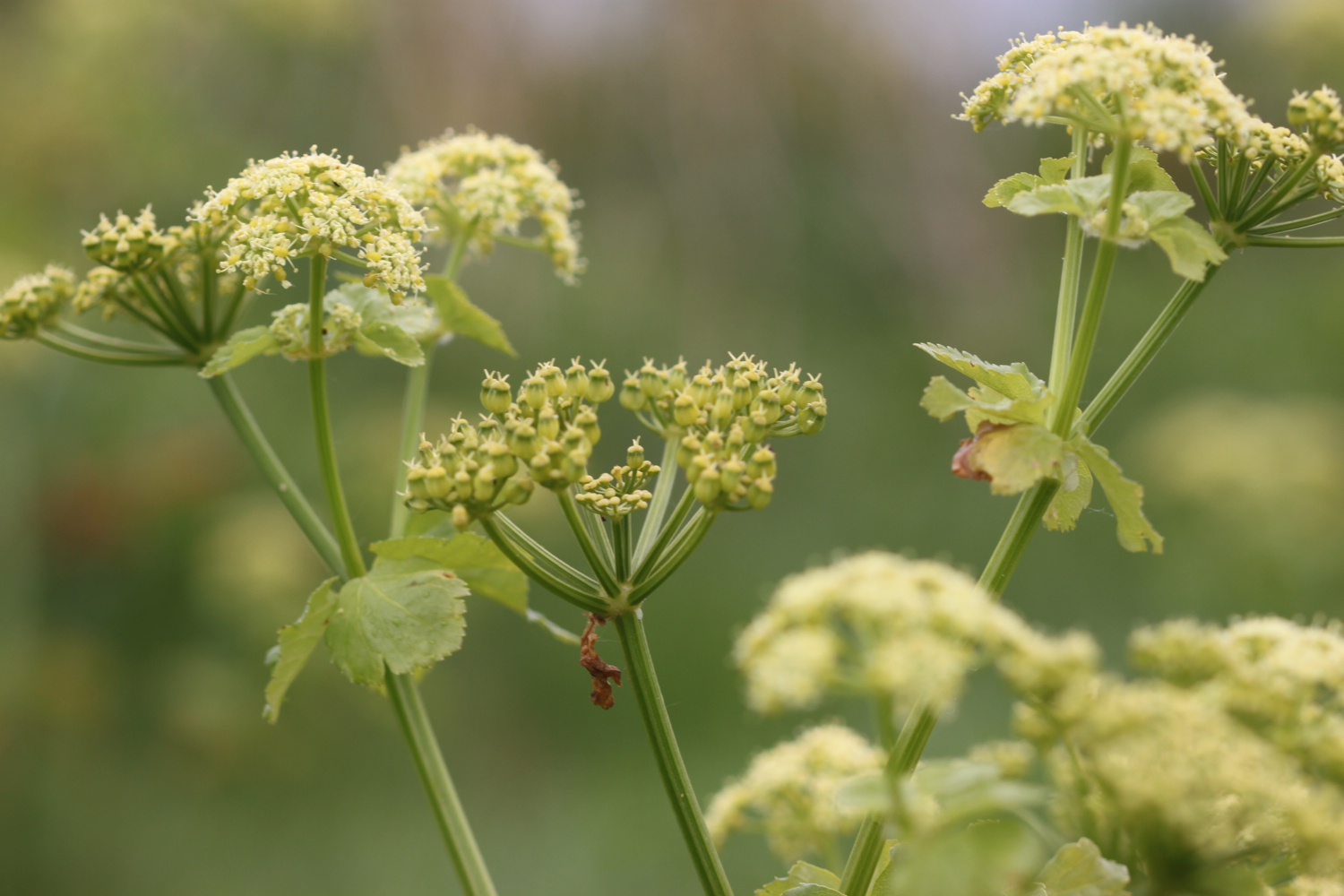
  • alexanders
  • japanese knotweed
  • herb robert
  • bluebells
  • primroses
  • wild garlic
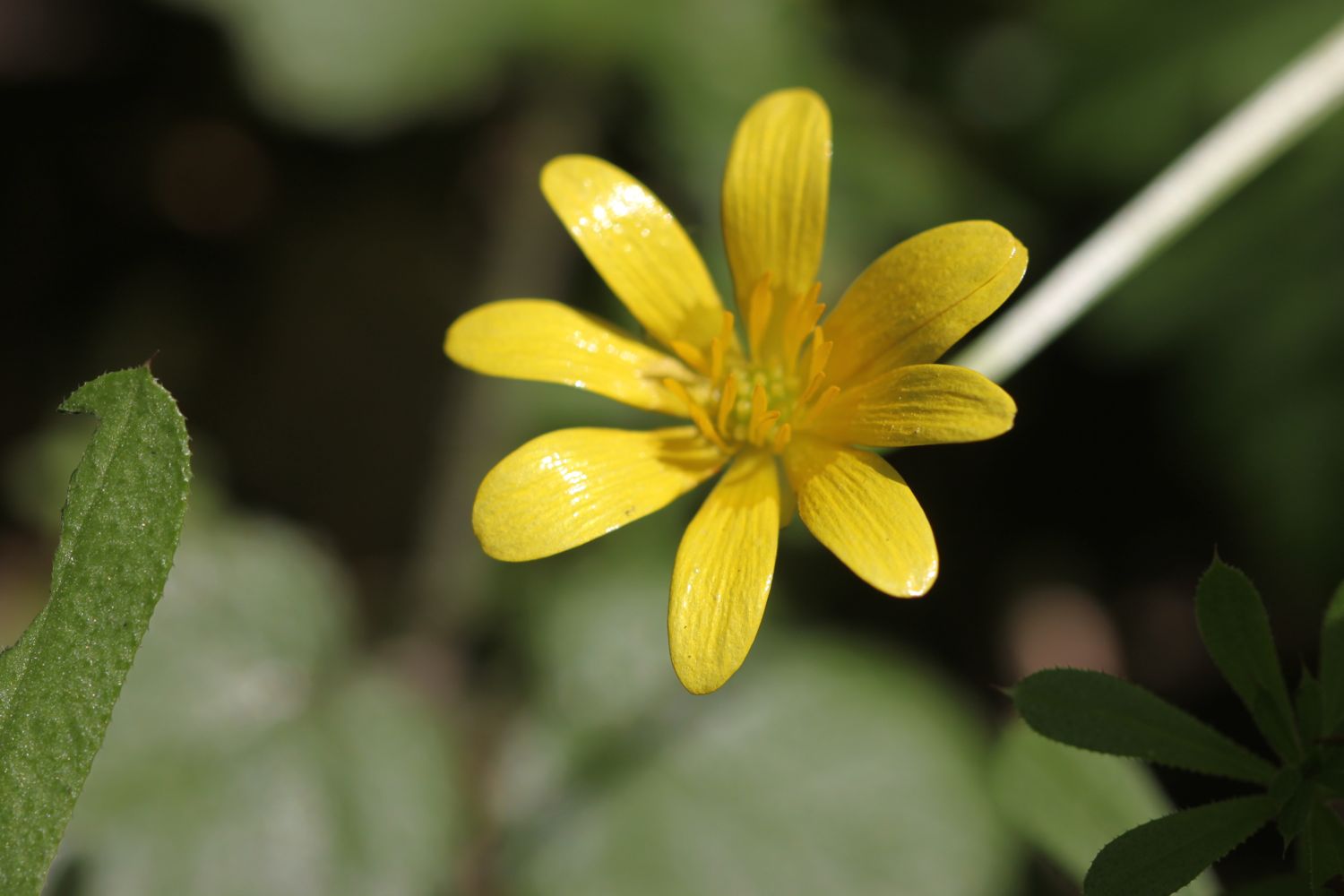
  • celandines
  • cowslips
  • dandelions
  • red admirals
  • peacock butterflies
  • speckled wood butterflies
  • orange tip butterflies
  • chiff chaffs
  • blackcaps

PODCAST

The podcast of today's walk is now available. You can subscribe via the iTunes store or listen using the player below.

MARKS OUT OF TEN?

According to my phone I've walked 20.15 miles today - I wasn't expecting that distance - which amounts to 47317 steps. Blimey! It has been a beautiful day's walking on the South West Coast Path and for the first time this year it has been HOT!!. Nine out of ten!

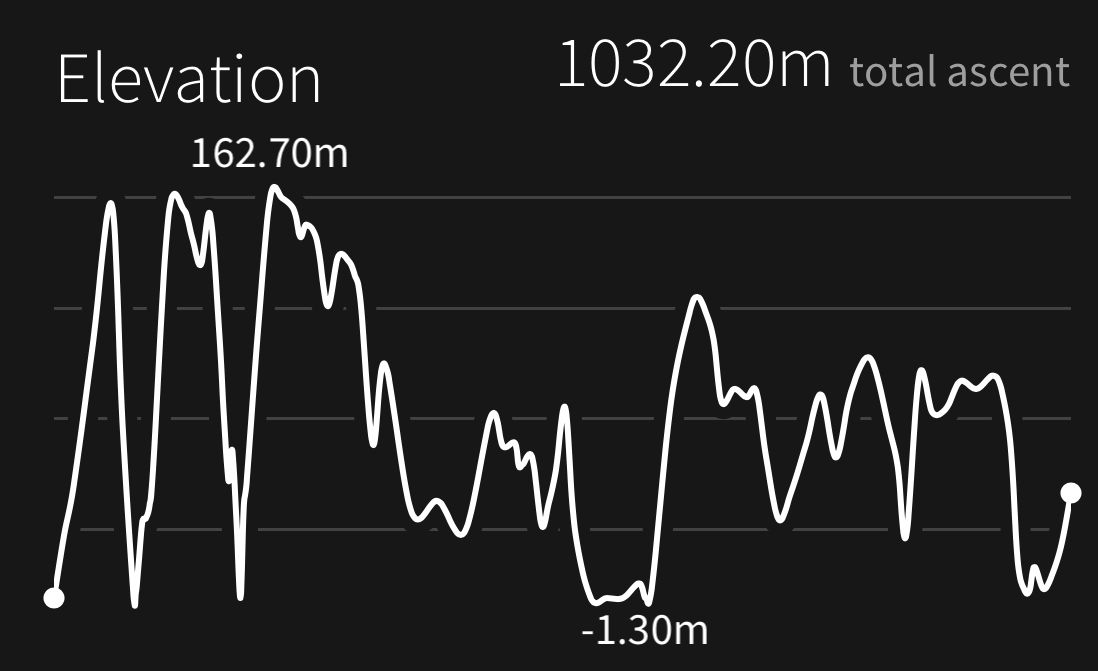
My total ascent today has been 1032.20 metres or 3386 feet and it feels like it.

view back to sidmouth

early purple orchid

orange tip butterfly

exmouth to sidbury via sidmouth

south west coast path

saturday, 7th may 2016

2016 has been a miserable year so far. It has been wet, windy and cold. But hang on a sec, I seem to have a pretty decent forecast for today. It looks like it will be warm and sunny for much of the day.

Exmouth high tide: 07:48

Exmouth low tide: 14:02

Today's walk starts at Exmouth Marina where the Exmouth to Starcross ferry is moored. I'll use this ferry later on in the year to get across the River Exe.

exmouth

From here it's a short walk to the nice, sandy beach. It's high tide so the waves are lapping against the sea wall. I pass the Jubilee Clock Tower on The Esplanade, erected to commemorate the diamond jubilee of Queen Victoria, before continuing along the beach.

jubilee clock tower

I pass by The Grove (@thegroveexmouth), several hotels and the Bath House. I drop down on to the beach and wander along it. Just behind the beach can be found  The Maer, a local nature reserve, which seems to be full of dog walkers.

Towards the end of the beach I pass Exmouth Lifeboat Station (@exmouthrnli) before going through Foxholes Car Park. The path rises out of Exmouth and along the top of cliffs heading towards Orcombe Point.

exmouth lifeboat station

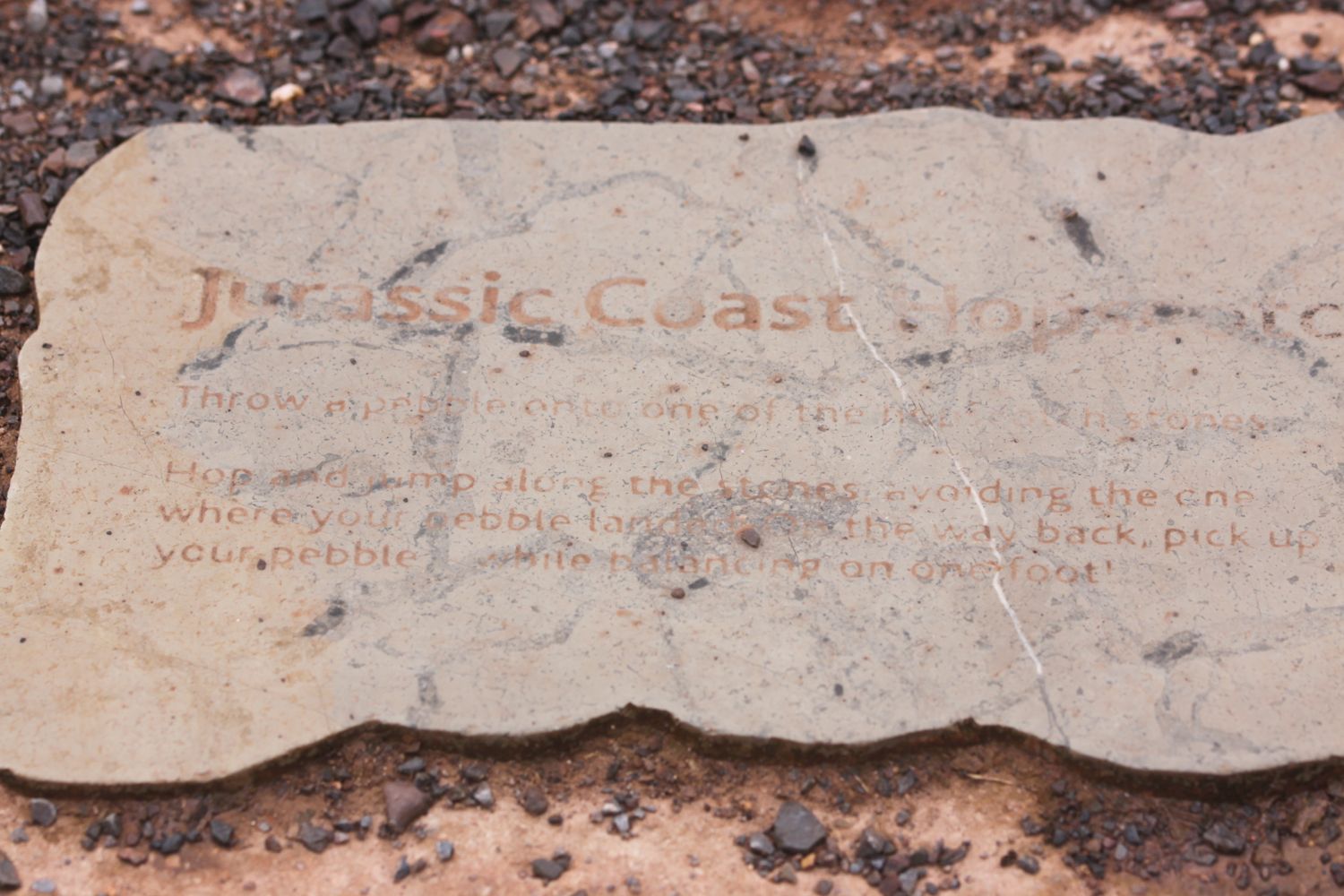
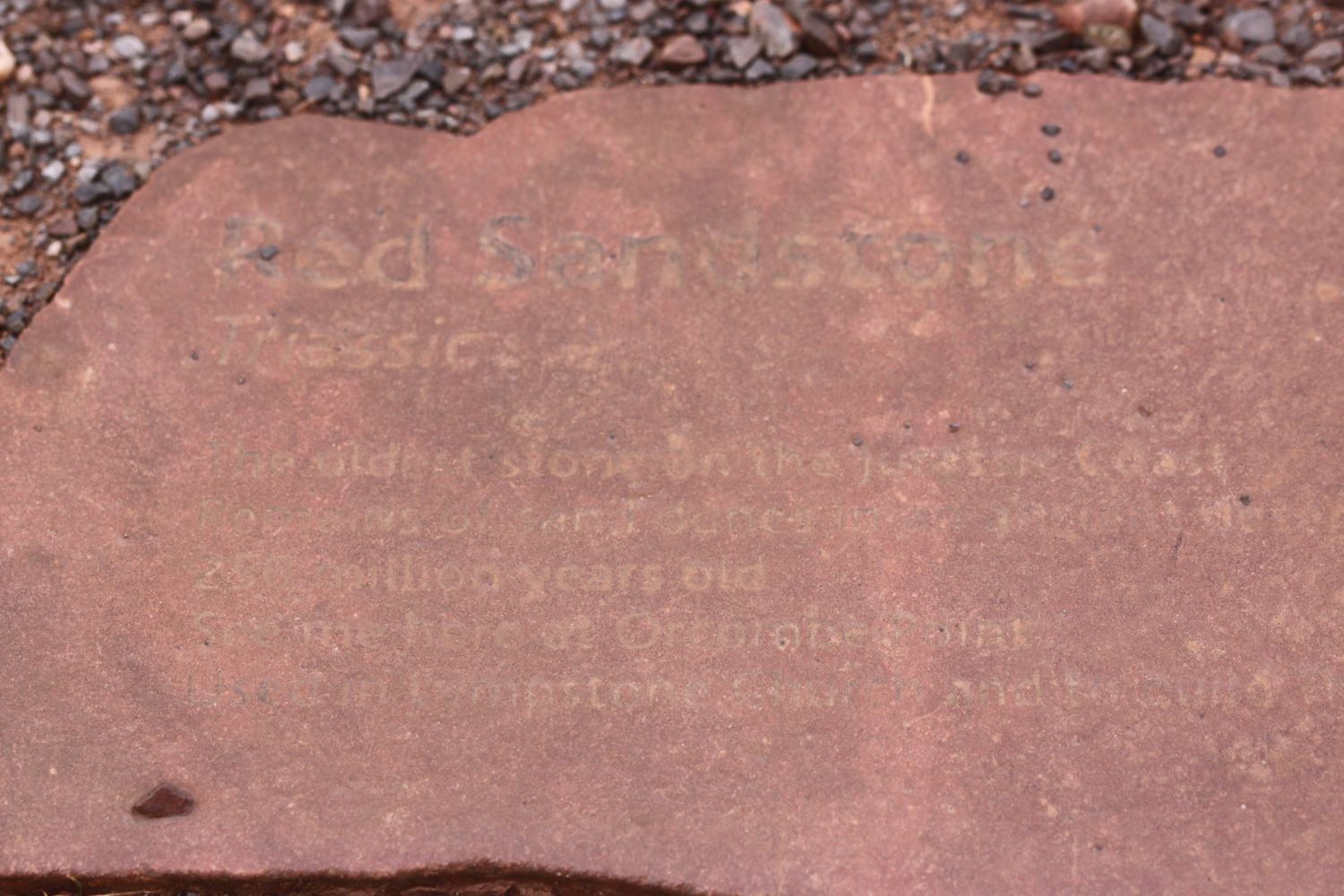
Orcombe Point marks the start of the Jurassic Coast, a World Heritage Site stretching 95 miles from here right the way around to Dorset. The rocks here are 250 million years old and a deep red colour. A sign here gives details of the Jurassic Coast.

You are standing at a remarkable point in the geological story of our planet. About 250 million years ago, most of life on Earth was wiped out. The distant headland to your right holds fossils that record some of the strange creatures that died out. The red rocks in the cliffs to your left were formed when the survivors started to recover.

today's geology lesson

Orcombe Point marks the start of the Jurassic Coast, a World Heritage Site stretching 95 miles from here right the way around to Dorset. The mudstone and sandstone rocks here are a deep red colour and were laid down in a desert 250 million years ago in the Triassic period. There are no fossils in these rocks indicating that in the early Triassic period almost all life had been wiped out. 

The beach at Budleigh Salterton is made up of pebbles derived from the Budleigh Salterton Pebble Beds and are made largely of Quartzite.

At Ladram Bay, there is a series of red sandstone stacks out at sea, all that remain of what were once natural rock arches that were once joined to the cliff.

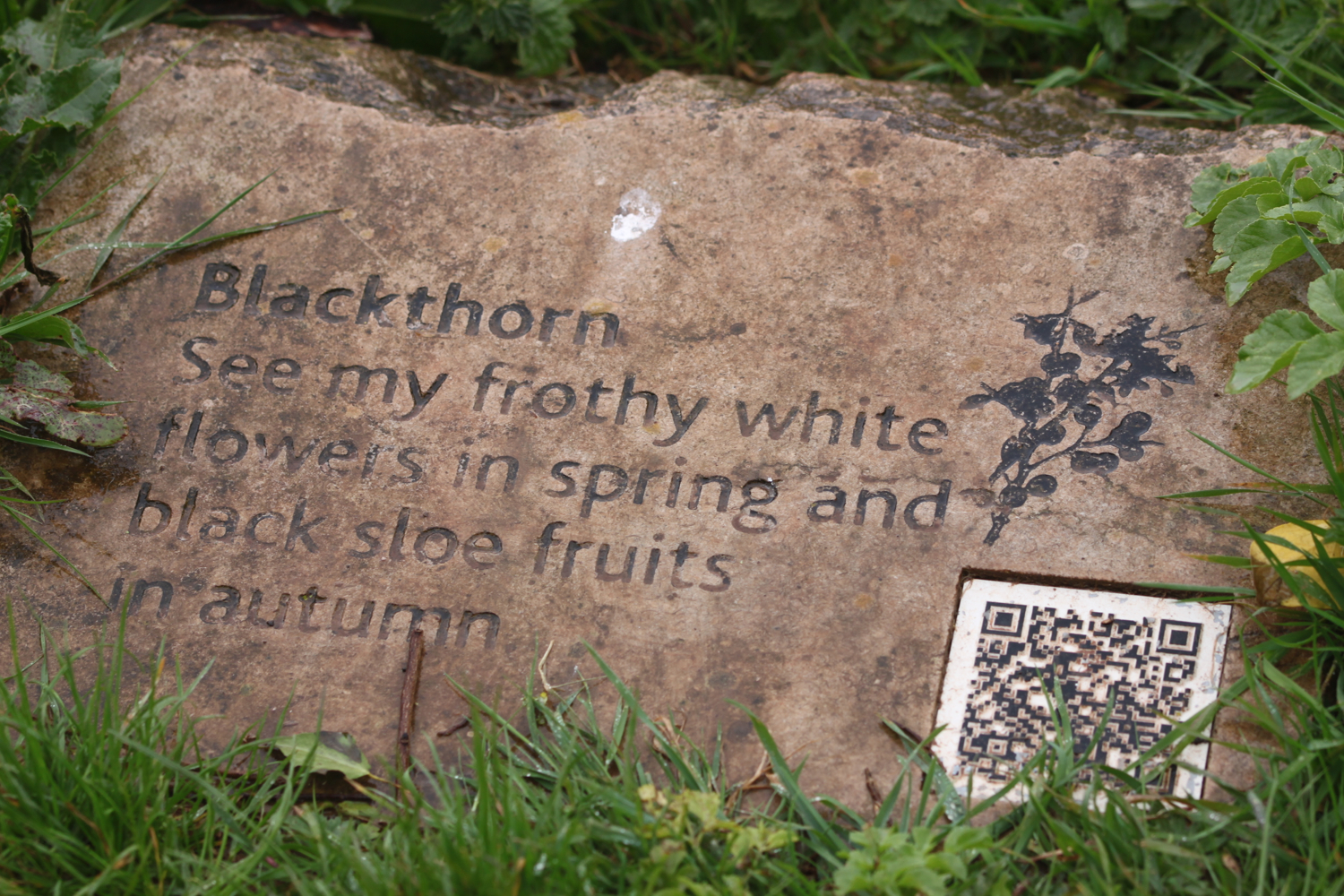
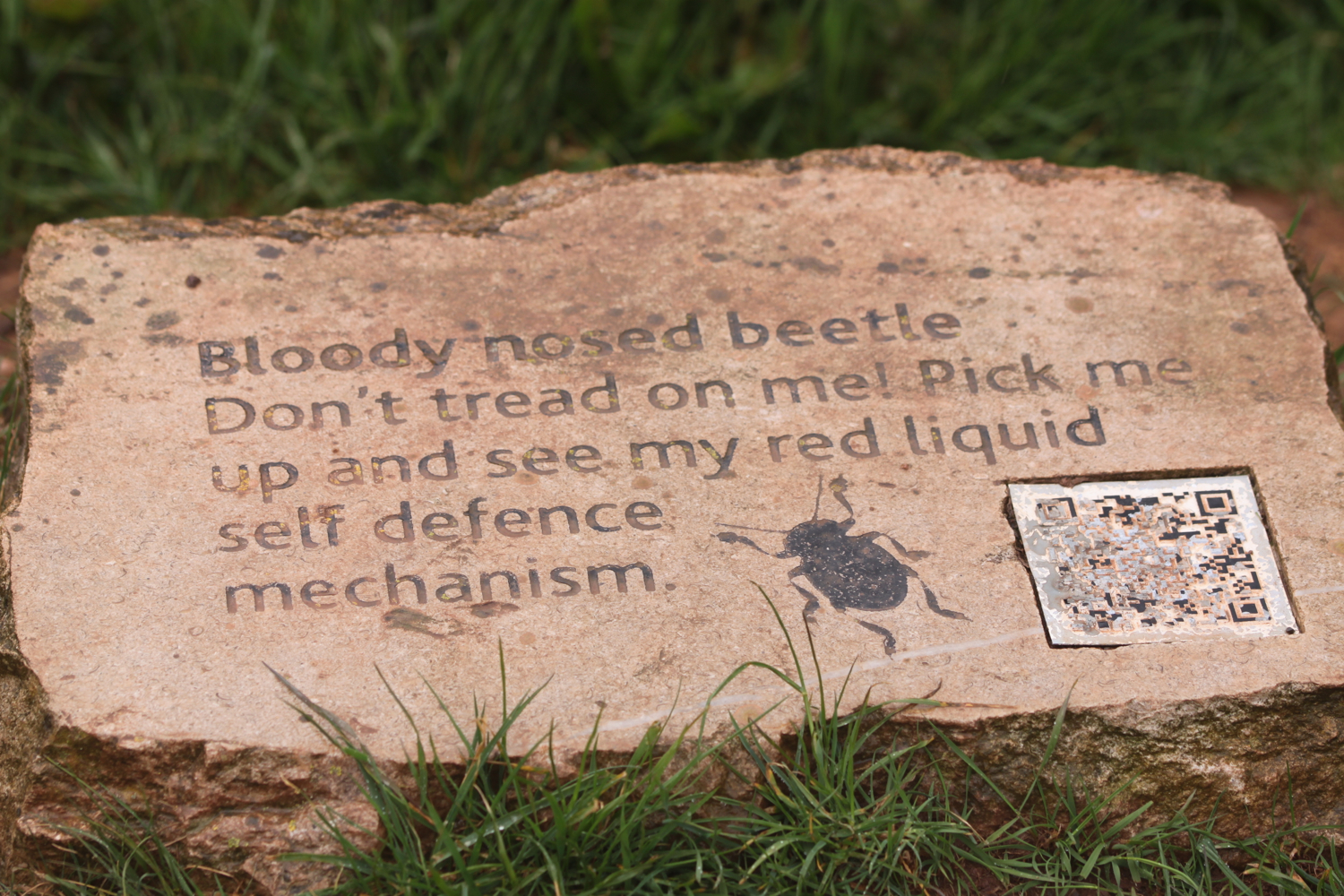
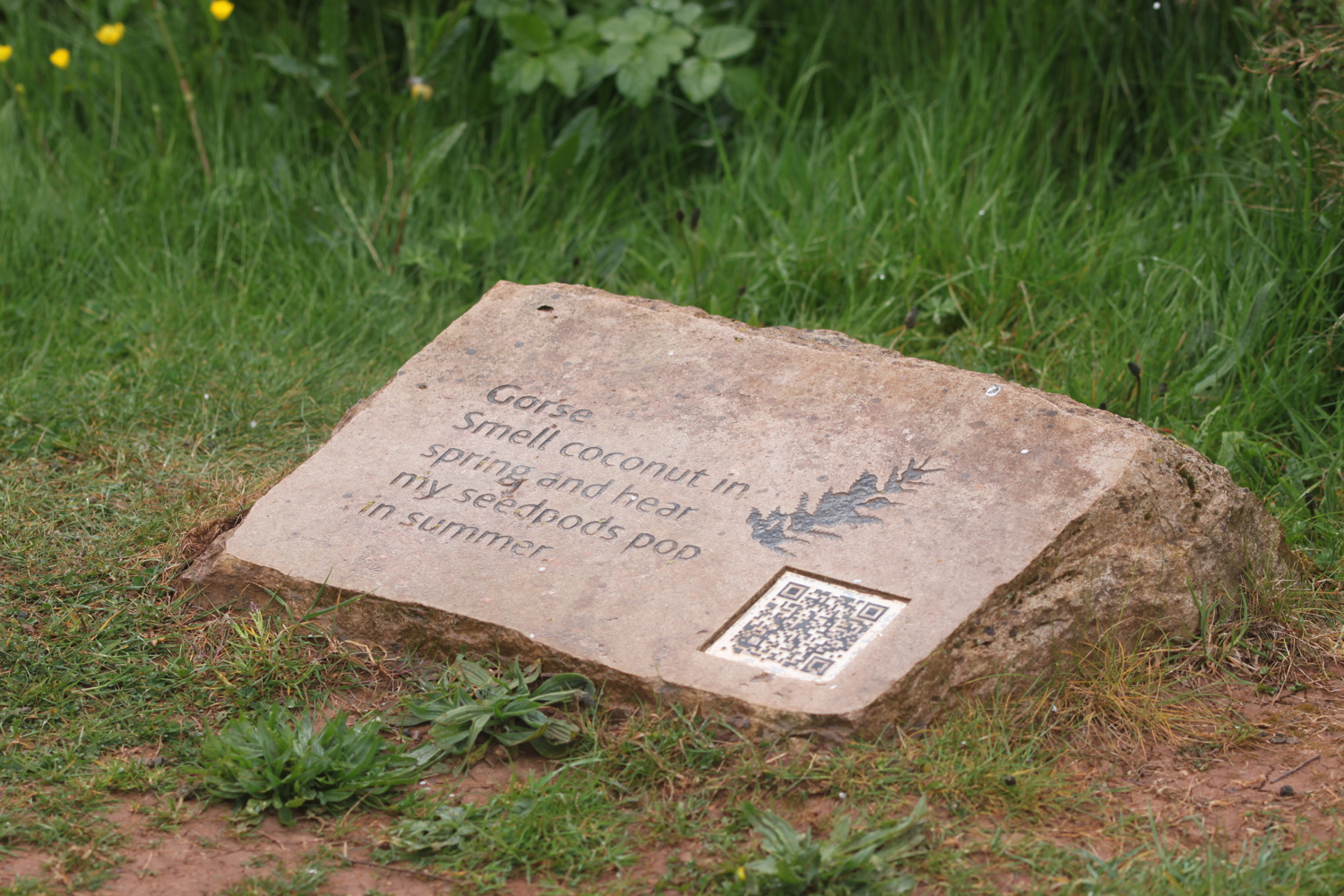
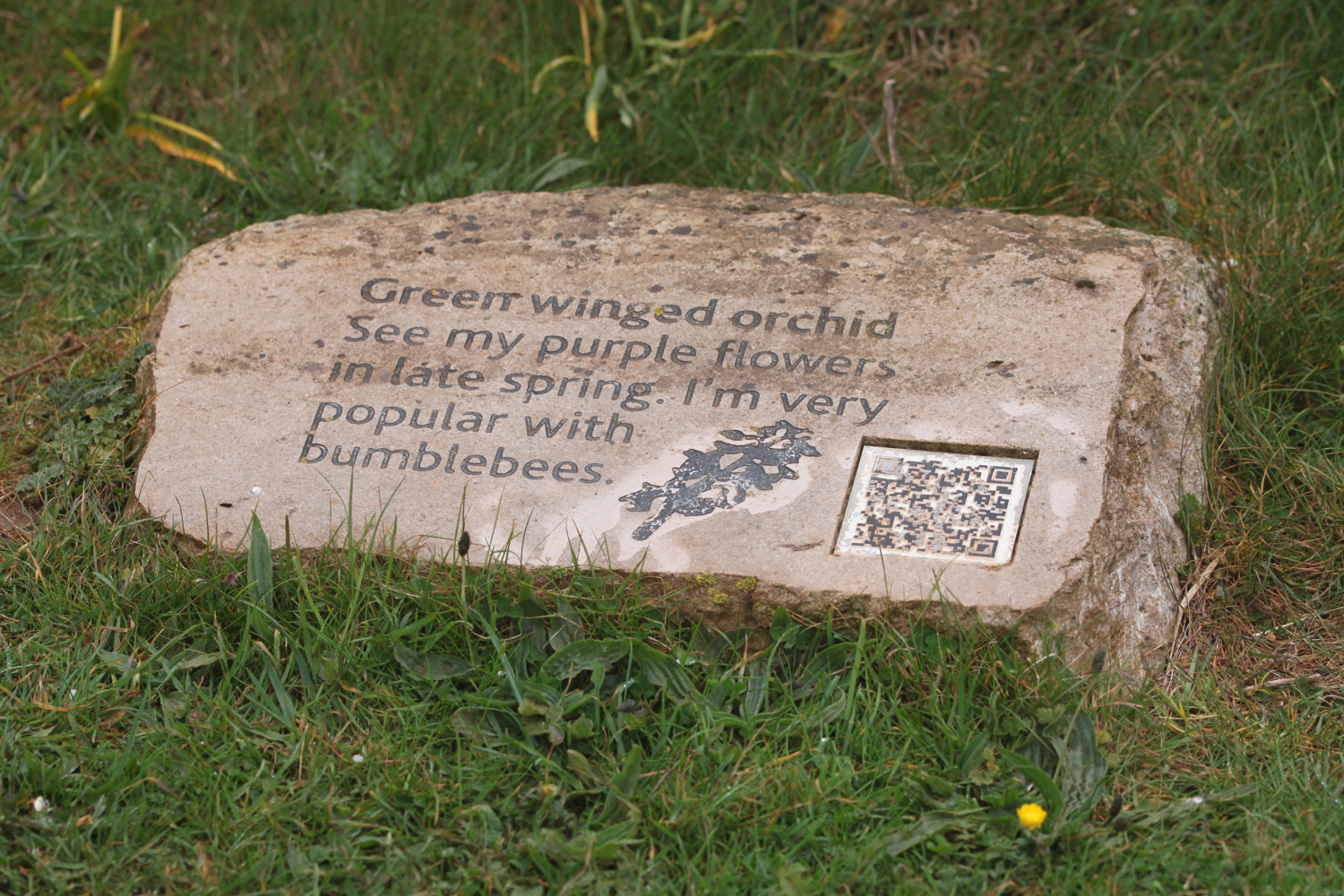
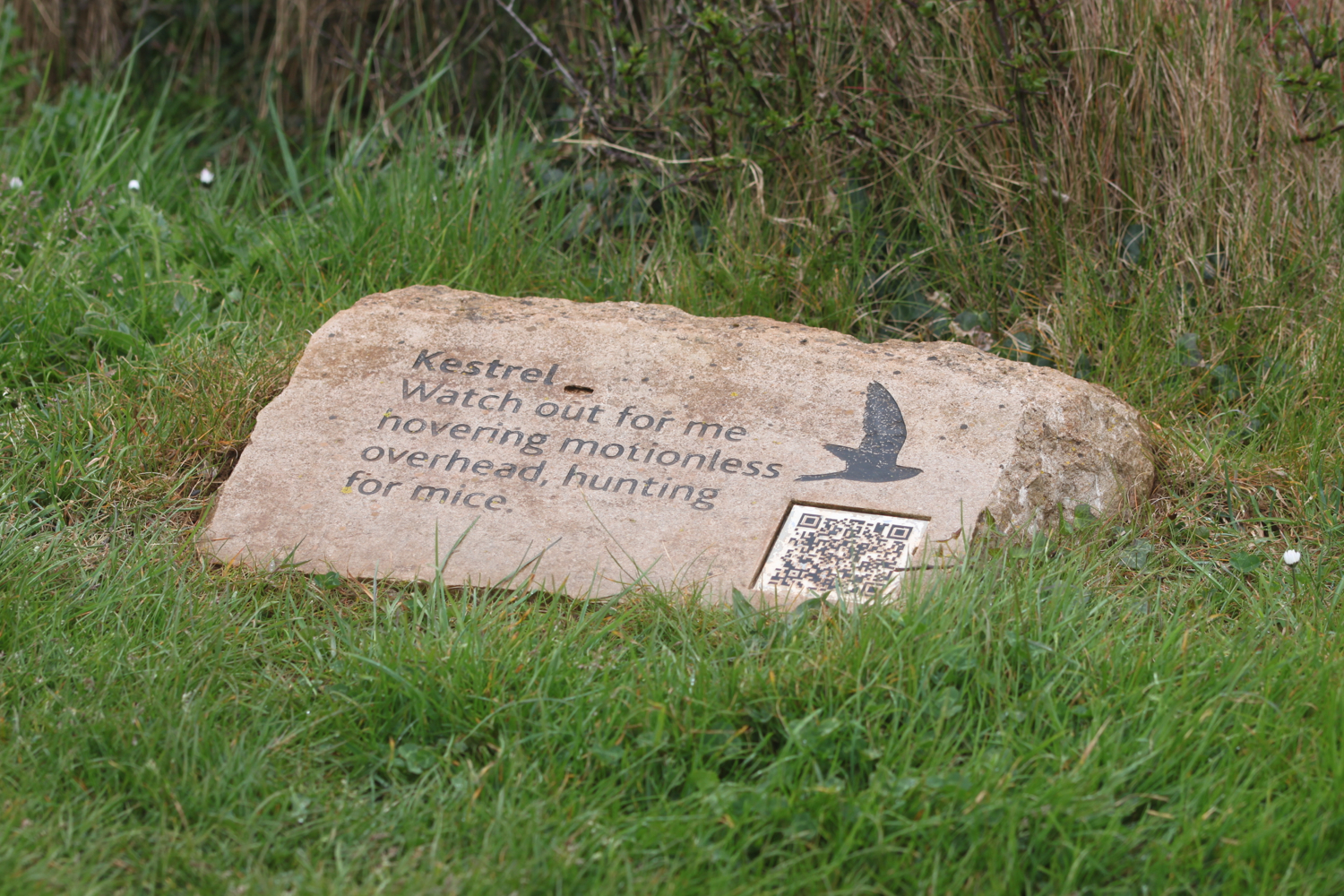
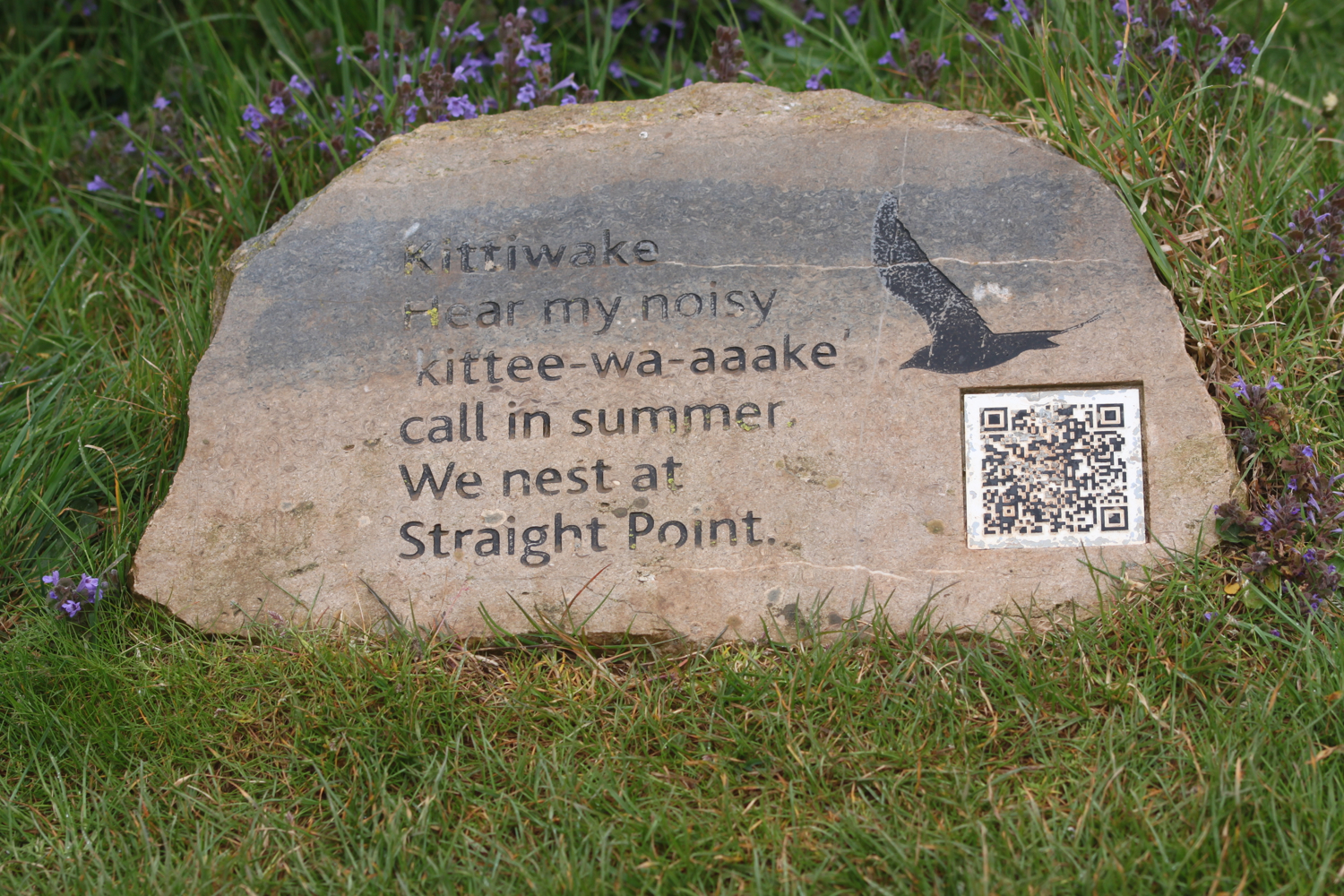
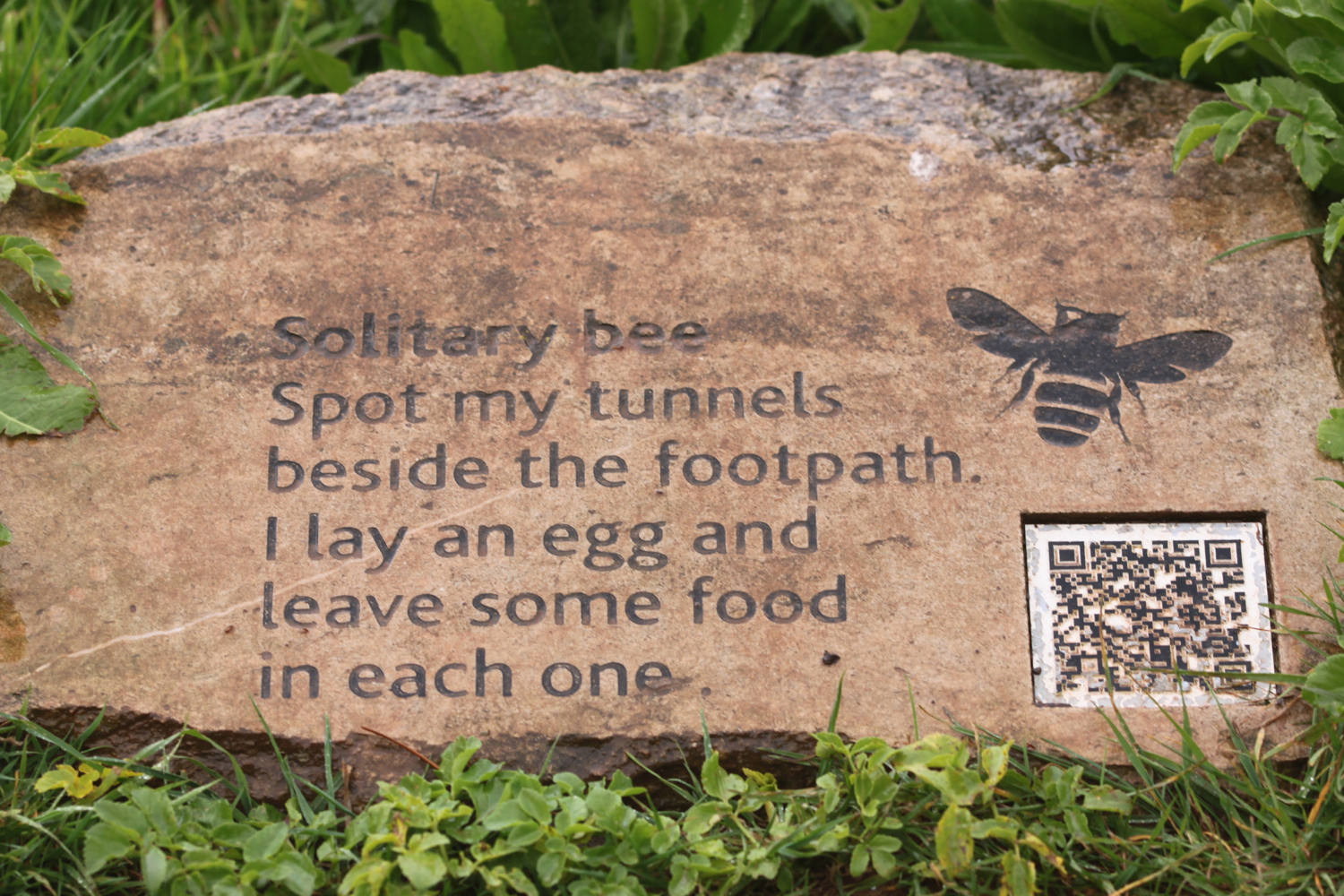
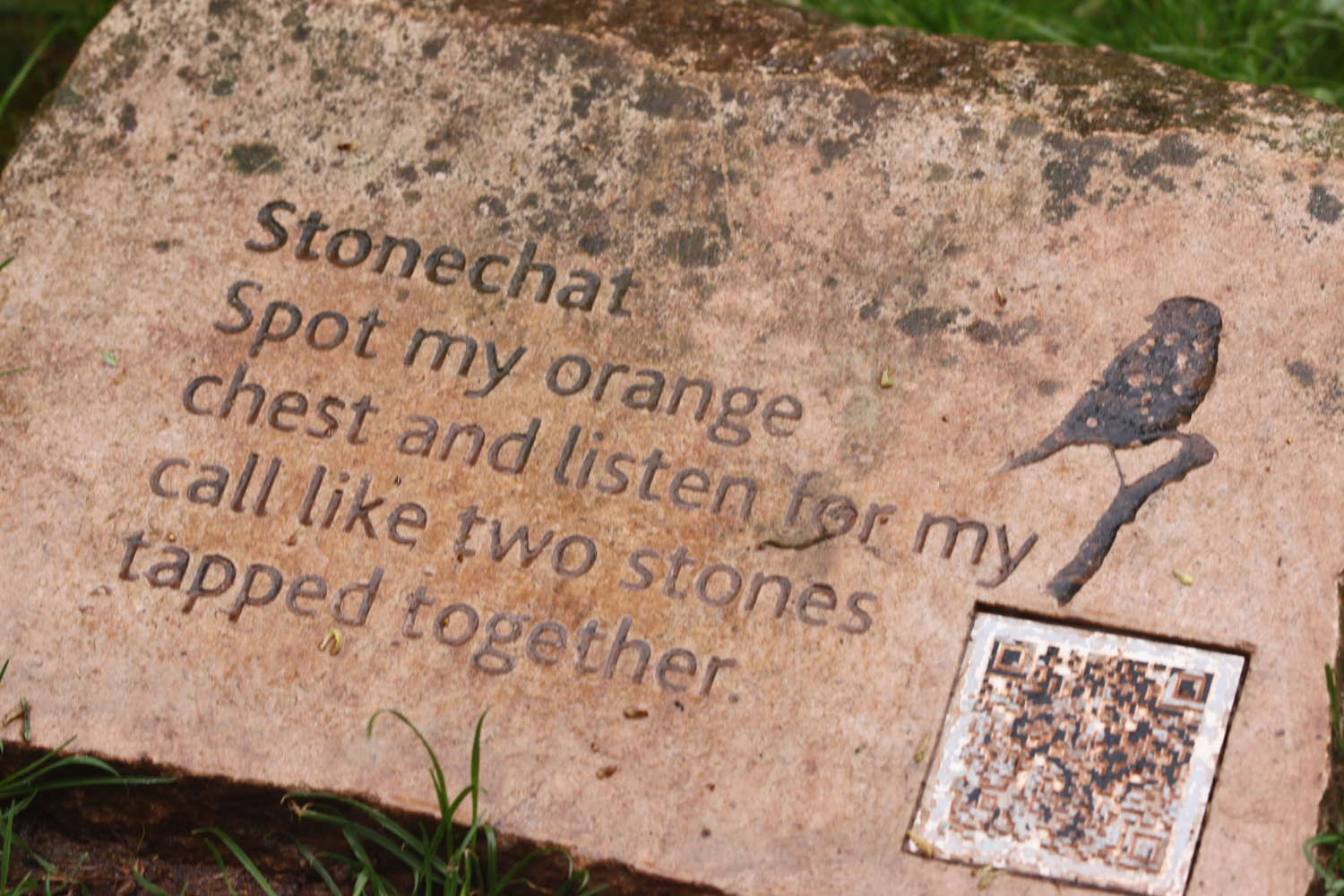
I enter the High Land of Orcombe and pass information stones containing information on blackthorn, solitary bees, stonechats, bloody nosed beetles, green winged orchids, gorse, kestrels and kittiwakes.

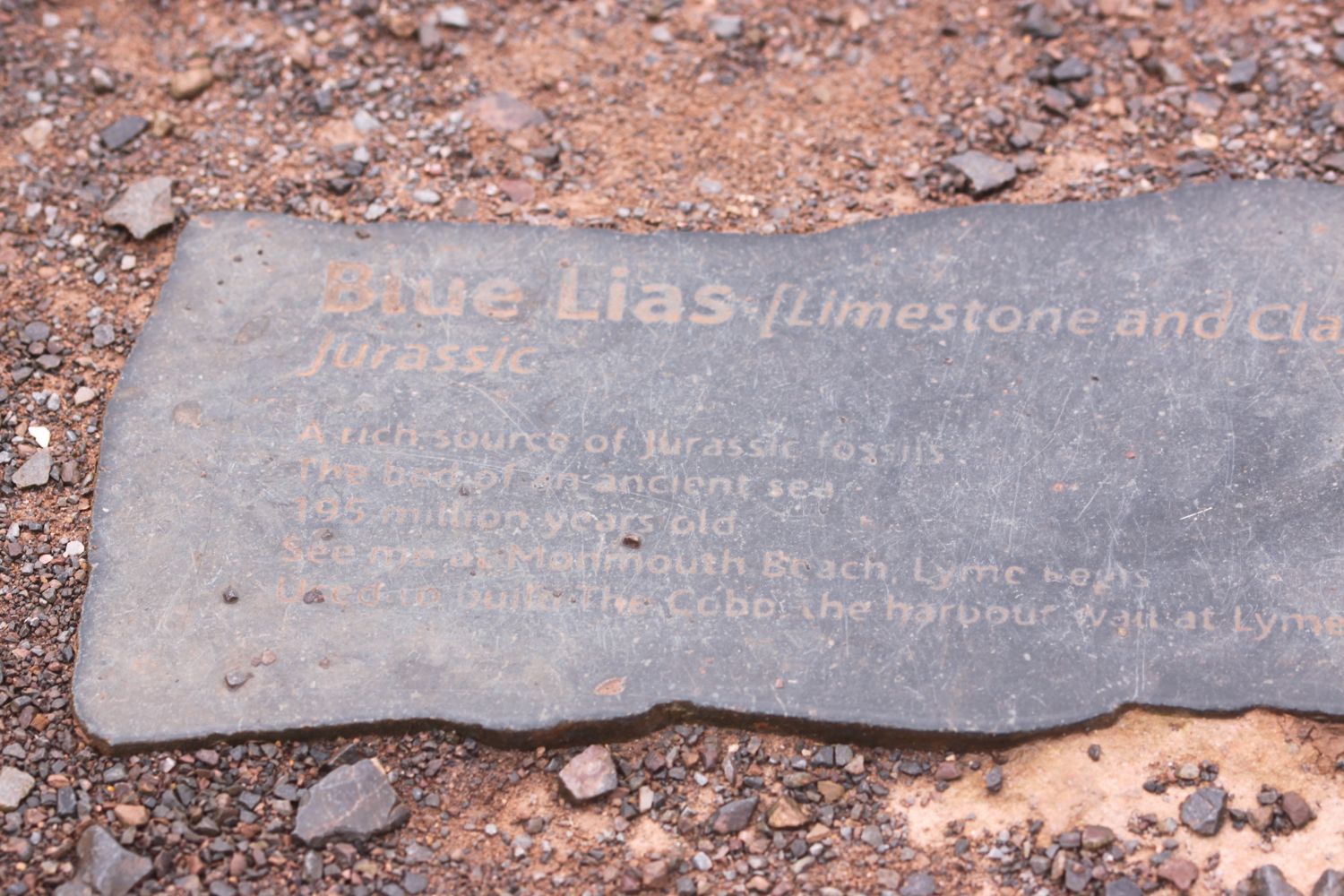
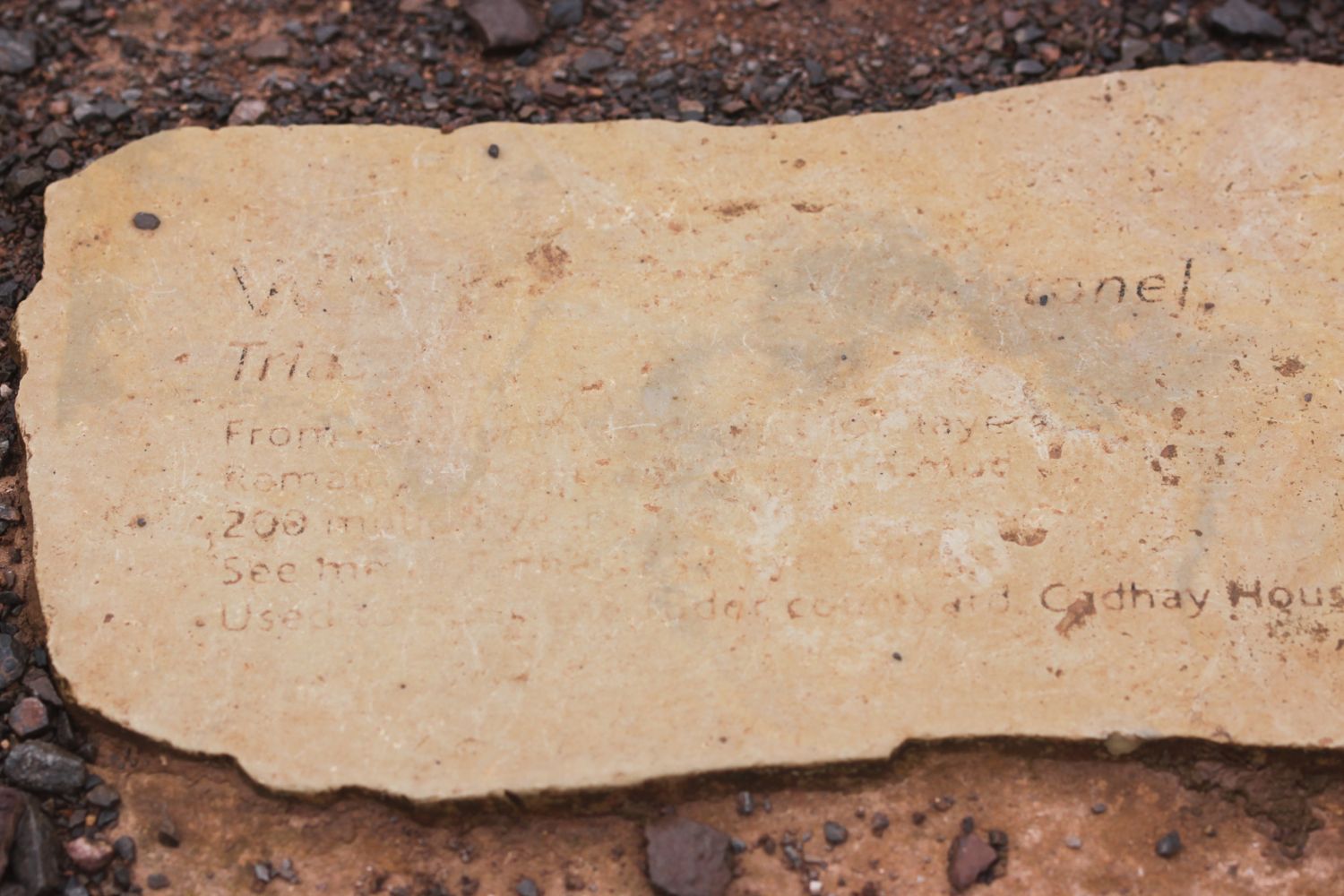
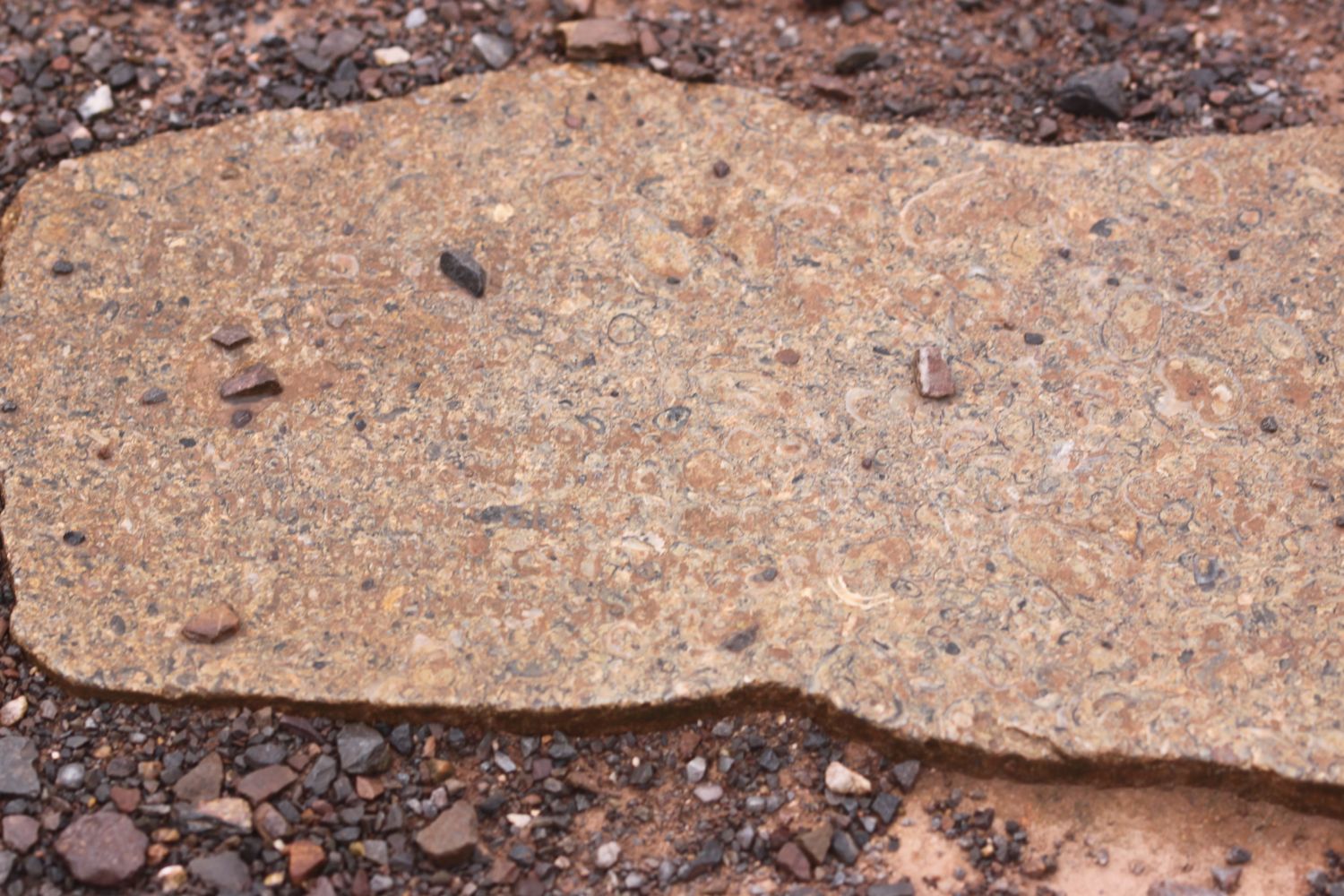
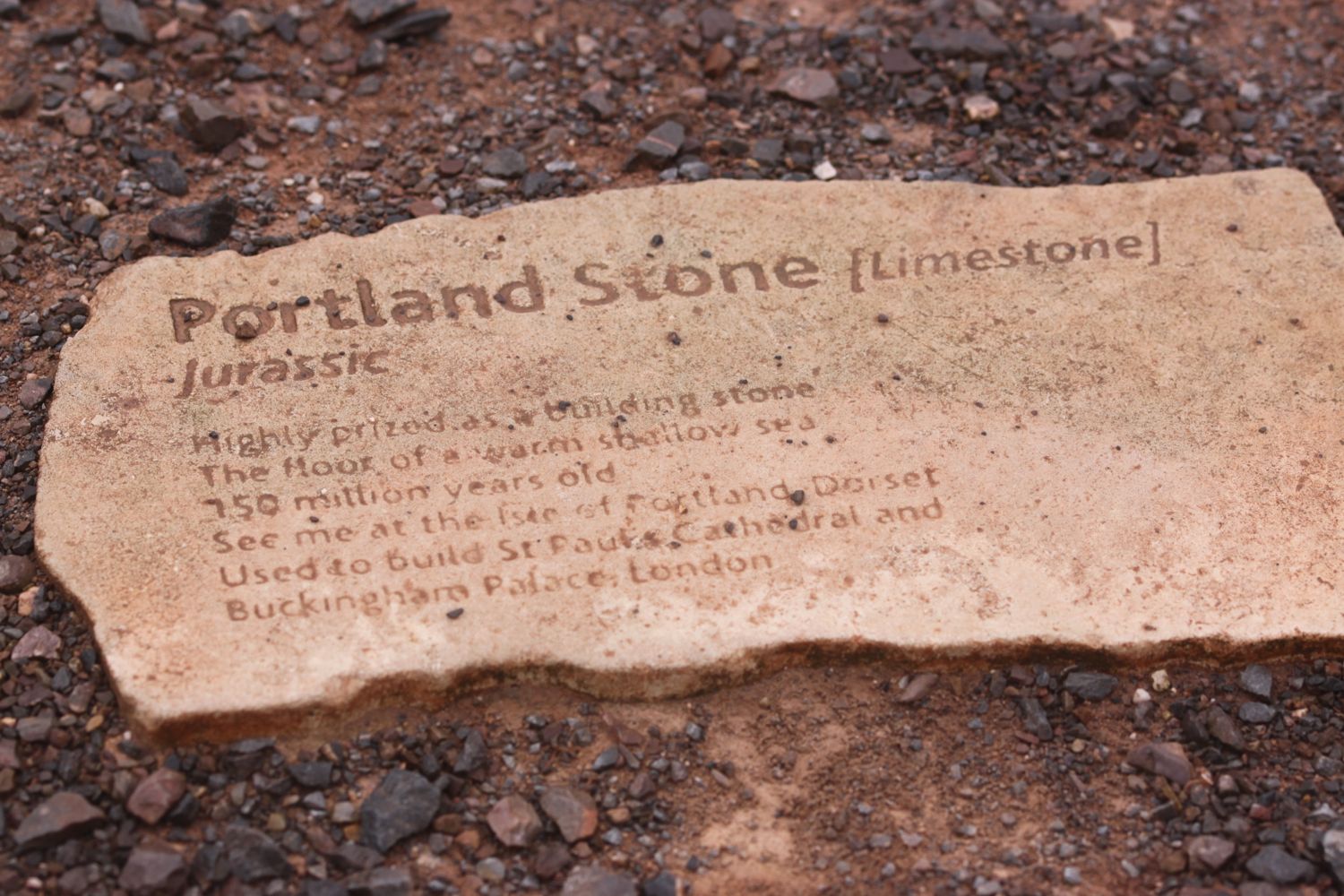
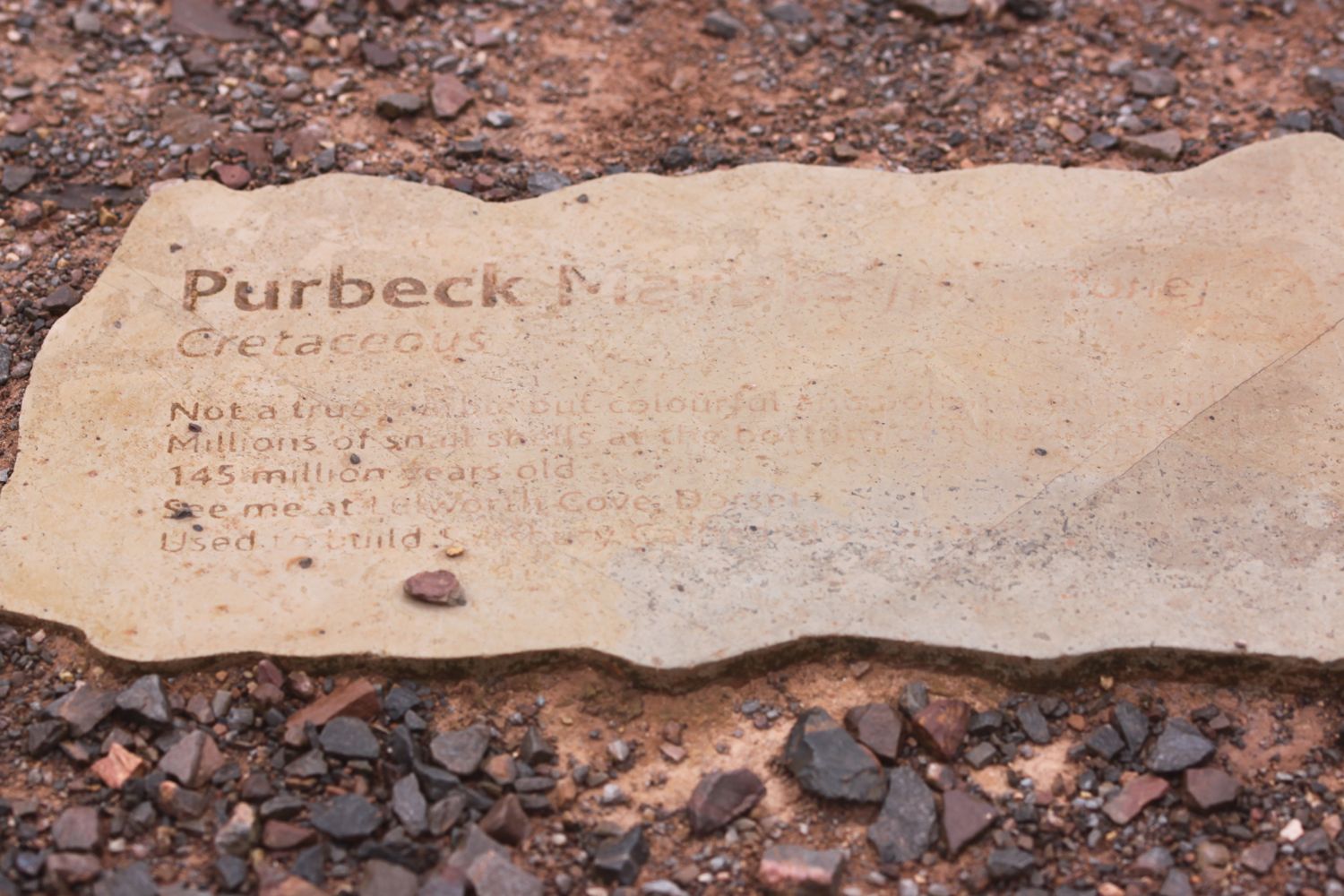
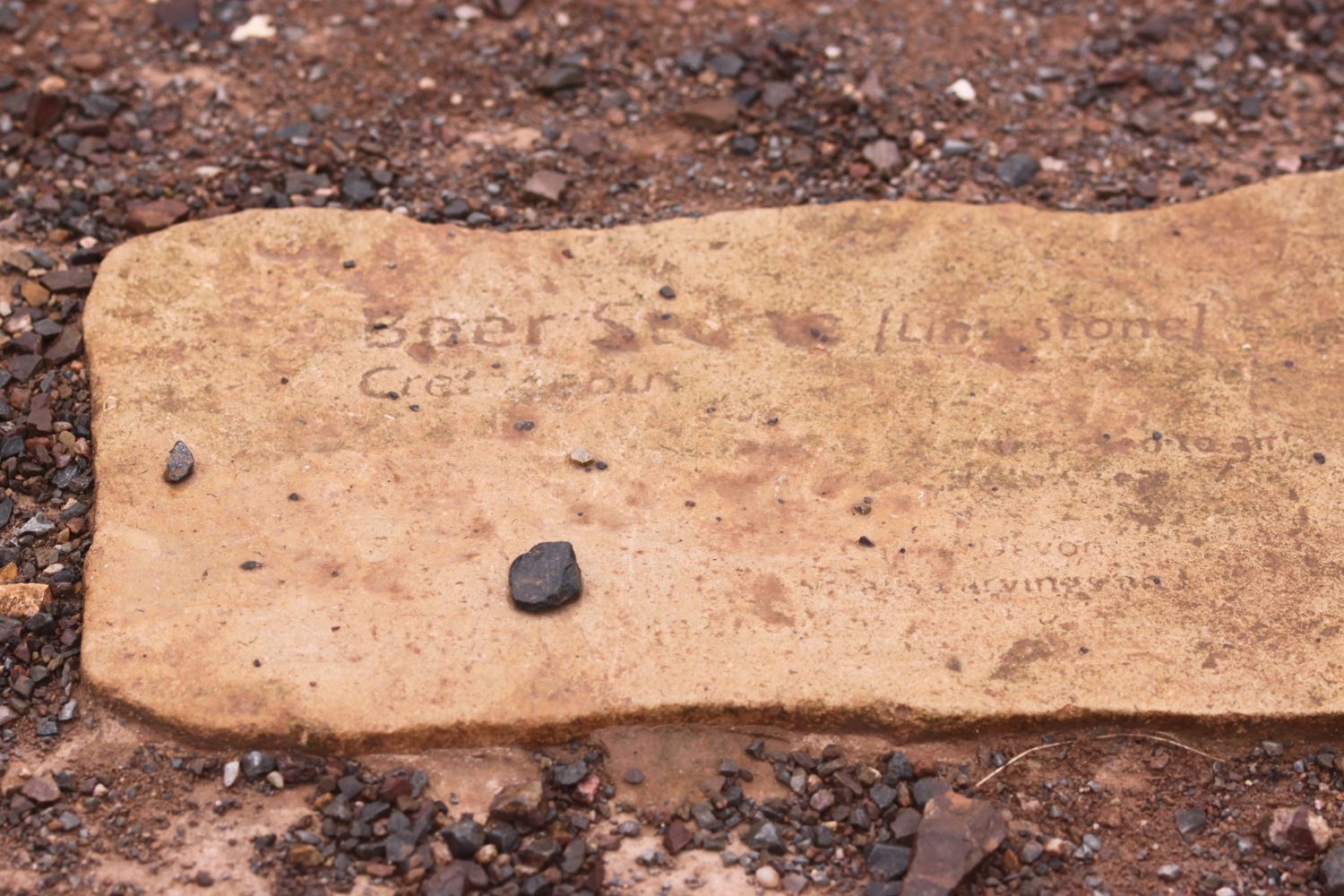
I pass the Geoneedle which marks the start of the Jurassic Coast which was unveiled by His Royal Highness the Prince of Wales on the 3rd of October 2002. The Geoneedle is constructed from a variety of different stones, representing both the major building stones to be found on the Jurassic Coast and the sequence of rocks that form this part of the coastline. There are blocks of stone set into the ground but they are starting to be a bit worn after 14 years.

geoneedle

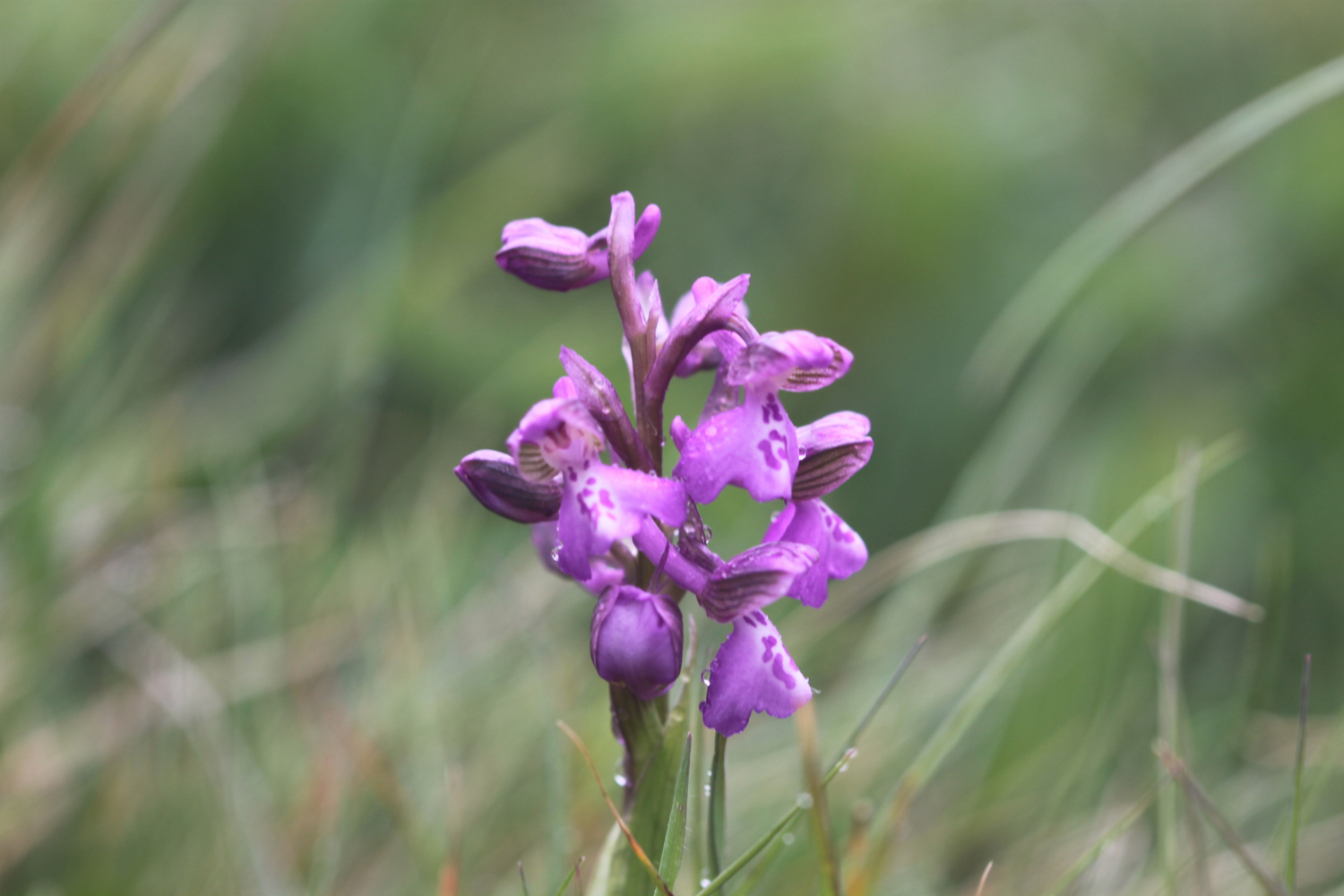
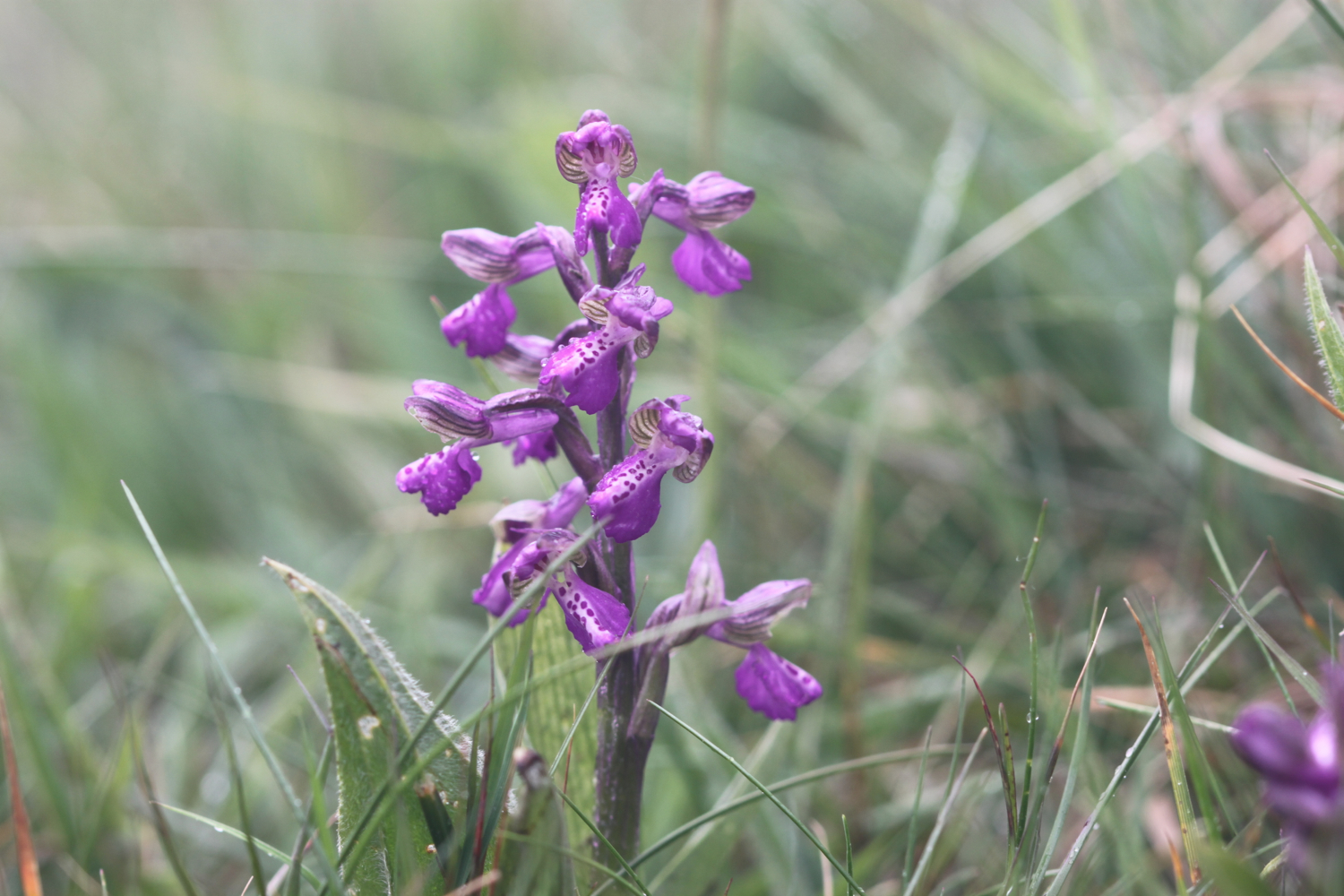
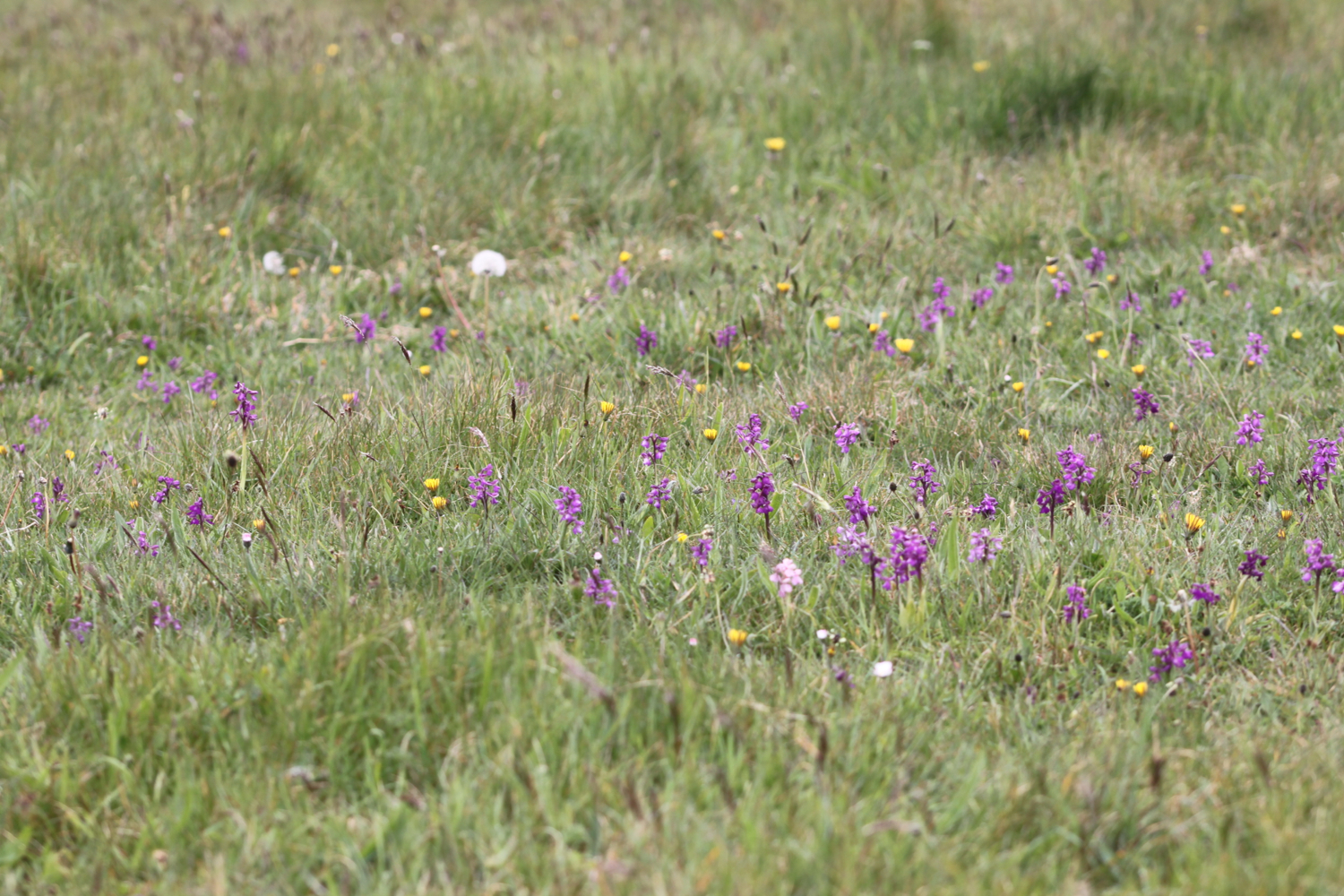
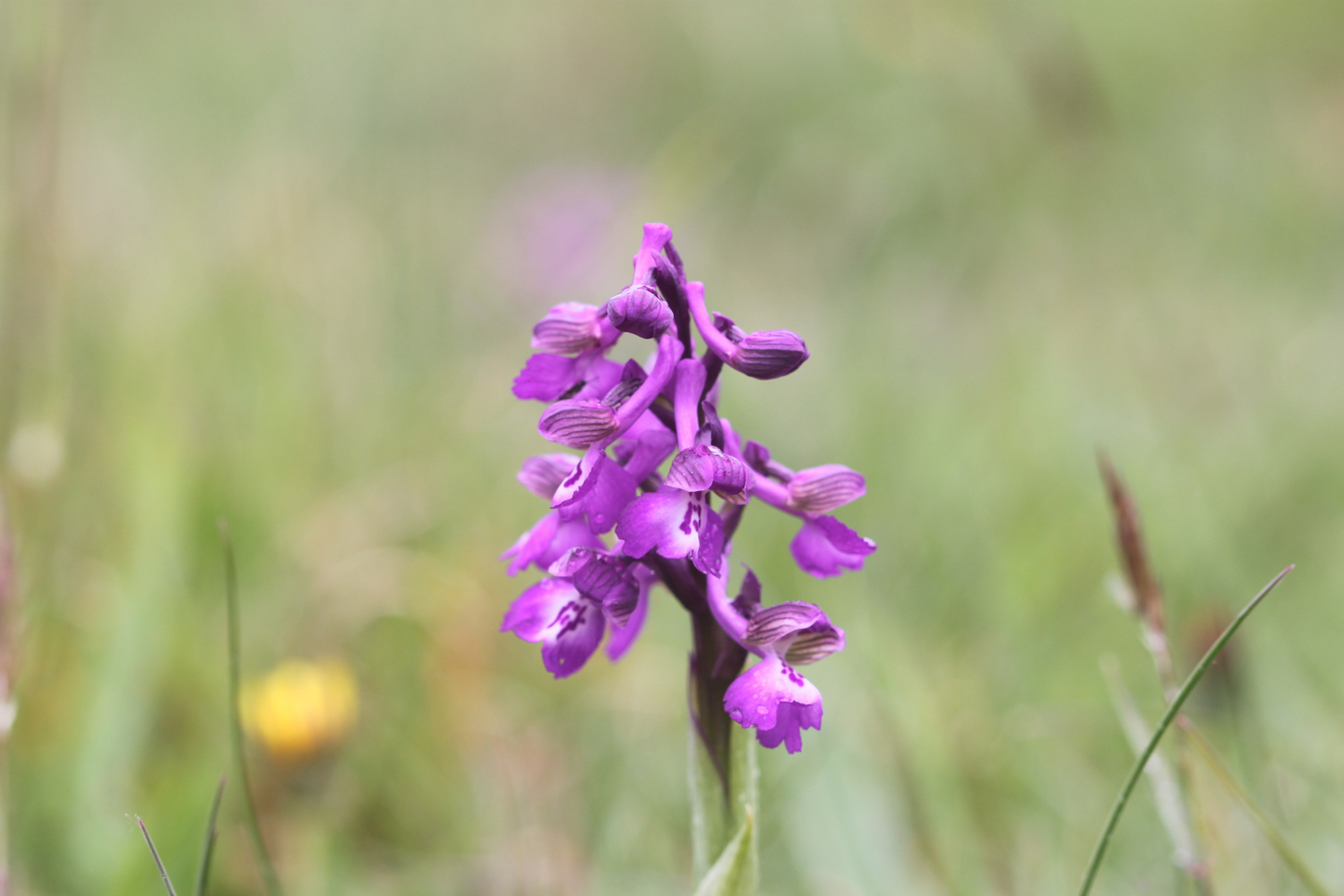
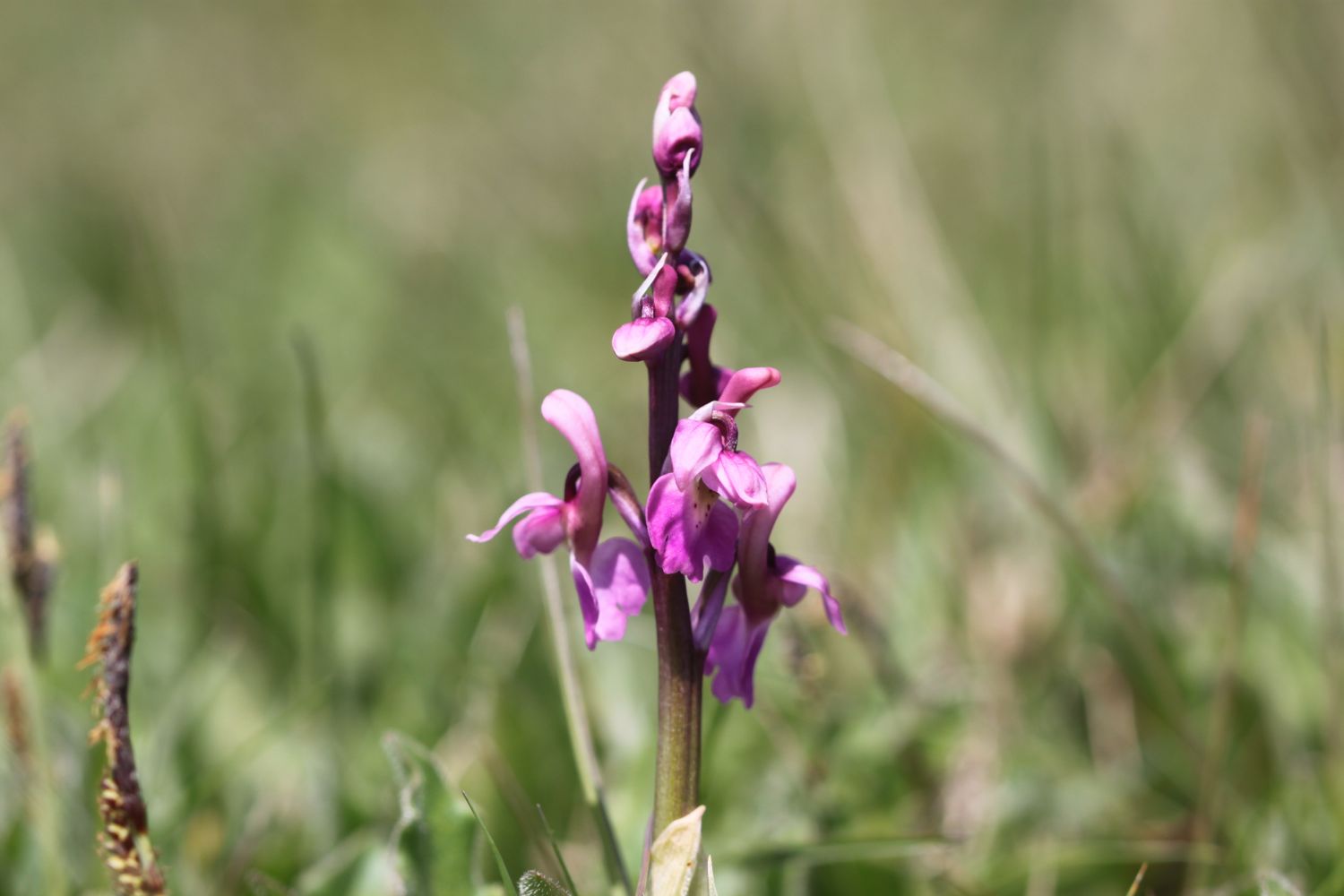
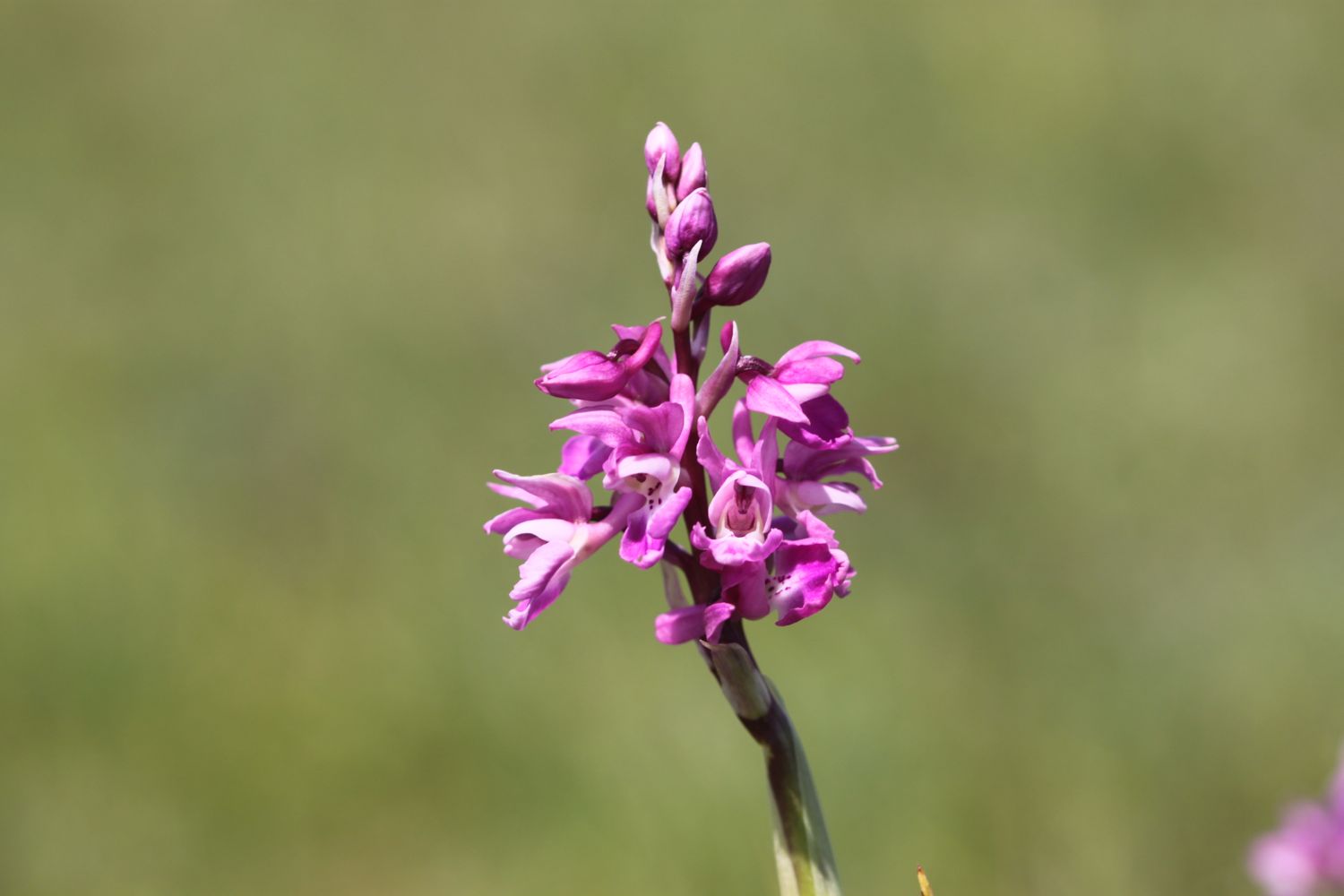
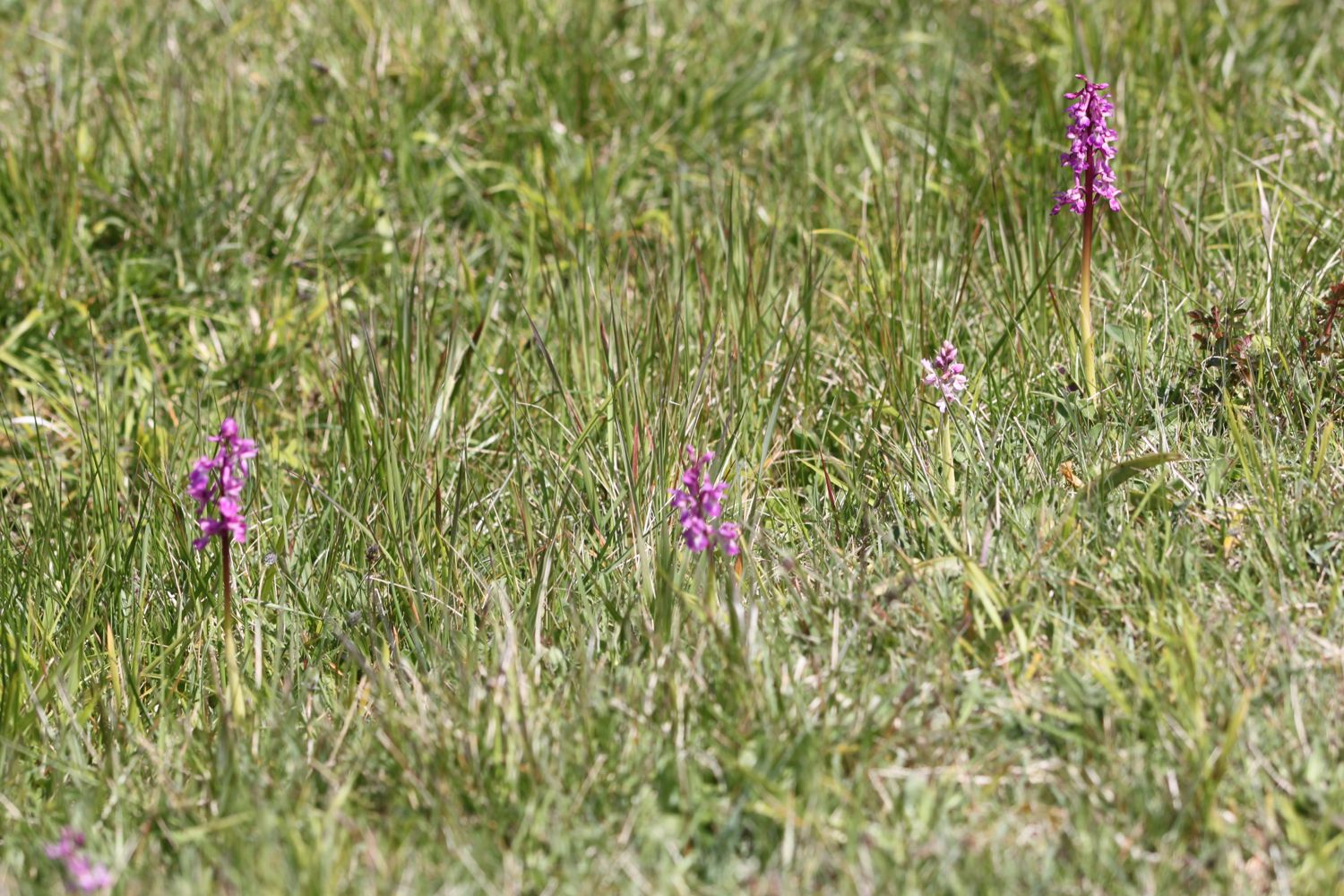
I come across a fine patch of green winged orchids - my first orchids of the season - near to the geoneedle.

The wild flowers are starting to look lovely. I come across a herd of very friendly cows who, as soon as they see me, stop munching on the grass and crowd the barbed wire fence instead, wanting me to scratch their heads which I dutifully oblige.

friendly cows

I stay up on the cliffs passing through the Devon Cliffs Holiday Park, before dropping down onto the beach just before Straight Point.

devon cliffs holiday park

The Royal Marine Straight Point Rifle Range is found on Straight Point and they were practising intermittently today.

sandy bay

After wasting some time on the red, sandy beach I climb back onto the cliffs, passing inland of the rifle range, to reach Littleham Cove where there are fine views of the lovely crumbling red sandstone cliffs. The sea here is red with sand.

littleham cove

I keep well away from the edge of the crumbling cliffs and climb onto Beacon Hill.

I'm now walking below the East Devon Golf Club and the path continues through some woodland before a tarmac path leads in to Budleigh Salterton and its pebbly beach where I come across some colourful beach huts as well as an ice cream hut. I have lovely views along the beach and across the bay.

budleigh salterton

I head along the sea front passing below the shops, pubs and restaurants that make up the town. I pass some fossil roots showing in the sandstone dating back 235 million years ago. Towards the end of the town I pass a shelter which I used three years ago while a thunderstorm raged around me.

fossil roots

As I leave Budleigh Salterton I pass the lovely ground of the Budleigh Salterton Cricket Club where sparrows are making an awful racket.

I'm now walking along the River Otter where the Otter Estuary Nature Reserve can be found. It is a pleasant walk inland along the river listening to the bird song before I cross the River Otter over White Bridge. I pass a sign for Pyne's Farm Shop and then head back to the coast over the other side of the river. Somewhere around here is a colony of beavers but I don't see any. I don't see any otters either but there are plenty of noisy geese here.

otter estuary nature reserve

I now have some fine views back over to Budleigh Salterton and there are some fine clumps of scots pine. I come across someone flying their DJI Phantom drone which makes an awful noise as it comes in to land.

view back to budleigh salterton

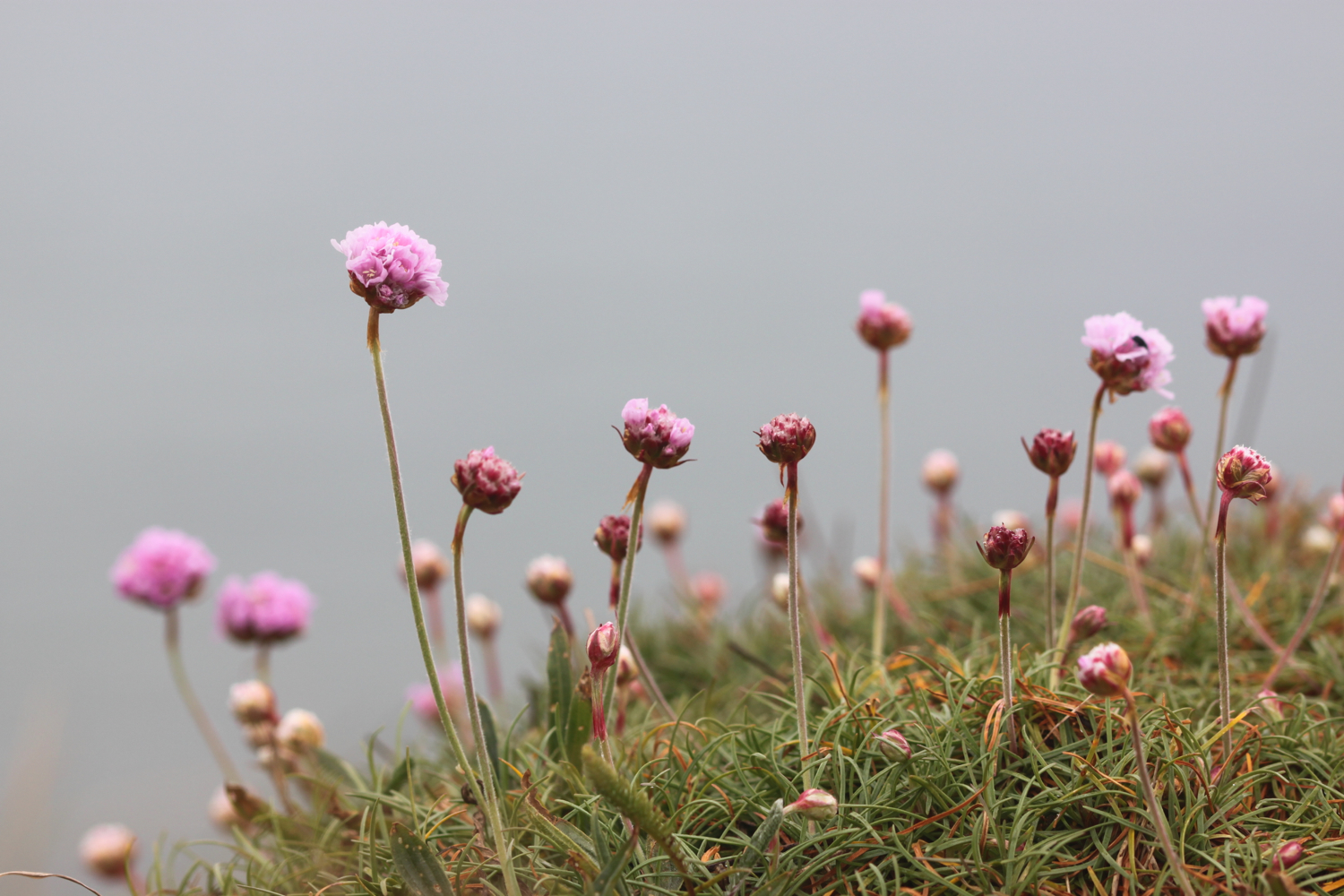
More red sandstone cliffs are climbed and the sea thrift is looking lovely - probably two weeks in advance of the clumps at home.

sea thrift

Skylarks are singing their hearts out. The going from here to past Sidmouth is going to get pretty rough. I pass Danger Point, Coal Beach, Black Head, Poolness Beach and Brandy Head, named after the smuggling activities which were once rife along this coast. I come across the Brandy Head Observation Hut, used in World War II to test aircraft mounted cannon and gun sights.

brandy head observation hut

I pass Twopenny Loaf Rock, Crab Ledge and Smallstones Point before coming across another holiday park at Ladram Bay.

The beach here is pebbly and there is a series of red sandstone stacks out at sea, all that remain of what were once natural rock arches that were once joined to the cliff.

ladram bay

ladram bay stacks

I pass the Three Rocks Inn before continuing along the grassy slopes which give way to a steep climb through the woods of High Peak where I sheltered from filthy rain three years ago. I pass inland of Little Picket Rock, Big Picket Rock, Green Point, Wheel Rock and Tortoiseshell Rocks. I come across a National Trust sign at Peak Hill, where ponies are munching on the grass. There are beautiful wild flowers all over the place.

The path eventually reaches a road which drops in to Sidmouth. I walk down a path to the side of the road where I have lovely views over Sidmouth.

view over sidmouth

I make my way down to the beach at the western end of Sidmouth which is sandy, in stark contrast to the main beach at Sidmouth, which largely consists of pebbles except at low tide. It's rather busy on this fine, sunny Saturday.

sidmouth

I make my way past the wooden steps called Jacob's Ladder at Connaught Gardens and then wander through Sidmouth along the esplanade, passing the various shops, pubs, cafes and restaurants.

jacob's ladder

We're staying in a cottage in Sidbury for the week which is about three miles inland of Sidmouth so it's now time to leave the coast path and head for our home from home. 

The eastern side of Sidmouth is where the original fishing village was based but by the end of the 19th century the fishing trade had declined. Rich people discovered Sidmouth during the Napoleonic Wars and began to visit and settle in the town which explains the large and ornate buildings which now make up the town.

I reach the River Sid and have no idea where I'm going now but figure that if I roughly follow the River Sid I should be OK. I start to head inland and come to a road fording the river but fortunately there's a footbridge over the river so I don't have to get my feet wet.

 I pass a toll house which was built in the early 19th century and once controlled the eastern approach to the town. The original toll gate now hangs next to the toll house.

toll house

toll house gate

I enter Byers Riverside Park and pass several weirs walking along the river valley floor and criss cross the river over bridges on the approach to the village of Sidford, which seems to now be an extension of Sidmouth.

weir

I pass the red bricked St Peter's Church, built in the Victorian era. 

st peter's church

I continue through Sidford and cross the river using a footbridge which was the original packhorse bridge and said to date from around 1100. I then pass the Blue Ball Inn. I now gently ascend towards Sidbury, passing fields of yellow rape.

rape

I turn into Deepway and pass Sidbury's cemetery on the outskirts of the village.

sidbury cemetery

Visible over to my left is a wooded hill now known as Sidbury Castle but earthworks here date from the early Iron Age. I cross another bridge over the River Sid where our cottage for the week sits. I then pass the lovely 18th century cob cottages which line Bridge Street.

cottages on bridge street

I've now reached my destination for the day, Sidbury, so there is just time to visit the rather attractive Church of St Giles, which dates from Saxon times but looks mostly to be Norman and later. There still exists a 7th century saxon crypt under the chancel.

church of st giles

That's my walking done for the day and there's plenty of time to visit the Red Lion pub opposite the church. Hang on a sec! It closes at 3 even on a Saturday!! Good job our fridge is loaded with cool, refreshing bottles of Doombar.

red lion pub

FLORA AND FAUNA

Flora and fauna encountered on the walk today includes :-

  • swifts
  • chaffinches
  • green winged orchids
  • housemartins
  • goldfinches
  • chiff chaffs
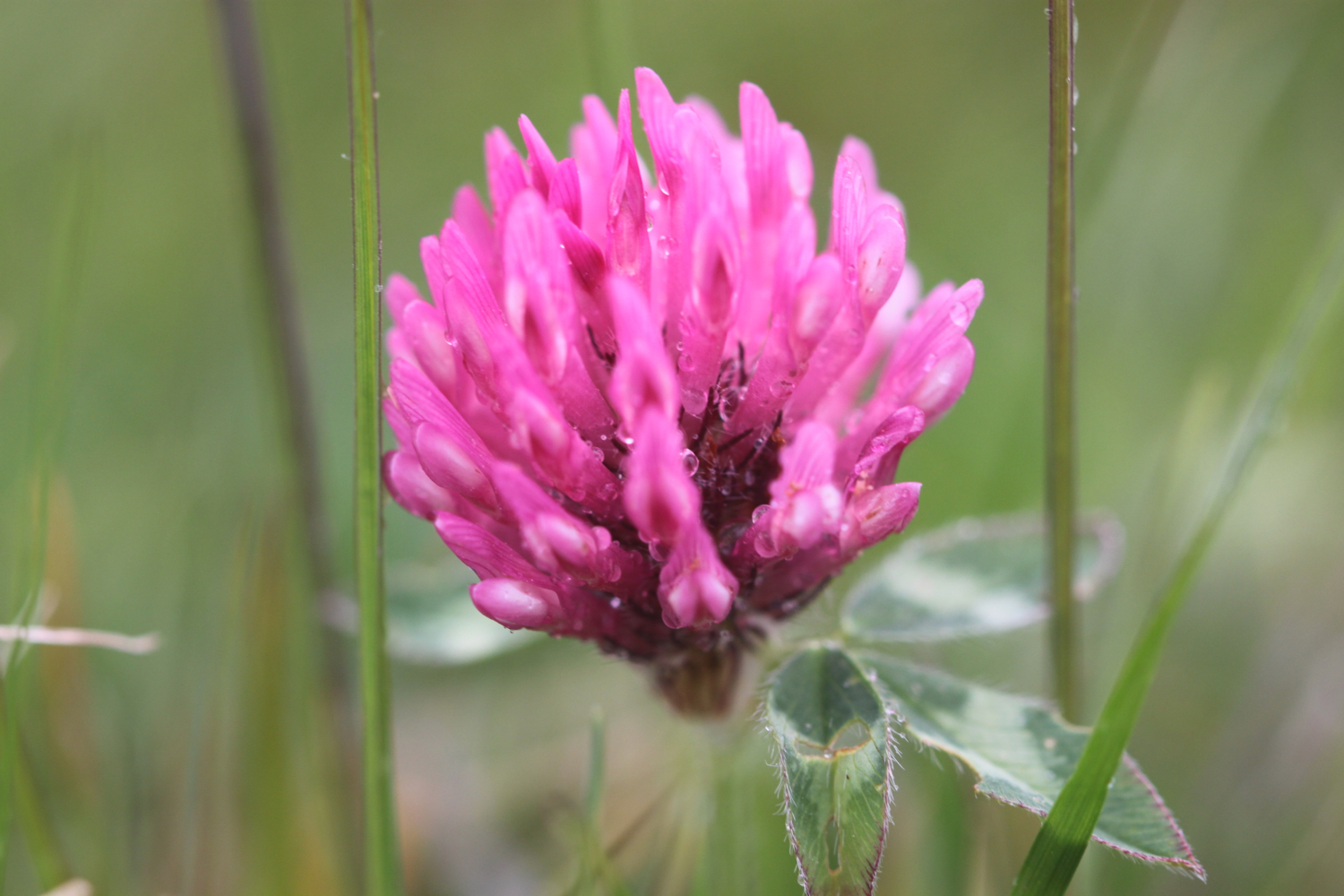
  • clover
  • cows
  • bluebells
  • red campion
  • beetles
  • germander speedwell
  • lords and ladies
  • sparrows
  • peacock butterflies
  • orange tip butterflies
  • skylarks
  • scots pine
  • green alkanet
  • cow parsley
  • cuckooflower
  • red admirals

PODCAST

The podcast of today's walk is now available. You can subscribe via the iTunes store or listen using the player below..

MARKS OUT OF TEN?

According to my phone I've walked 17.94 miles today which amounts to 39275 steps. It has been a beautiful first day's walking on the South West Coast Path this year and the weather has been glorious. Well, as glorious as it has been this manky year. Nine out of ten!

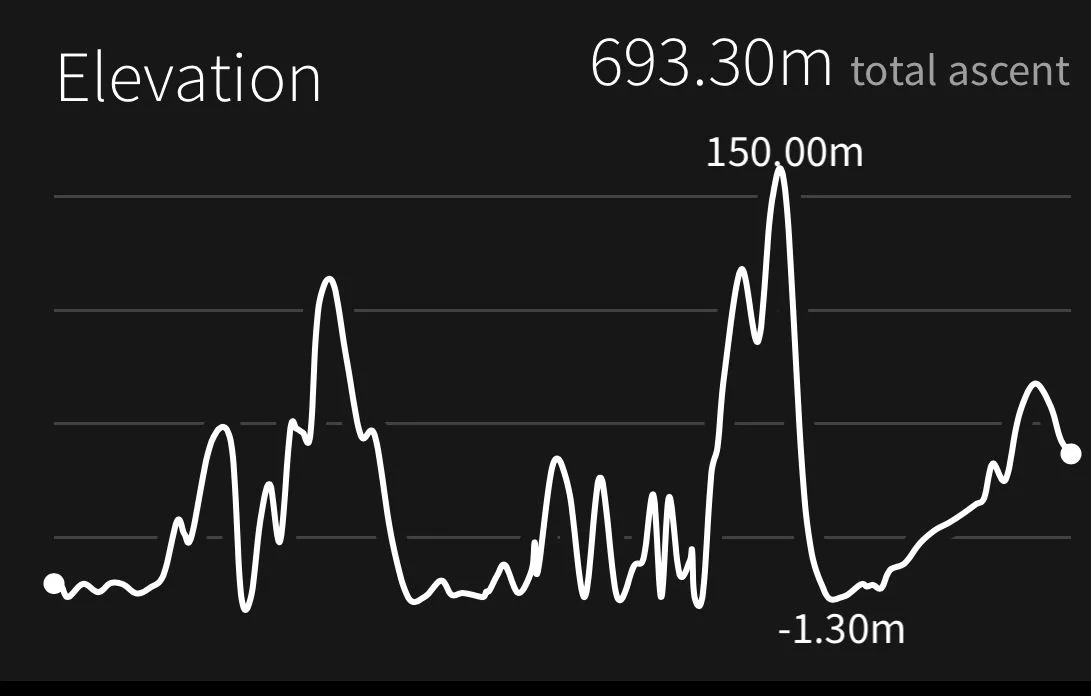
My total ascent today has been 693.30 metres or 2274 feet.

video

map

green winged orchid